
Home » Layers

The Task(s) At Hand (Online Only)

15 March 2011 No Comment

Story by David Sinex

Under the low light of his house in the York neighborhood, a musician performs for his roommates­­­­­­­­­­­ — a common event in this house. He sits on the throne of a wood-toned drum set, tucked away in a corner, guitar in hand — while a metal contraption around his neck holds a harmonica in front of his face. An array of sound comes from the corner of the house, the bass drum setting the beat for a Bob Dylan song.

23-year-old Western graduate Jeff Johnson strums his guitar while singing, all the while tapping the beat on the bass drum with his right foot and the hi-hat with his left. To add a little more folk sound, Johnson adds harmonica during the interlude. Johnson is in constant motion, using multiple layers of his brain to keep up with everything he does.

Johnson is a member of Generation Y whose parents are part of the baby boomer generation — a generation with the ability to do a multitude of difficult tasks at one time by passing each task to different layer of his brain.

Professor Kelly Jantzen teaches cognitive neuroscience at Western. He says Johnson probably struggled when first playing all of the instruments at the same time. He compared it to learning to drive a vehicle with a manual transmission. At first, it seems impossible to try and work the clutch and the gas at the same time.

“After a while it doesn’t seem like you’re doing 10 things at once. Everything gets integrated into a pattern,” Jantzen says.

Johnson started playing the guitar four years ago and picked up the other instruments along the way. His brain is able to pass the task of playing the guitar down and allow the cortex to focus on the next instrument. The cortex is the top layer of the brain, used for paying attention and setting goals.

As Johnson continues to practice the drums and harmonica more, it becomes easier to play all of his instruments at once; it becomes second nature, like driving a clutch.

Jantzen says after a task becomes easier, the cortex passes all of details of how to accomplish the goals, or the music in Johnson’s case, down to the different layers of the brain.

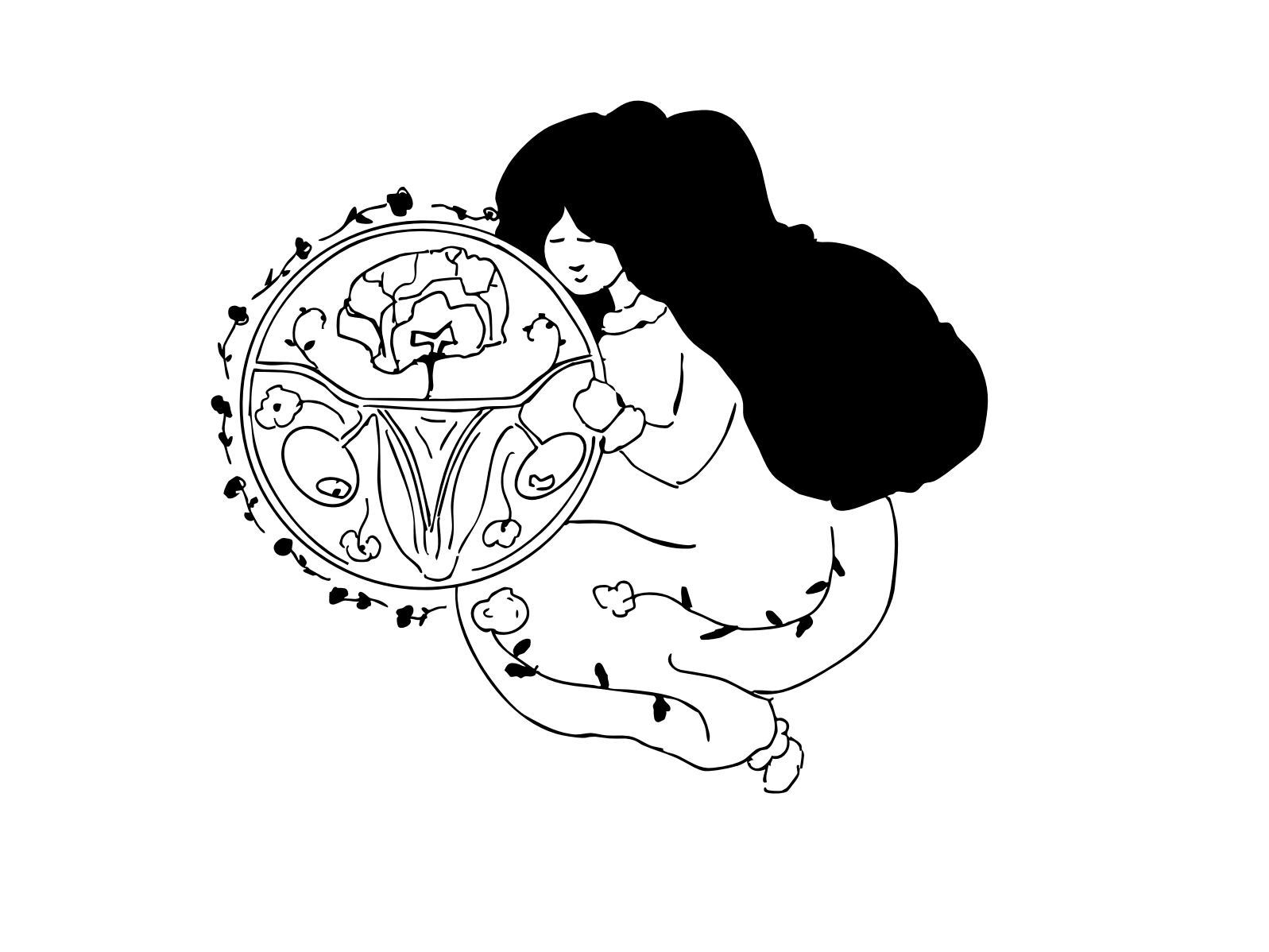
Located in the temporal lobe, the auditory cortex controls Johnson’s hearing. He uses this to make sure the music sounds right. The motor cortex, located at the top of the brain, assists Johnson with moving his feet, fingers, arms and anything else while he is playing.

The somatosensory, also located at the top of the brain, allows Johnson to feel his feet against the pedals as well as his fingers against the guitar strings. The cerebellum, located at the back of the brain, controls Johnson’s coordination and allows him to time the strums of his guitar and notes on his harmonica as well as the tapping of his feet. Through these layers of Johnson’s brain, he is able to produce a medley of sound.

Jantzen ventures to compare younger generation’s ability to multitask against their parents by the way a text message is written and sent versus a traditional letter as an example. A text message is sent in the spur of the moment, almost without thinking. A letter is written at a pace where the mind can think about what is written on the piece of paper, providing a richer form of communication.

Baby boomers grew up in a time when focusing on one thing for a long period of time was easy and less multitasking was required, which some argue, gives the baby boomers the ability to dedicate themselves to the task at hand, Jantzen says.

Generation Y has strong neural connections involved with multitasking. They are surrounded with tools that supply them with what they want so they can move onto the next thing. Current generations are able to access information immediately through services such as Wikipedia and other online information databases.

Baby boomers have strong neural connections involved with focusing on a specific task for a long period of time. While growing up, they were able to spend time figuring things out and were not under pressure to do as many things at once; the resources available to the current generation were not available to them.

Jantzen and Johnson agree that the amount of resources that Generation Y has at its fingertips is a huge reason as to why they are able to multitask the way they can. Through the strong neural plasticity and the many layers of his brain, Johnson uses his talents to perform. But has his generation’s access to the many resources available to them forced them to miss out on their parent’s generation’s skills of focus and patience?

Jantzen says, “I think there is something to be said for doing a lot at once, I also think there is a lot to be said for thinking about something deeply.”

Both generations have advantages to how their brains work. Both ways require the many layers and intricacies of brain to function as one. These layers come together to perform not only impressive tasks like Johnson playing the multiple instruments, but tasks that all people do, like eating and changing the channel, or talking and writing.


Comments are closed.