
Redlight districts, yellow journalism and grey concrete
The plaques preserving Fairhaven’s ambiguous and sensational historical legacy
Story and photos by Jae Ranney
Published April 7, 2026
Courtesy of Whatcom Museum photo archive.
Today, the historic Fairhaven neighborhood in Bellingham sits as an upscale shopping district, brimming with boutiques and restaurants tucked inside historical brick buildings. But the late 19th century marked a much different era for Fairhaven: saloons and brothels buzzed and bustled with trigger-happy railroad workers, rowdy gamblers, plenty of whiskey and at least one volunteer firefighter who moonlighted as an arsonist.
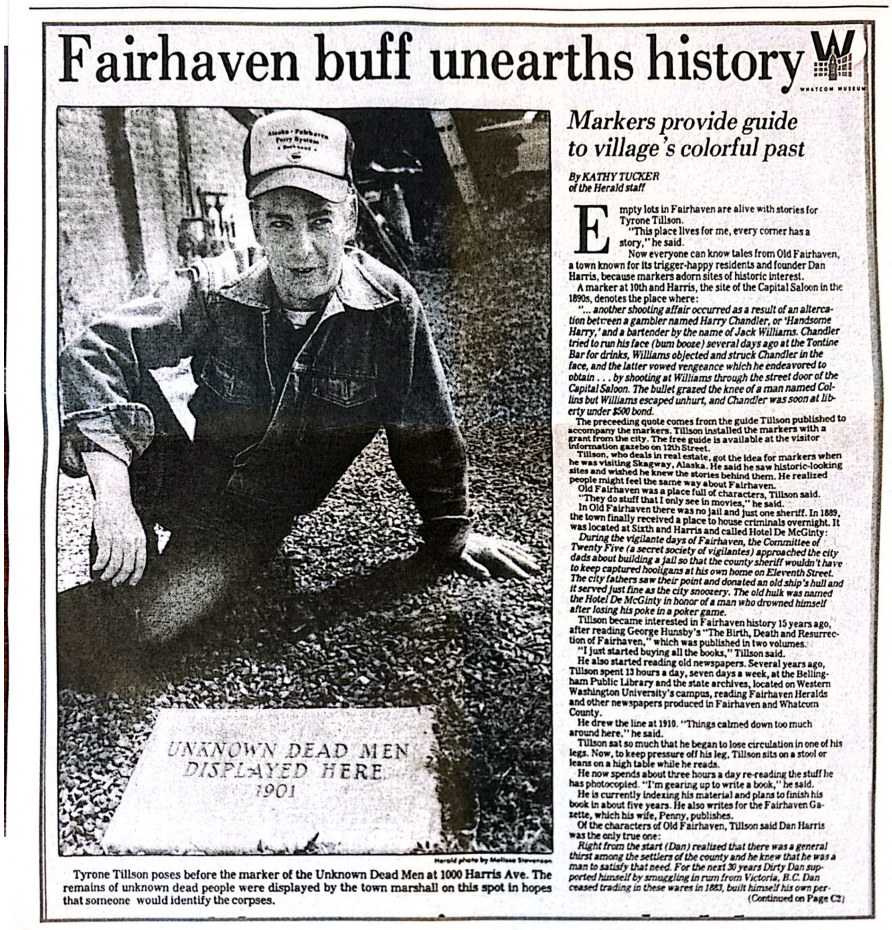
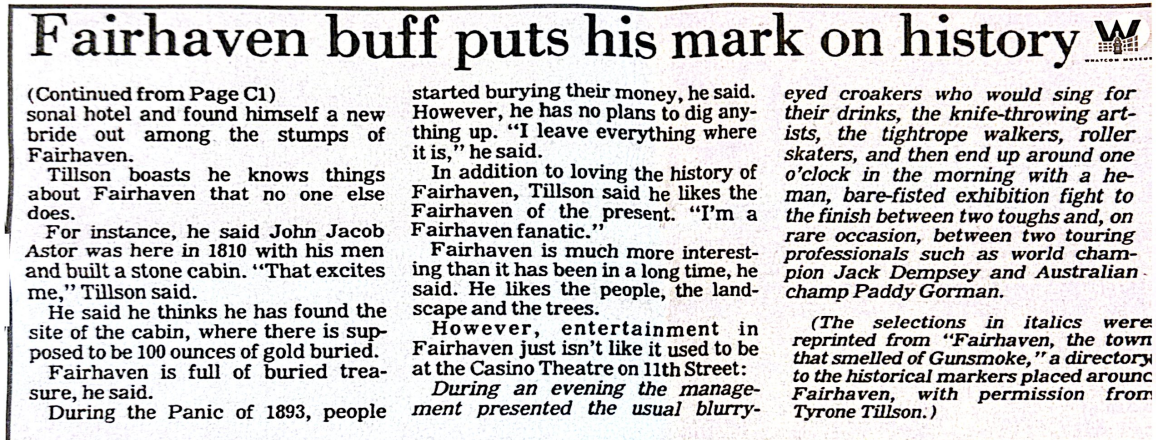
Born in 1941, Bellingham historian and Western Washington University alum Tyrone Tillson had an idea. According to a 1990 article in The Bellingham Herald, Tillson believed people would be curious about Fairhaven’s history, a town once full of what he described as characters. With grants from the city of Bellingham and the Old Fairhaven Association, he installed a series of plaques along Harris Avenue in the 1990s, memorializing locations and events he uncovered through years of researching old newspapers, reading historical works by authors such as George Hunsby, and speaking with fellow historians.
Coincidentally, Fairhaven’s birth in 1881 overlapped with the American era of “yellow journalism,” the common journalistic practices of the 19th century that led to exaggerated, sensationalist headlines that often prioritized drama over facts. The true stories of old Fairhaven are intertwined with tall tales and flights of fancy. The outcome? Plaques that tell a history as ambiguous as it is electrifying.
With insight from modern local historian and Good Time Girls owner Kolby LaBree, archival work from the Whatcom Museum Photo Archives and information drawn directly from Tyrone Tillson’s research, Klipsun revisited the stories behind these historical markers. Or, at least, a very entertaining version of the truth.
Aden Erskine was about 5 years old when he got what he called his “soccer owie.” His grandmother is from the United Kingdom, and after learning that what they call football, Americans call soccer, he assumed the reverse must also be true. So when he noticed the scar between his brows was shaped like a football, he named it accordingly.
Erskine said his parents have differing accounts of how the scar came to be, but he remembers it happening at a park. He was playing on a large structure — one he admits, in hindsight, might not have been the safest for a child his age. One moment, he was peering through a fake telescope; the next, he turned to find a group of older kids running straight toward him.
“I just heard a bunch of footsteps,” Erskine said. “I turn, and there’s like, this stampede of older kids just running my way, and I get trampled by them.” He remembers falling forward, striking the bridge of his nose against the structure’s floor, leaving behind a cut that would later become the scar.
Growing up, Erskine said he sometimes wondered whether it shaped how others saw him. Over time, as the mark faded, that concern shifted. He began to see it as something that set him apart, something he wasn’t sure he wanted to lose.
“It really felt like it was a unique part of myself,” Erskine said. “As silly as it sounds, I wanted to hold on to that.”
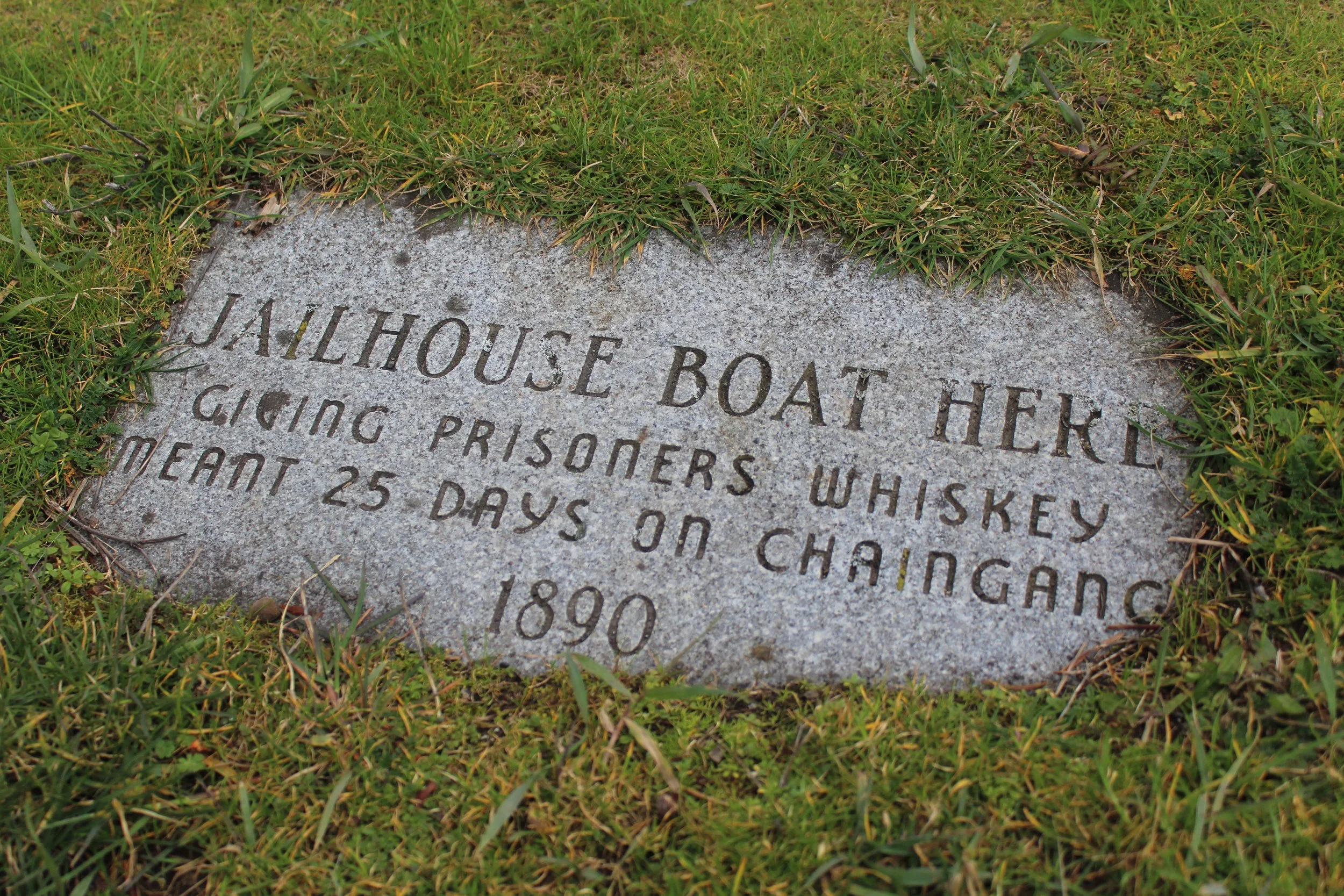
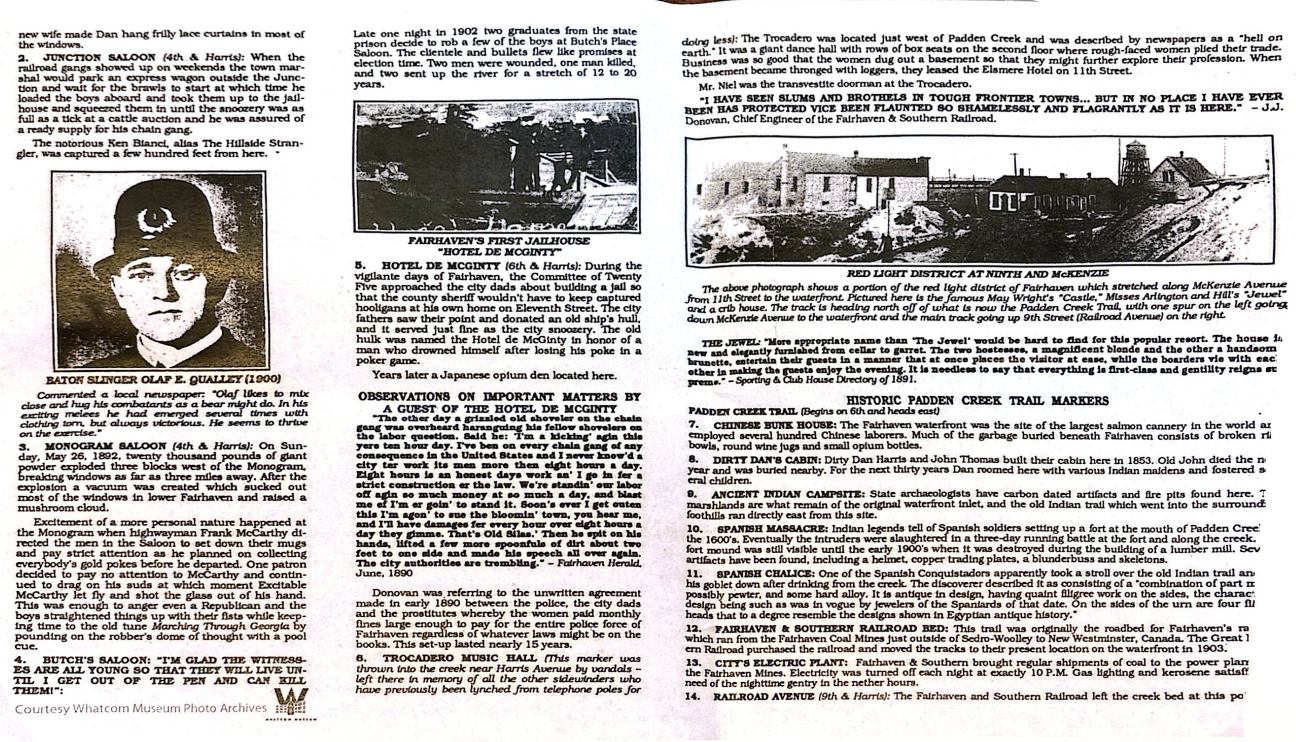
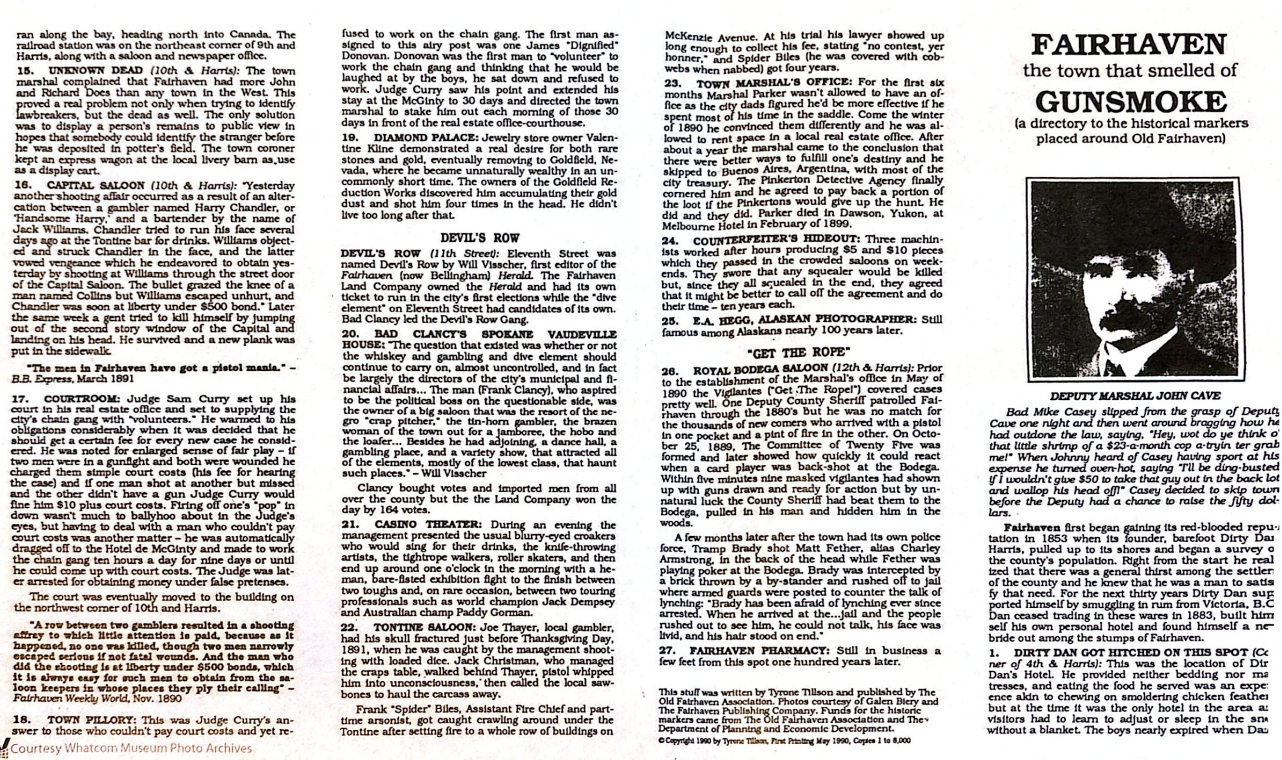
“Jailhouse Boat Here, Giving Prisoners Whiskey Meant 25 Days On Chaingang, 1890.” According to a brochure written by Tillson, published by the Old Fairhaven Association in 1990 and preserved by the Whatcom Museum Photo Archives, Fairhaven’s first jailhouse was made from the old hull of a ship. It was big news for the county sheriff, who no longer had to keep criminals in his own home, and was named Hotel de McGinty in honor of a man who allegedly drowned himself after losing a poker game. This plaque sits in the grass next to the sidewalk at the corner of Sixth Street and Harris Avenue.
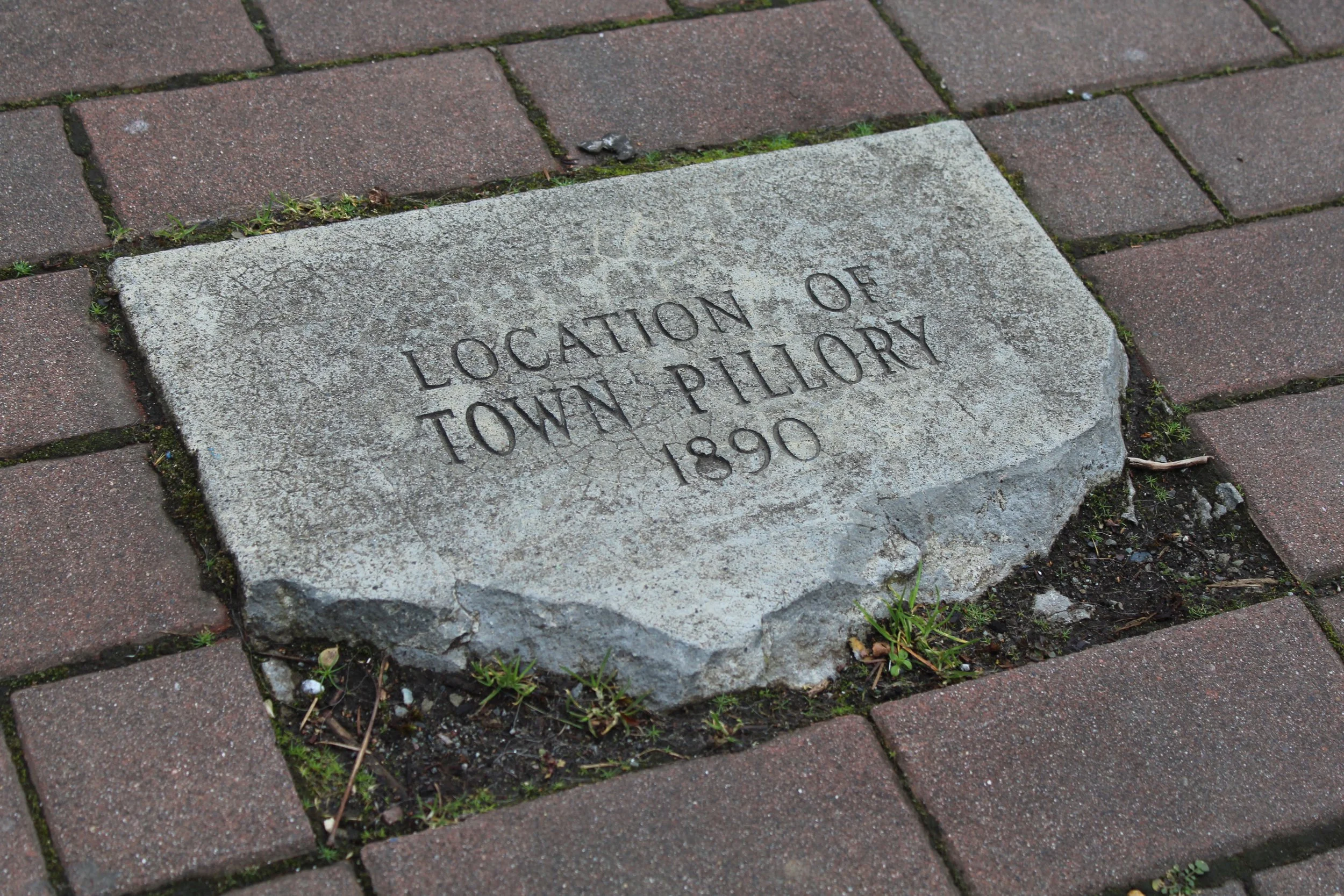
“Location of Town Pillory, 1890.” In old Fairhaven, the judge’s answer to those who couldn’t pay court fees and wouldn’t work on the chain gang was the pillory: a pole holding up a board with holes for someone's hands and head, where they would be locked up and subjected to public humiliation. Archived by Tillson, the story and the plaque sit at the center of a red brick walkway near the corner of 11th Street and Harris Avenue.
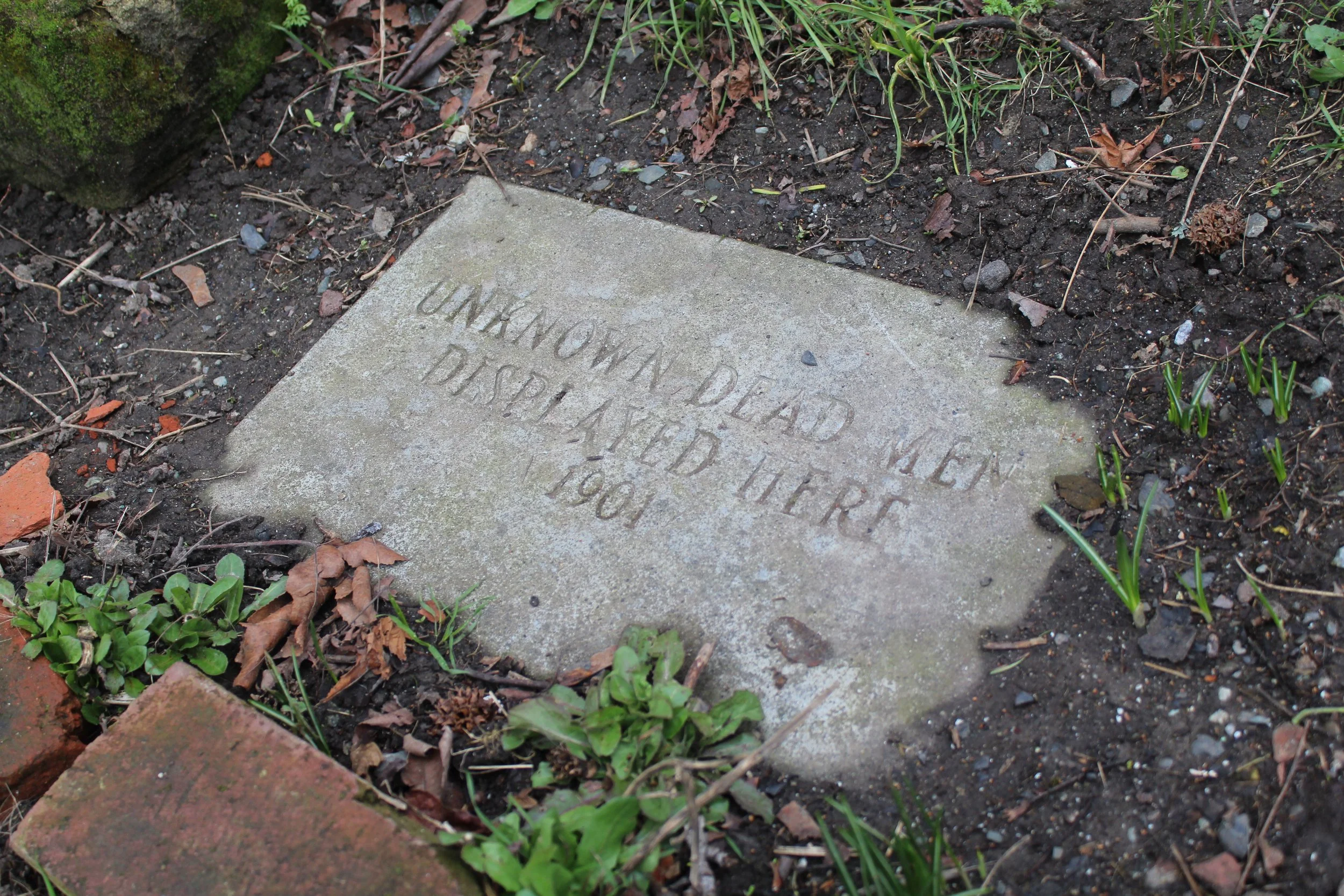
“Unknown Dead Men Displayed Here, 1901.” As Tillson wrote, the town marshal once complained that Fairhaven had an incredible number of unidentified bodies. To fix this morbid issue, the town corner began to publicly display the bodies of the unidentified dead, in the hopes that a passerby could provide some insight. This plaque sits amidst sparse grass and mossy brick near the corner of 10th Street and Harris Avenue.
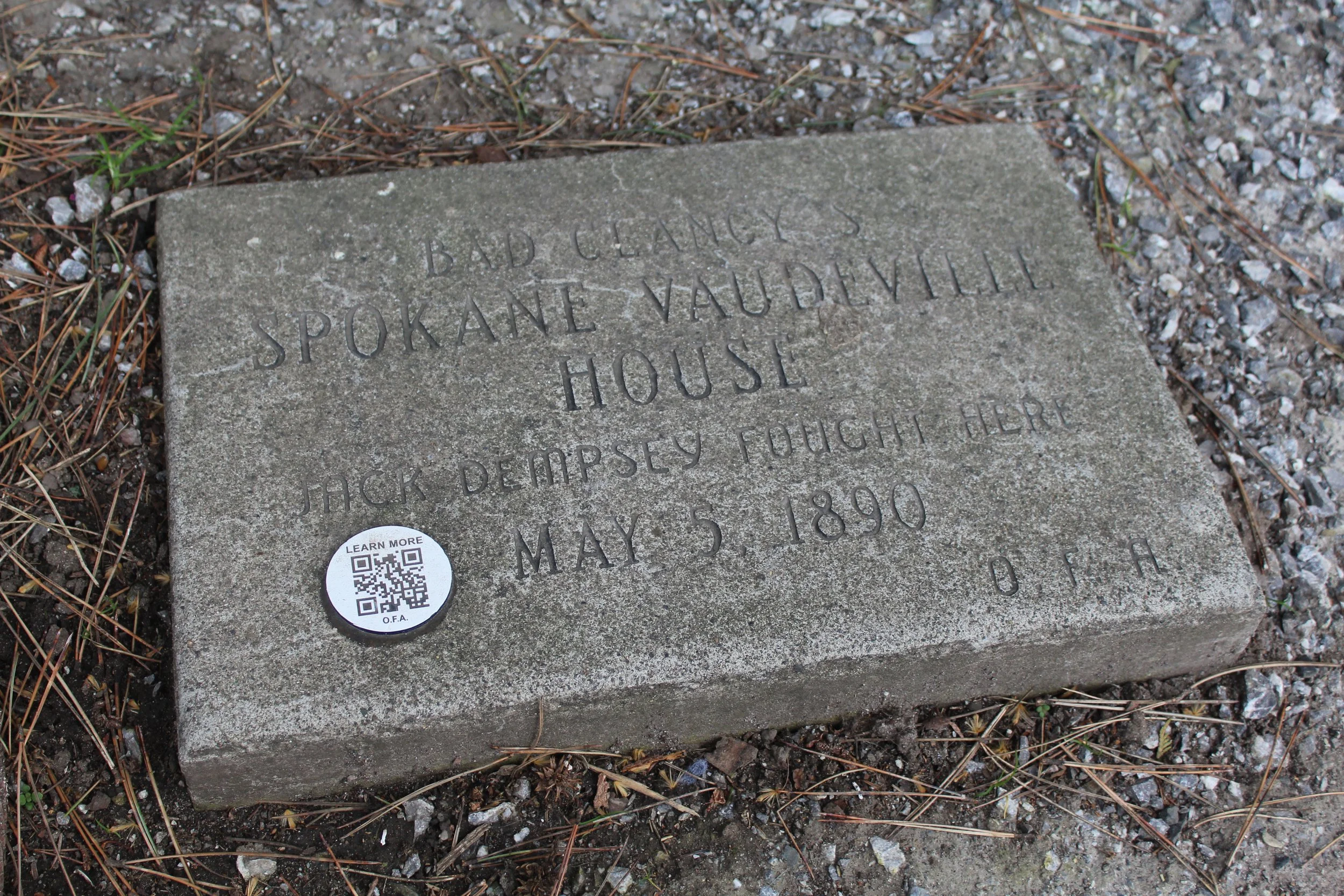
“Bad Clancy’s Spokane Vaudeville House, Jack Dempsey Fought Here, May 5, 1890.” This fading plaque commemorates the date that John Edward Kelly, the first holder of the World Middleweight Championship and also known as “Nonpareil Jack Dempsey," fought at Frank “Bad” Clancy’s establishment. Vaudeville was a type of live entertainment that consisted of a variety of short acts, including comedy, burlesque, theatre and boxing. This plaque lies in gravel on 11th Street between Harris Avenue and McKenzie Avenue.
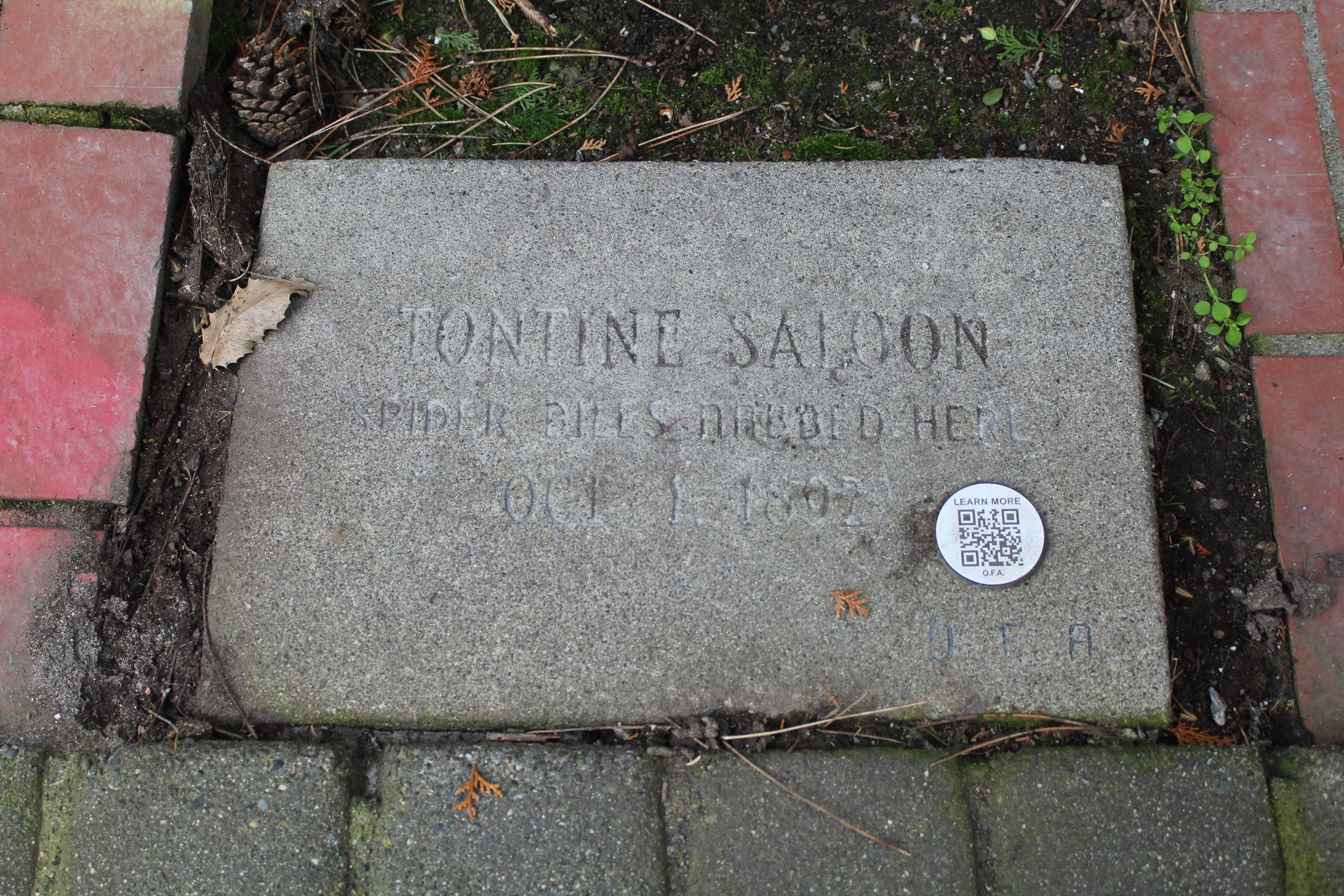
“Tontine Saloon, Spider Biles Nabbed Here, Oct. 1, 1892.” This plaque near the corner of 11th Street and Harris Avenue is a personal favorite of LaBree. As a historian and the owner of the Good Time Girls, a local tour agency that does themed tours of old Fairhaven, LaBree generously assisted Klipsun in sharing historical information and sources. In an interview, she detailed the saga of Frank “Spider” Biles.
In the 1890s, the railroad industry in Fairhaven was booming. With it came the influx of new workers, which included Biles. “He gets elected to the assistant chief position multiple years. And then there's the year 1892,” LaBree said. “He doesn’t win the election, and that same year, there is suddenly a rash of arson fires plaguing Fairhaven.”
LaBree said that the newspapers of the time called this mysterious arsonist a “firebug,” which was common sensationalist slang for an arsonist. “They’re also reporting that Frank Biles is first on the scene, doing a great job putting out all these fires,” LaBree said. “It’s almost like he knew,” she joked.
Inevitably, it all caught up to Biles. He was caught crawling underneath the Tontine Saloon after setting fire to a row of buildings on McKenzie Avenue, and when they finally “nabbed” him, he was covered in cobwebs. “Spider Biles” was born and went on to serve four years for his crimes.
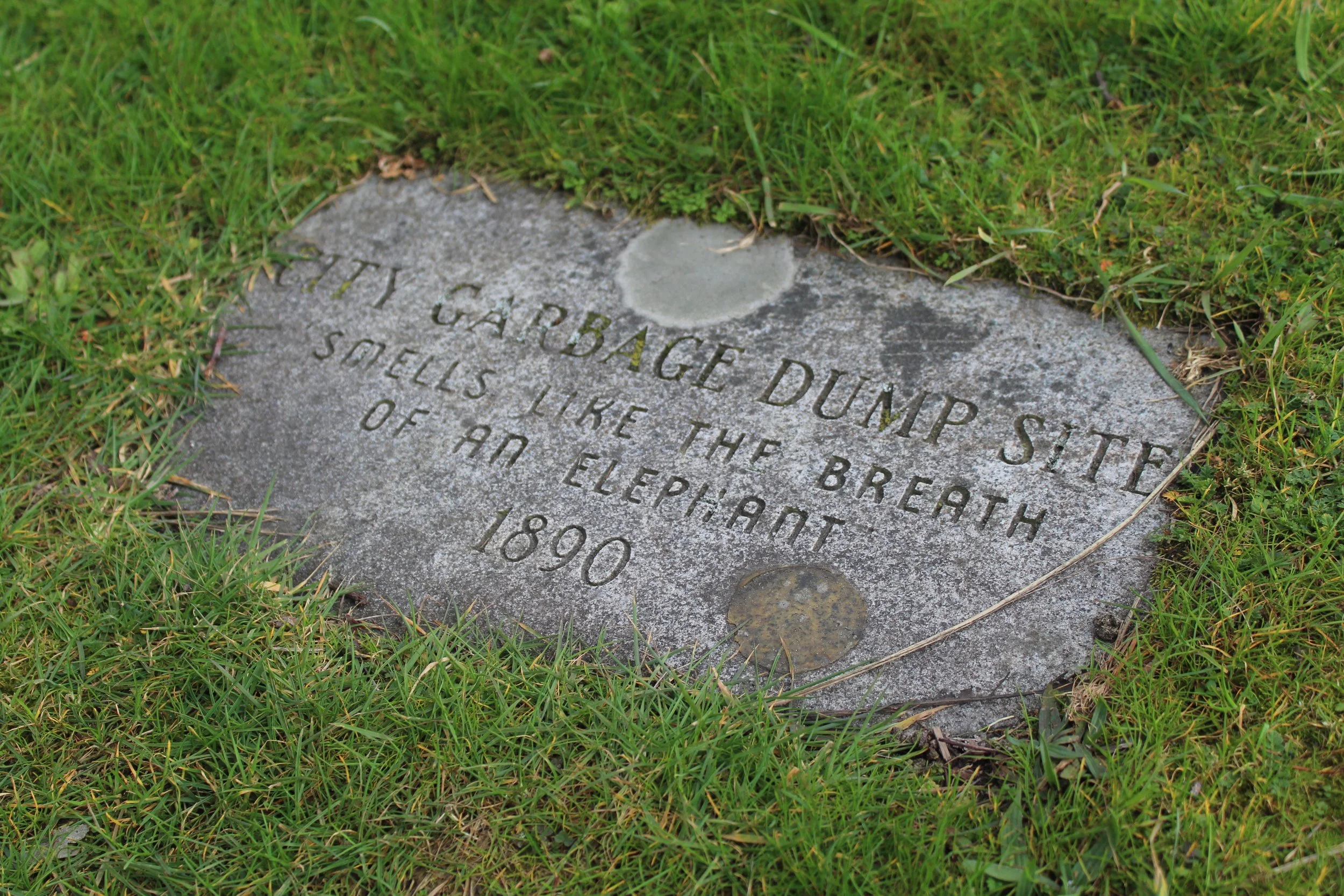
“City Garbage Dump Site, Smells Like The Breath Of An Elephant, 1890.” During the Fairhaven boom, the city faced major issues in waste management. On May 22, 1890, the Fairhaven Herald (now Bellingham Herald) described it as smelling like “an abandoned slaughterhouse,” or “the breath of a salivated elephant.” This reminder to all passersby to be thankful for today’s fresh air sits near the corner of Sixth Street and Harris Avenue.
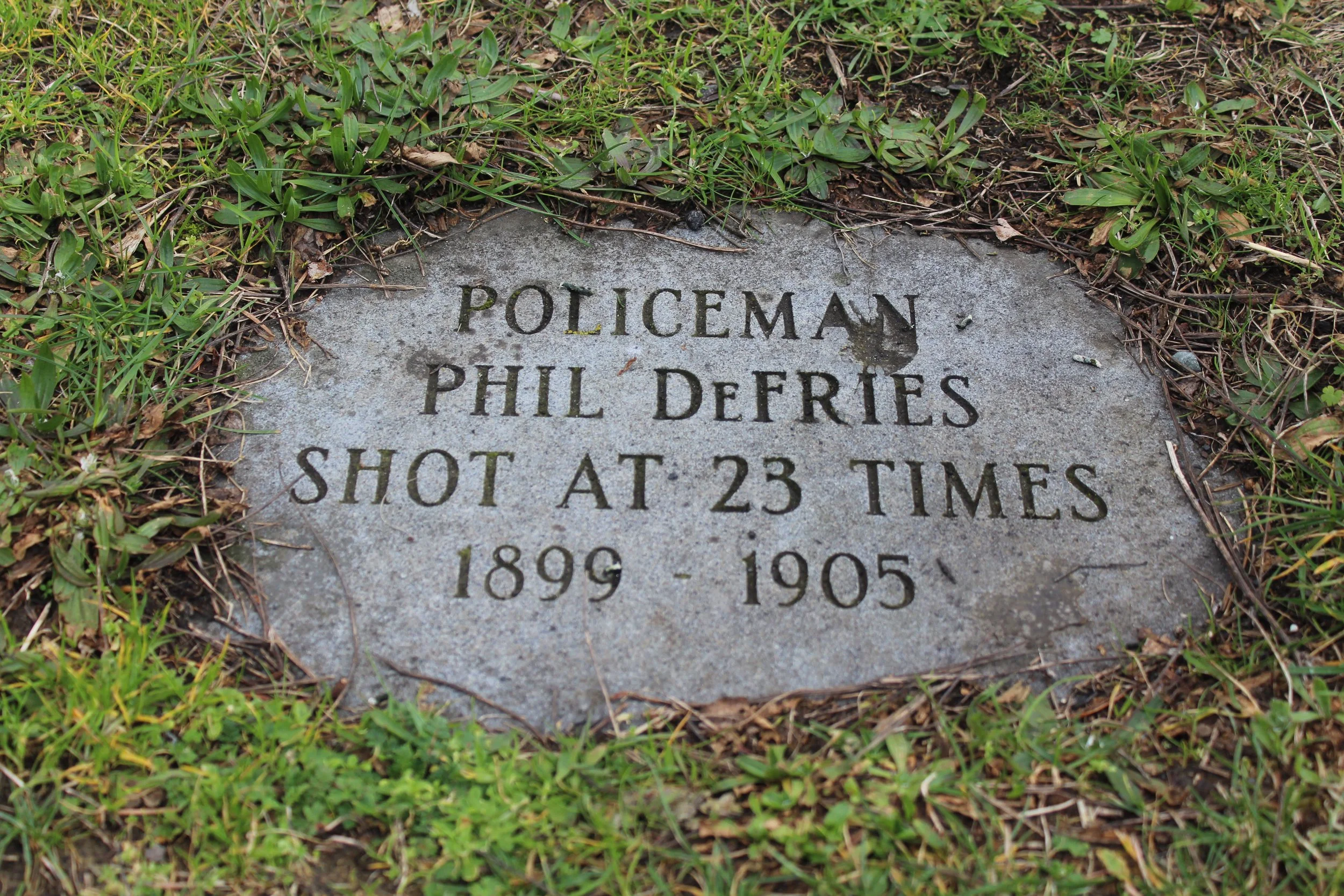
“Policeman Phil DeFries Shot At 23 Times, 1899 - 1905.” Old Fairhaven was a rowdy and often dangerous frontier town. In the scalding words of J.J. Donovan, the chief engineer of the Fairhaven and Southern railroads at the time, “I have seen slums and brothels in tough frontier towns. But in no place I have ever been has protected vice been flaunted so shamelessly and flagrantly as it is here.” This plaque sits near the corner of Sixth Street and Harris Avenue.