
The Body Keeps the Score
A collection of five individuals’ body markings that speak to specific moments in their lives
Story and photos by Madelyn Jones
Published April 7, 2026
Each of us carries the stories of our lives on our bodies. Some settle into gentle crow’s feet, the raised seams of scar tissue or the faint iridescent pink of a long-healed cut. Others appear in a scatter of freckles or the deep, purplish shadow of a bruise.
Together, they form a language that is entirely our own — a living record of what has shaped us. Of what we have endured through gritted teeth, and what we have chosen with hearts leaping in anticipation.
Five individuals chose to share one of their stories with Klipsun.
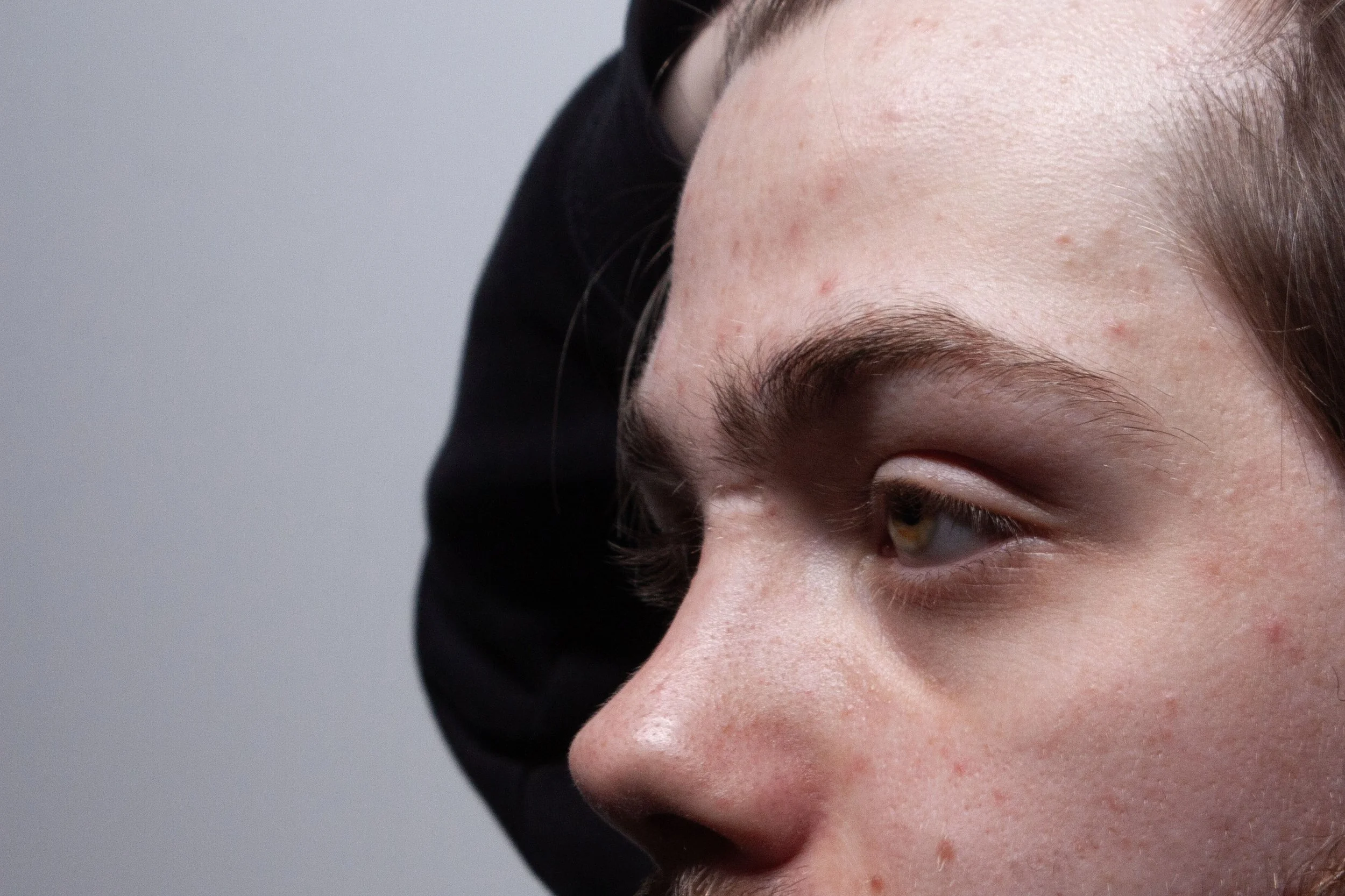
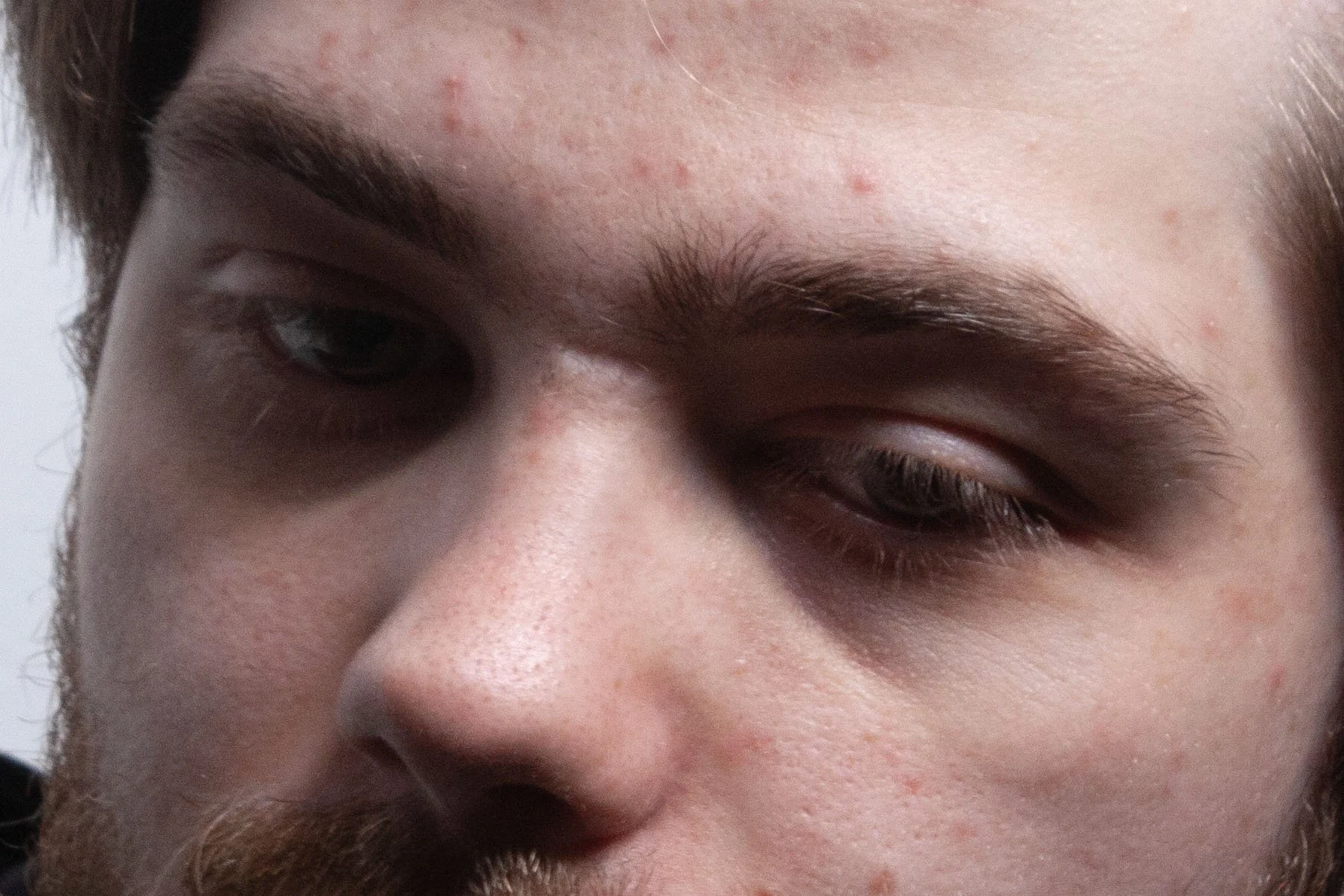
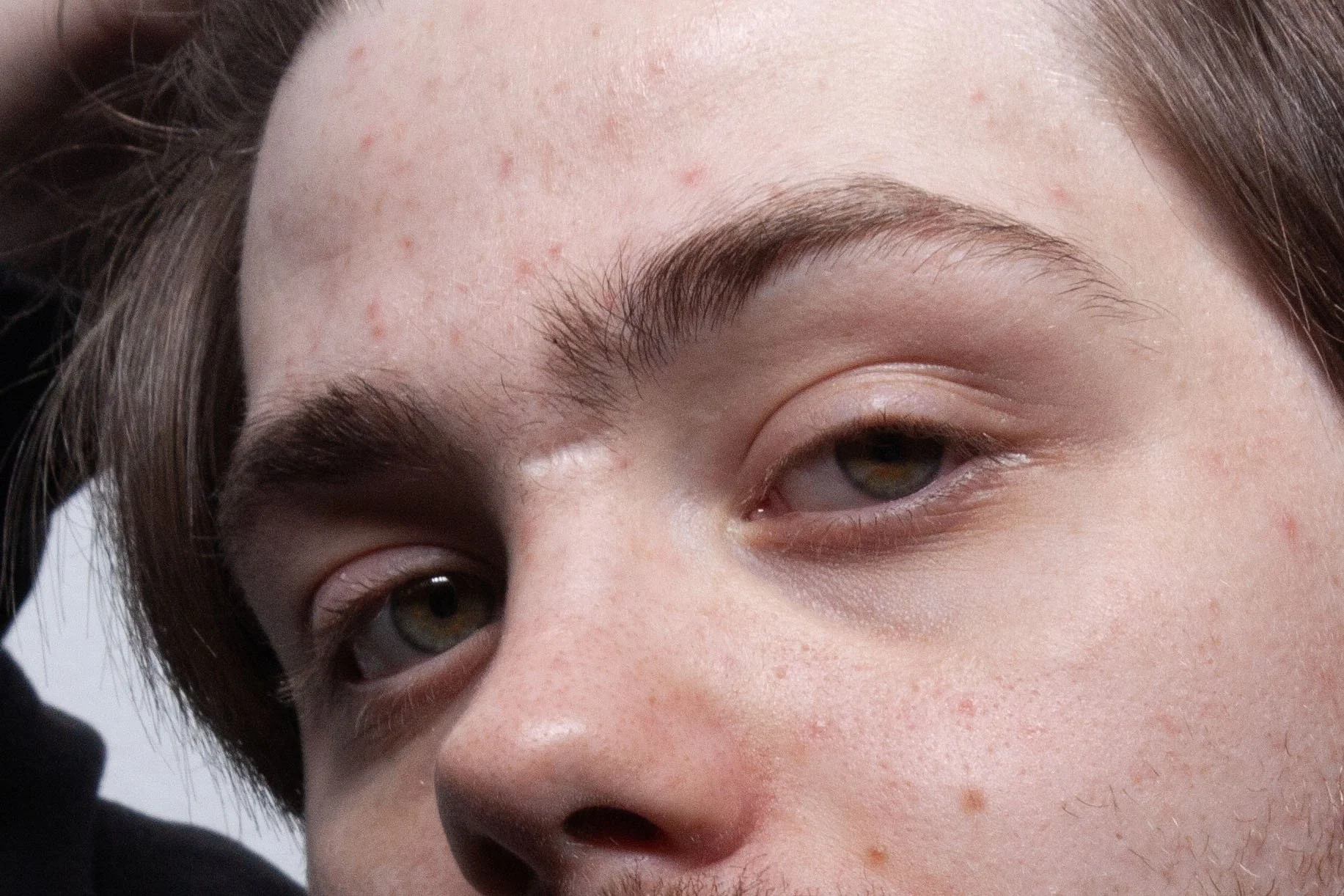
Aden Erskine was about 5 years old when he got what he called his “soccer owie.” His grandmother is from the United Kingdom, and after learning that what they call football, Americans call soccer, he assumed the reverse must also be true. So when he noticed the scar between his brows was shaped like a football, he named it accordingly.
Erskine said his parents have differing accounts of how the scar came to be, but he remembers it happening at a park. He was playing on a large structure — one he admits, in hindsight, might not have been the safest for a child his age. One moment, he was peering through a fake telescope; the next, he turned to find a group of older kids running straight toward him.
“I just heard a bunch of footsteps,” Erskine said. “I turn, and there’s like, this stampede of older kids just running my way, and I get trampled by them.” He remembers falling forward, striking the bridge of his nose against the structure’s floor, leaving behind a cut that would later become the scar.
Growing up, Erskine said he sometimes wondered whether it shaped how others saw him. Over time, as the mark faded, that concern shifted. He began to see it as something that set him apart, something he wasn’t sure he wanted to lose.
“It really felt like it was a unique part of myself,” Erskine said. “As silly as it sounds, I wanted to hold on to that.”
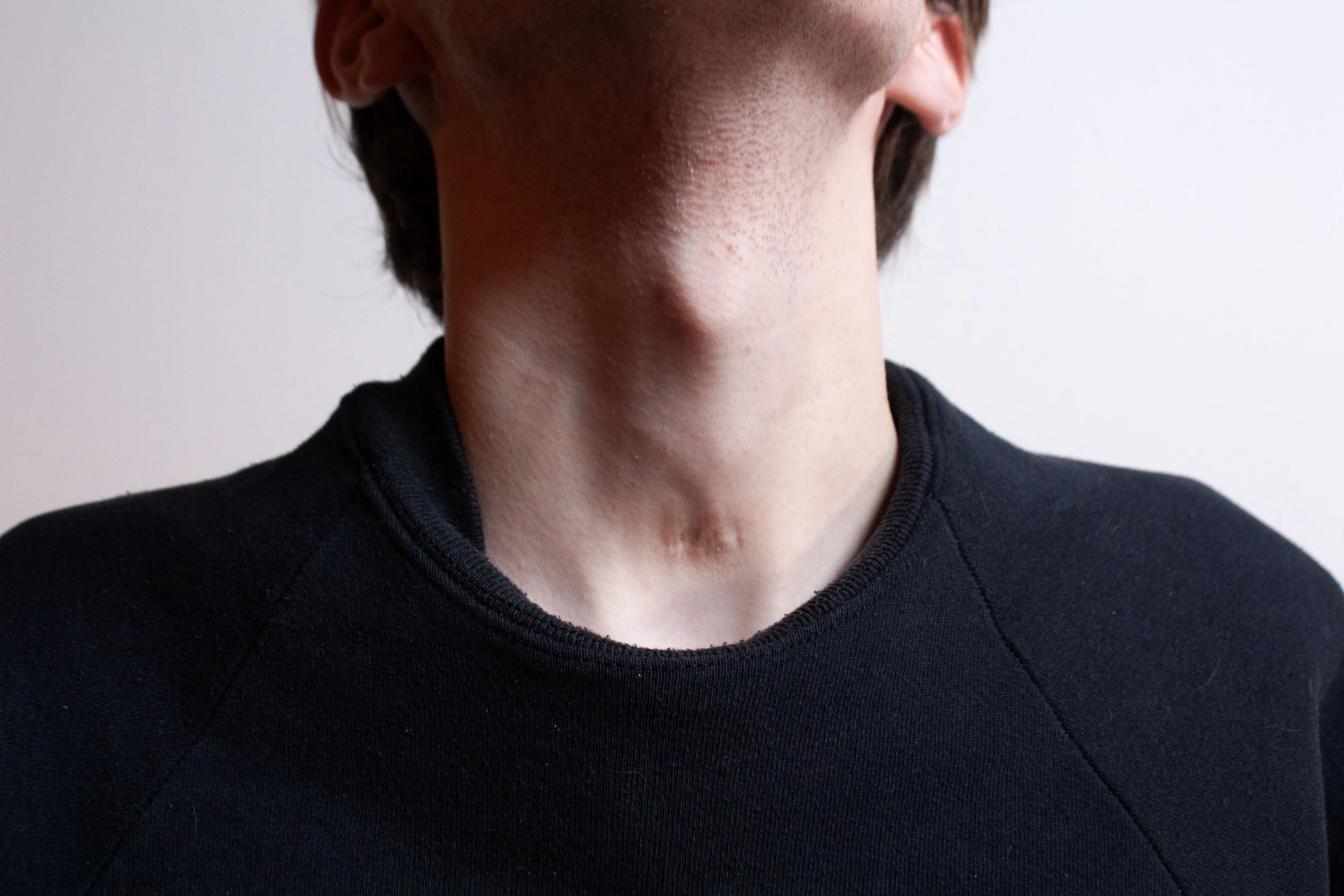
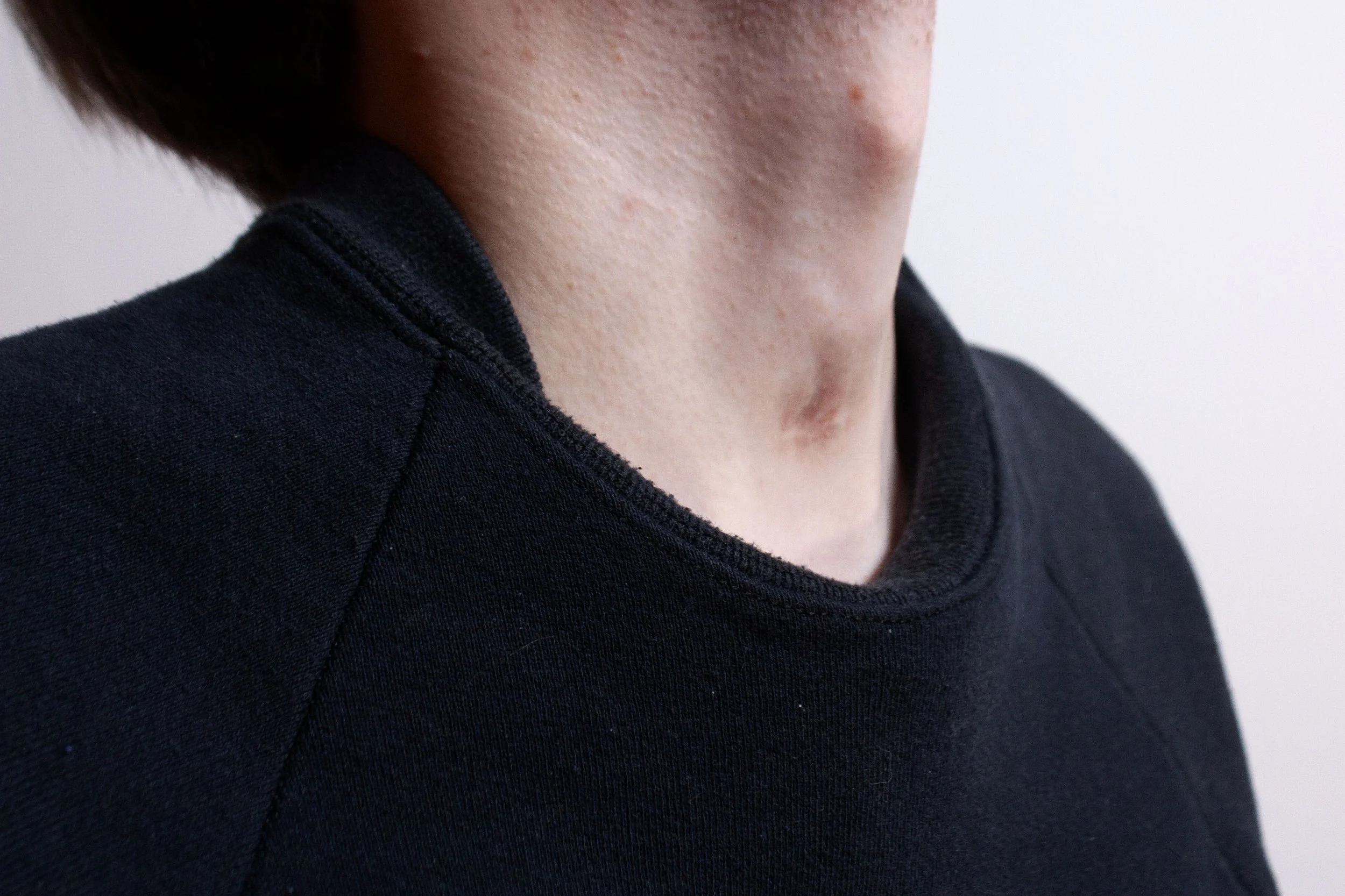
Finn Kurtz has had the scar on their neck for as long as they can remember. Kurtz has nemaline myopathy, a genetic neuromuscular disorder that causes muscle weakness. Within the first few months of their life, they were diagnosed with failure to thrive, now more commonly referred to as growth faltering.
By age 4, Kurtz had been admitted to the pediatric intensive care unit multiple times and undergone several surgeries. At 8 months old, they had a tracheal tube placed to help with breathing. The trach was removed when Kurtz was 20 months old, but the scar remained.
While nemaline myopathy has affected many aspects of Kurtz’s life over the years, they are grateful that they haven’t experienced severe medical issues for about 20 years.
“It’s always something I’ve heard about, but it sort of doesn’t feel like it happened to me,” Kurtz said. “I just have the evidence of it on my body and my history, but I don’t have as much of a personal connection to it just because it happened when I was so young. I definitely still deal with the aftereffects of that.”
Kurtz credits their parents for ensuring they received the best care.
“There are a lot of very difficult moments throughout that entire period where I was very close to death, and obviously it’s just a horrible thing for them to go through, but they remained very strong and advocated for me,” Kurtz said.
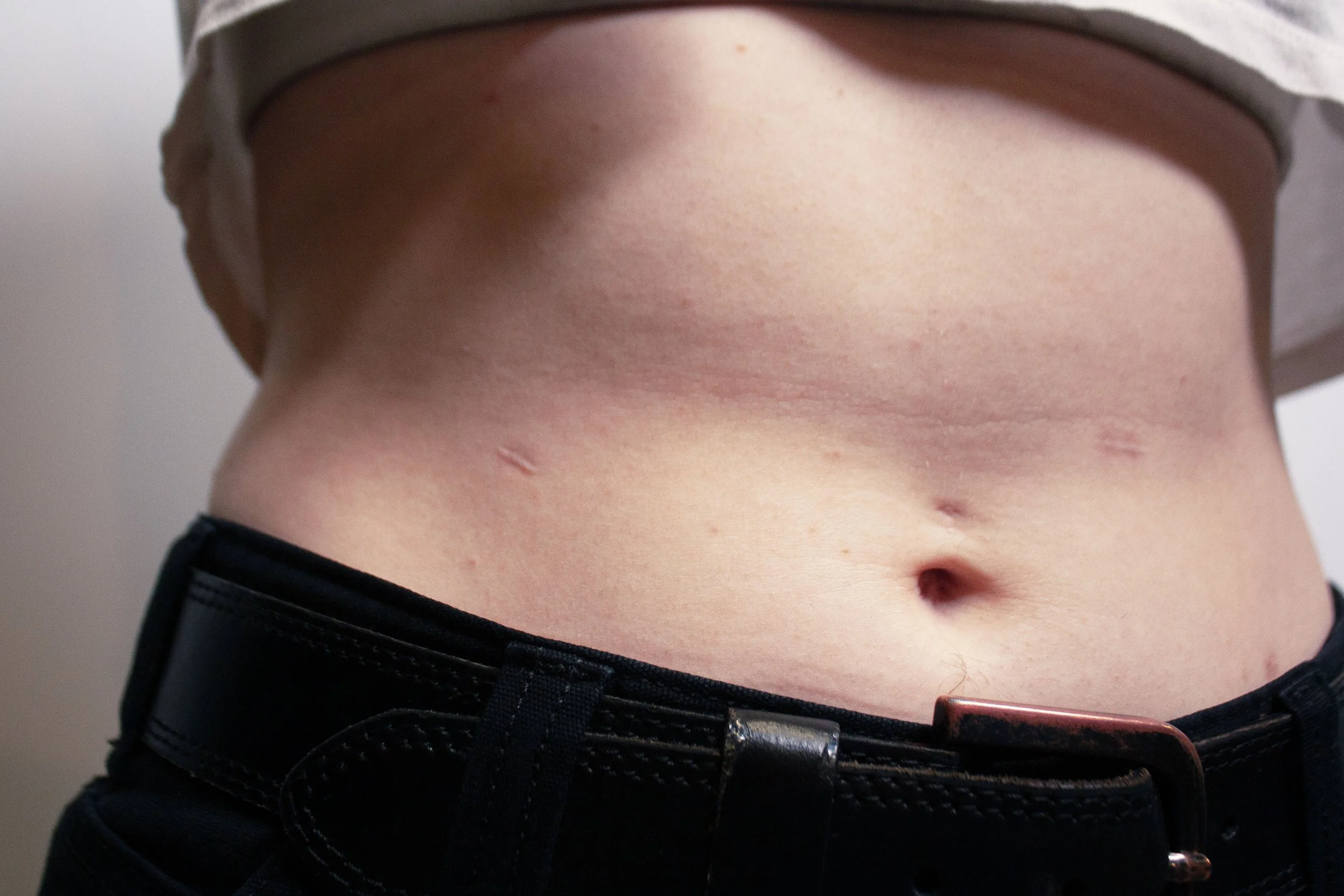
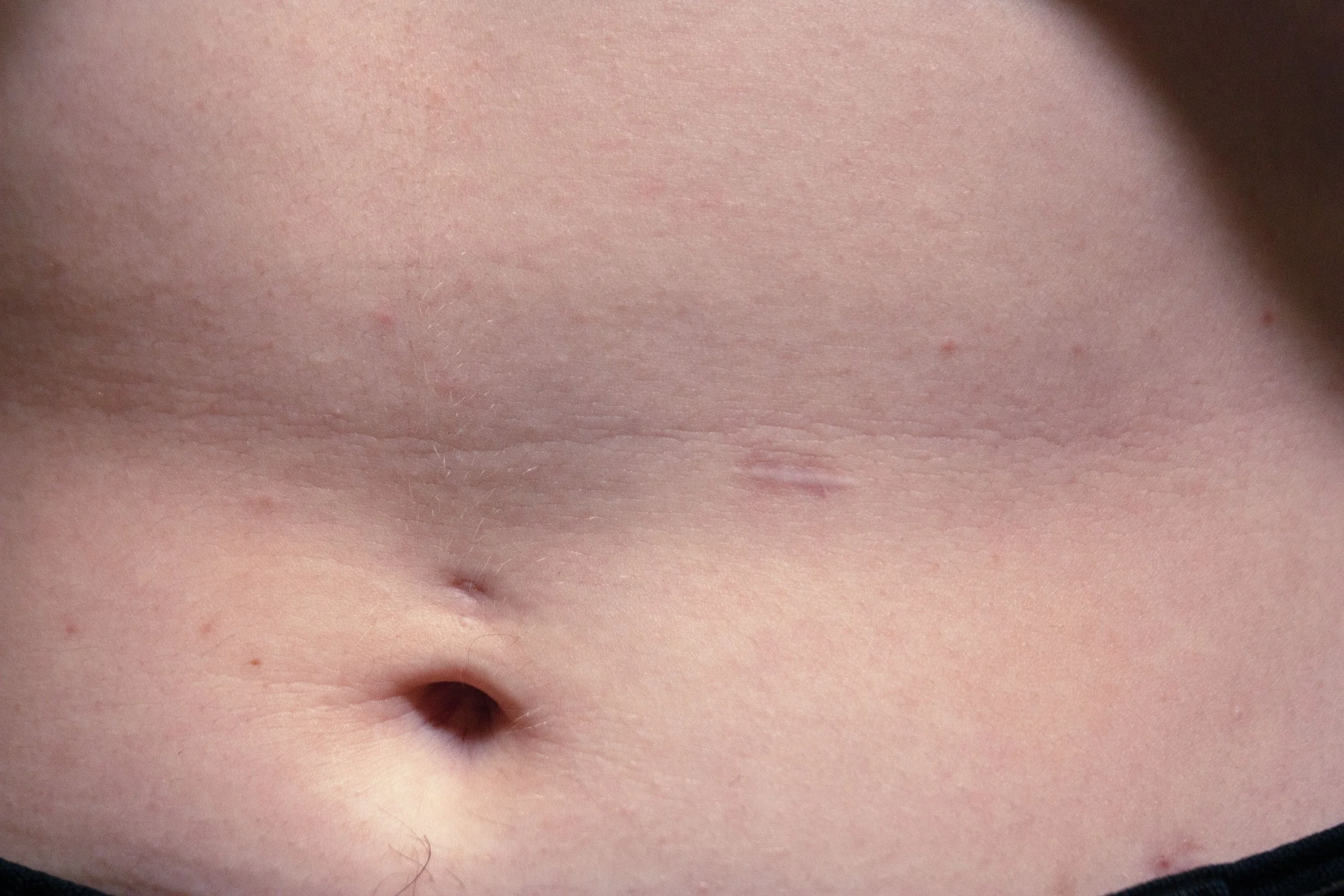
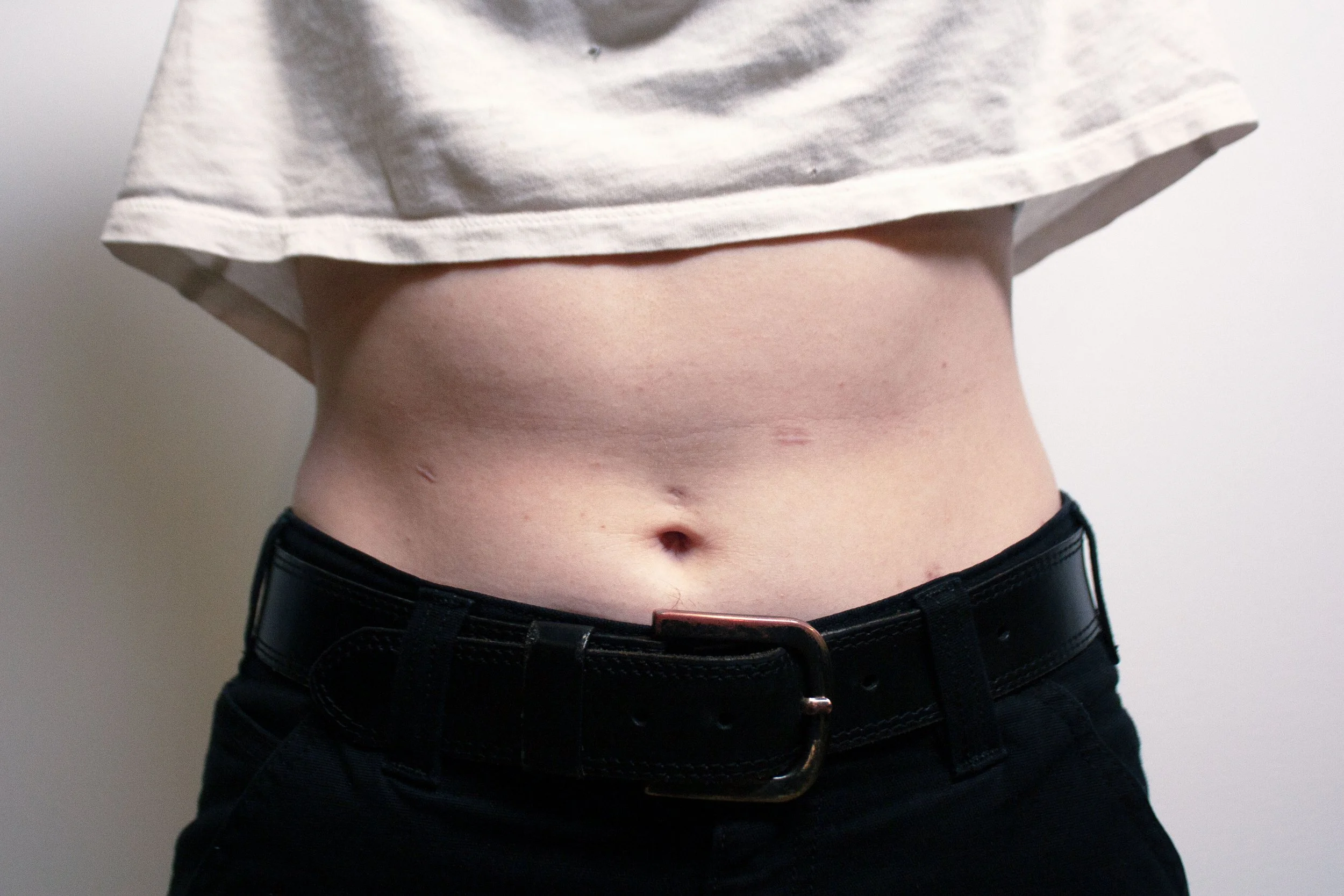
Zetta Prendergast’s scars, on the other hand, are newer to them. In December 2024, Prendergast had laparoscopic surgery. After a history of extremely painful periods, doctors had tried different forms of birth control to manage Prendergast’s symptoms, all to no avail.
Their mother had been diagnosed with endometriosis, a condition in which tissue similar to the uterine lining grows outside the uterus, often causing significant pain, and Prendergast had a hunch that they were struggling with something similar. Still, medical providers had to perform surgery to confirm the diagnosis.
“I’m weirdly proud of (the scars) because I was really worried that they weren’t going to find anything and they weren’t going to be able to tell me why I was in so much pain,” Prendergast said. “It felt like a little bit of visual confirmation that I’m not crazy and that there is actually something wrong.”
Prendergast said the scars also brought an unexpected shift in how they see themselves.
“I haven’t been a particularly confident person, like, ever, but I got a little more comfortable in my own skin with something there,” Prendergast said.
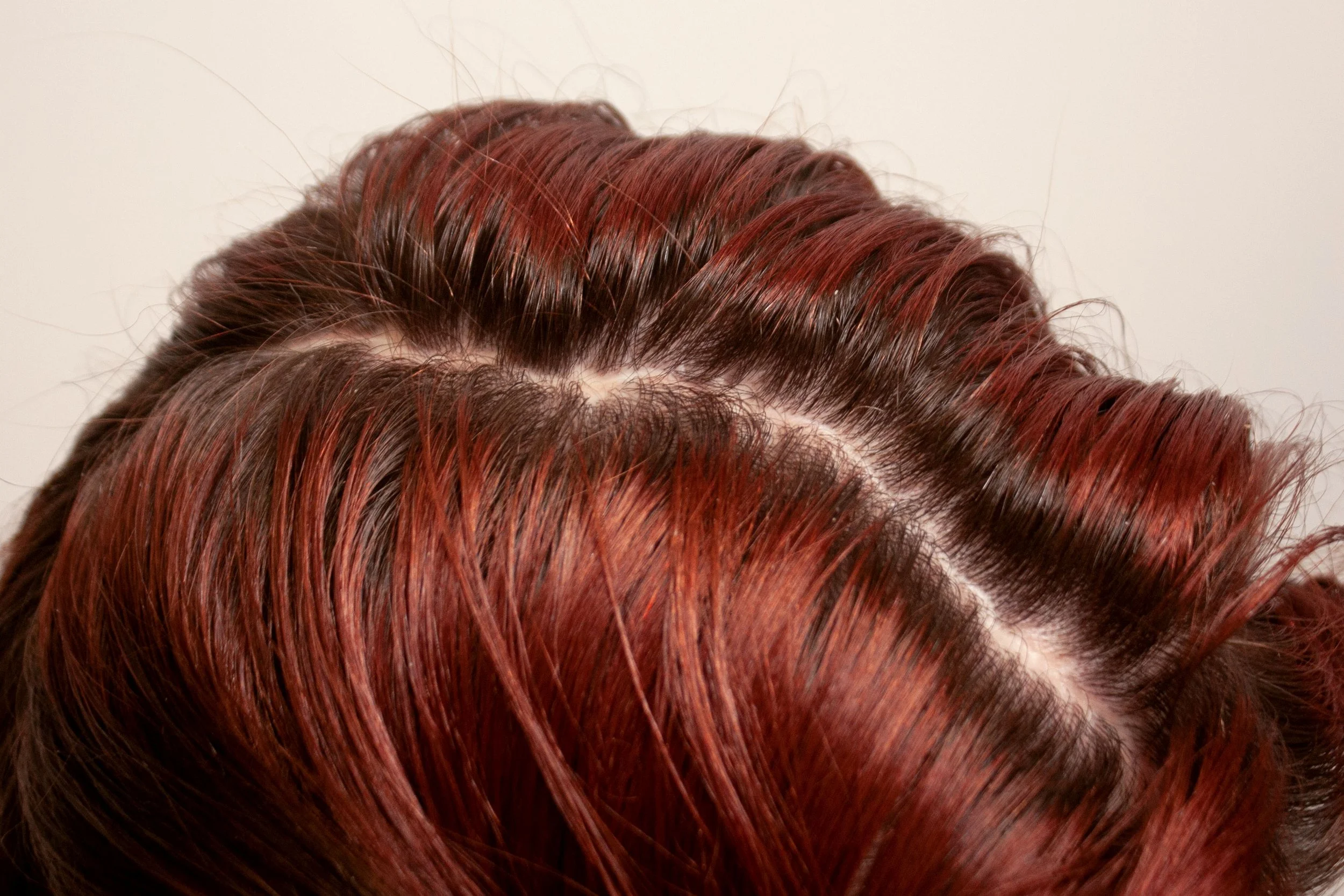
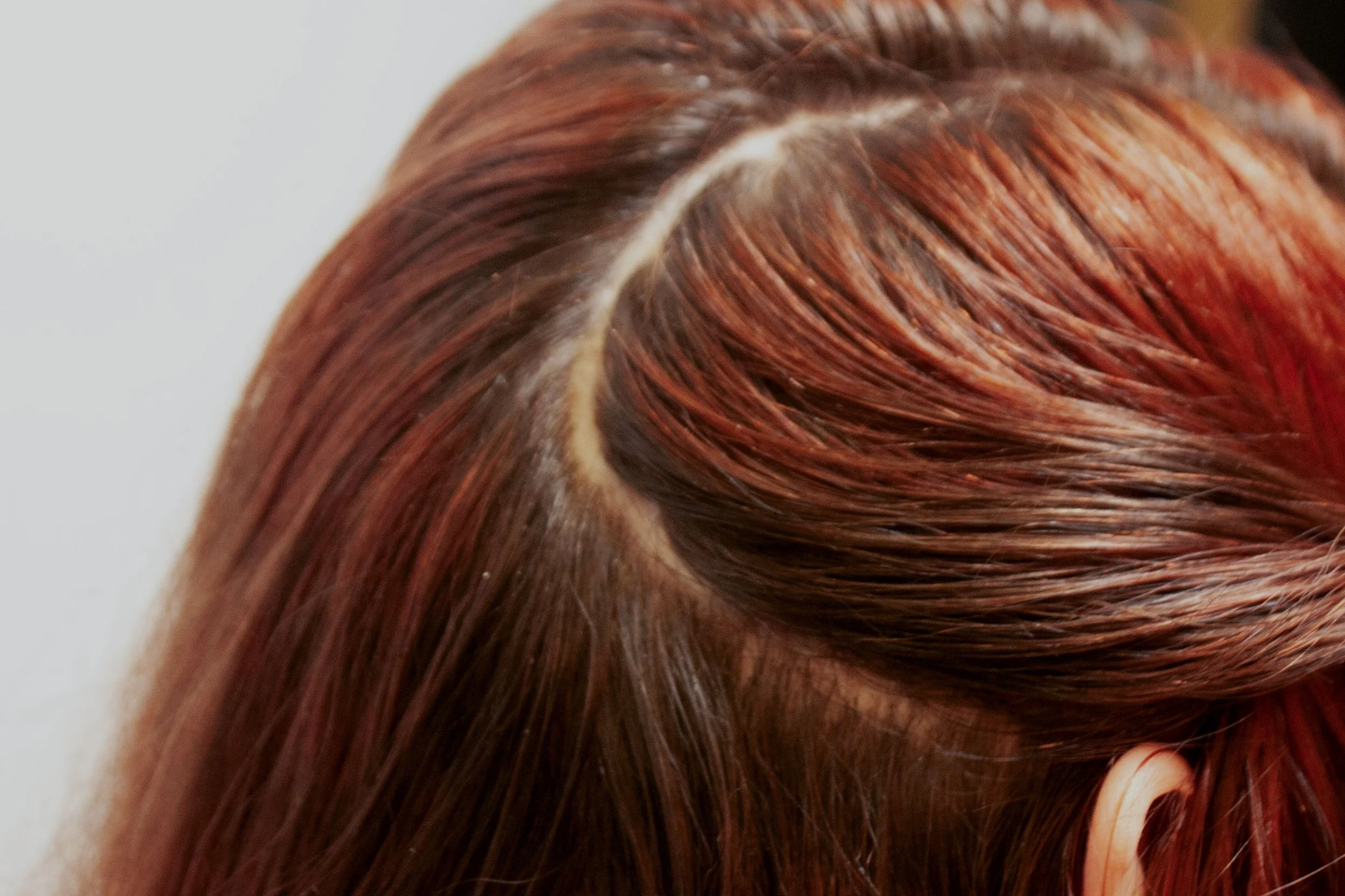
Adeline Roesler-Begalke is an old friend with her scar. In January 2008, she was 3 years old. On a cold winter day, her cousin was being pulled up an icy driveway in a sled by Roesler-Begalke’s mom. Watching from above, Roesler-Begalke decided she wanted to join them. She climbed onto a sled and pushed off down the driveway.
At the bottom, her aunt’s car was parked. Roesler-Begalke slid straight underneath it.
“The jack just caught my head and ripped it open,” Roesler-Begalke said.
She suffered a traumatic brain injury, received 56 staples in her head and underwent two surgeries, which required shaving her hair. At the time, she felt self-conscious and often covered her head with bandanas.
But over time, the bandanas became itchy and uncomfortable, and she reached a breaking point.
“Eventually, I just said, ‘fuck it, whatever. I’m just going to be exposed, and I don’t care,’” she said.
Years later, during her junior year of high school, Roesler-Begalke made an impulsive decision to shave her head. She said her parents were a bit nervous leading up to it, since nobody had seen her scar in years.
“It was pretty liberating,” Roesler-Begalke said. “It was like I was taking back that embarrassment and just owning it.”
Jeffery Hart is no stranger to the lasting effects of a traumatic brain injury. In the summer of 2018, Hart was in Colorado helping a friend complete a 100-mile race by running the final 20 miles alongside him. Knowing he had to make it back to Washington to guide a sunset trail run the next day, he drove and found himself passing his favorite mountain, Mount Timpaganos, in Utah. Despite it being almost midnight, Hart geared up for the 14-mile run.
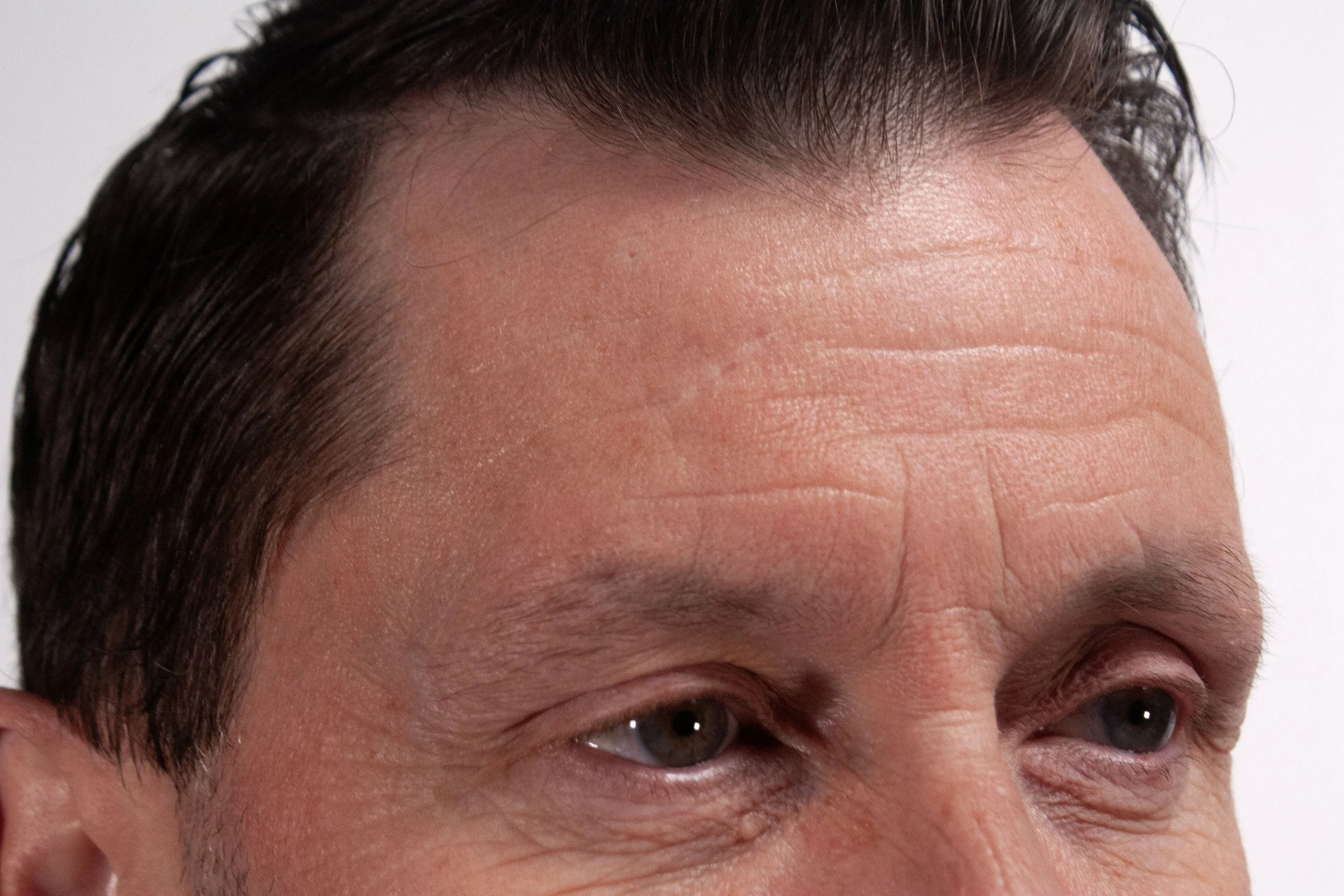
For better visibility, he wore two headlamps, one around his head and the other around his waist. The climb went smoothly. But with just two miles left on the descent, his waist lamp began to dim. His toe caught on something. As he tried to recover, it snagged again. This time, he couldn’t get his hands up in time to brace himself. Falling forward, Hart struck his forehead against a rock.
“It was this weird feeling, because it was so hard, it almost felt like you’re flopping down on a bed onto a pillow,” Hart recalled. As he started to get up, Hart realized, “Oh, it probably wasn’t the rock that felt like the pillow, it was probably my head.”
After that, Hart reached for his head. “I’m like, ‘Oh man, I’m really sweating,’ and I pull my hands away, and it’s blood.”
Having had some wilderness first responder training, Hart started ticking off a list in his head, making sure he knew his own name and where he was, and started checking his dexterity with exercises. “I’m like, ‘Okay, now it's like one o’clock in the morning on a Sunday in Utah in the mountains, you’ve got to get out of here,’” Hart said. He stretched a buff over his head to slow the bleeding and called his wife once he reached cell service. She urged him to go to the emergency room.
After a set of stitches and a two-hour nap, Hart was back on the road for the 14-hour drive to Washington, determined to make it in time to guide the run. But as he climbed the peak later that day, something felt off. He grew dizzy — almost euphoric — and by the summit, he could barely keep his balance. He assumed he just needed rest.
He woke up the next morning vomiting and breaking out into cold sweats. “I thought I was having an aneurysm. I thought I was going to die,” Hart said. He went to the hospital, where doctors told him he had suffered a severe concussion.
“I had balance issues, and basically for the next three weeks, I laid in a dark room,” Hart said. “For the first week or so, I couldn’t even have music or sound because it would just make my head spin.”
Weeks later, the deeper effects began to surface. During a trip to Costco, he ran into a colleague and couldn’t remember her name. He struggled to find words that once came easily. As a professor, the realization shook him.
“That’s when I realized just how profound it was and how much it was impactful to me,” Hart said. “To have the physical (problems) was miserable, it was terrible, but it was nothing compared to that loss of language.”