
Sex shops don’t have to be scary
An inside look at how community is fostered at WinkWink Boutique
Story and photos by Hailey Brown
Published Feb. 13, 2026
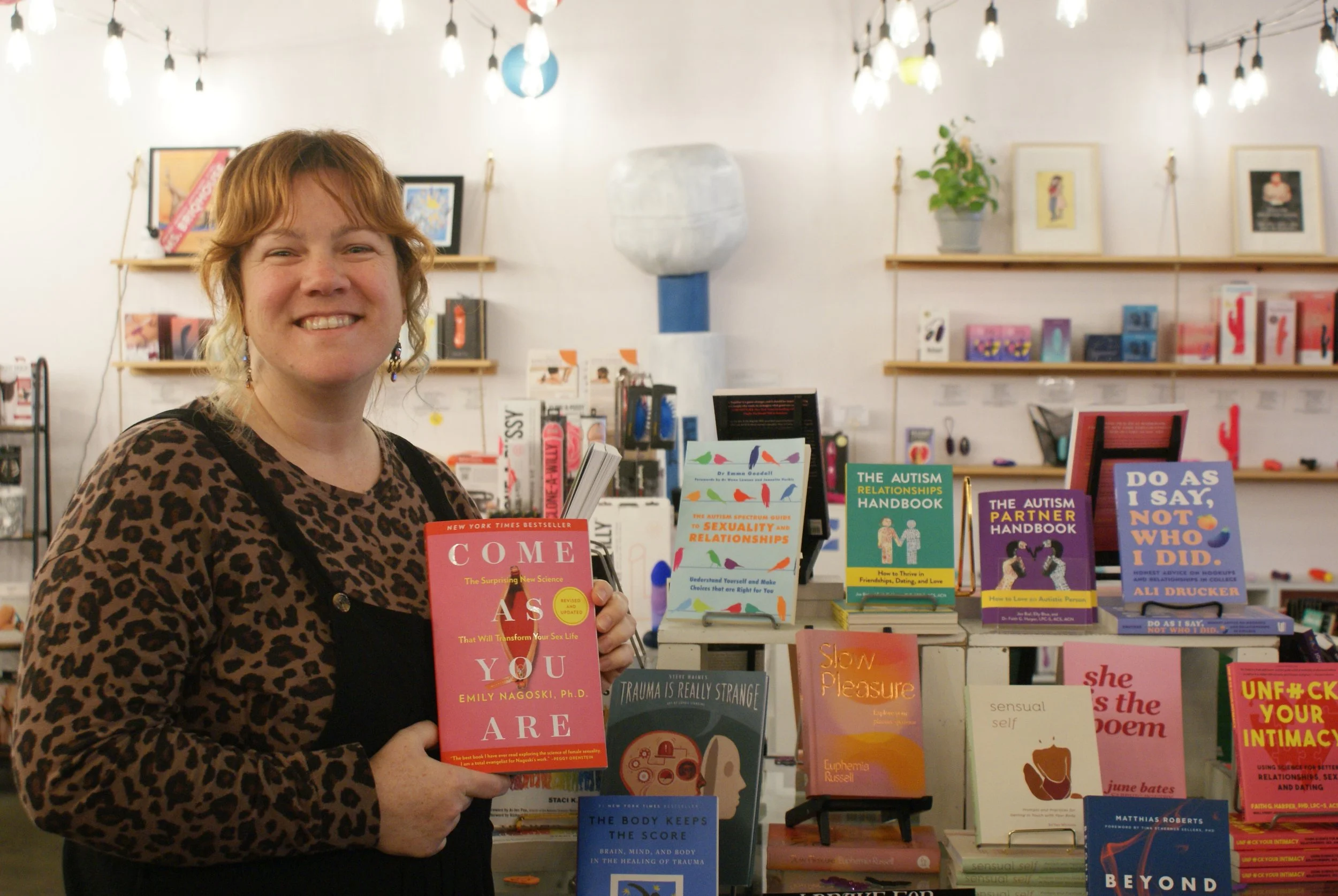
Fanny Geaudrau, WinkWink’s regional operations manager, holding her favorite book “Come As You Are,” by Emily Nagoski, on Oct. 22, 2025, in Bellingham, Wash.
The tiny space was empty when Jenn Mason first saw it. Outside, Commercial Street was alive with the rhythm of downtown Bellingham: chattering students, the rumble of buses and the ring of bike bells. Inside, the bare floors and four white walls encasing her, Mason pictured a place where curiosity and knowledge could coexist.
“When I first opened, I really wanted it to feel like it was a place you could come in to buy sex toys, but also that you could find something beyond that, and that it would become a community space,” Mason said.
This vision for WinkWink Boutique sprang out of a persistent question, one that had followed Mason since her childhood: What would things look like if people were able to talk about sex without fear or shame?
“I didn’t have very much sex education, and in some ways that’s what made me really interested in it,” she said.
The question sits atop centuries of silence. The stigma around sex education and reproductive health is woven through cultural taboos, religious ideals and long histories of educational neglect.
“This stigma has been ingrained in all of our legislation and our education systems from the beginning, through gendered messaging and purity to silence folks or install this shame in them,” said Mary Hunt, an associate professor in public health at Western Washington University, who researches sexual and reproductive health, consent education and sexual assault prevention.
Mason’s own career paths intersect with the silence of these conversations. Before founding WinkWink, Mason began working at the Domestic Violence and Sexual Assault Services of Whatcom County, curating consent and violence prevention workshops for teens, spanning more than a decade of her career as a sex educator and sex coach.
“It makes it hard for us to change conversations about consent, sexual violence and healthy relationships, if we can’t talk openly about what sex should look like,” she said.
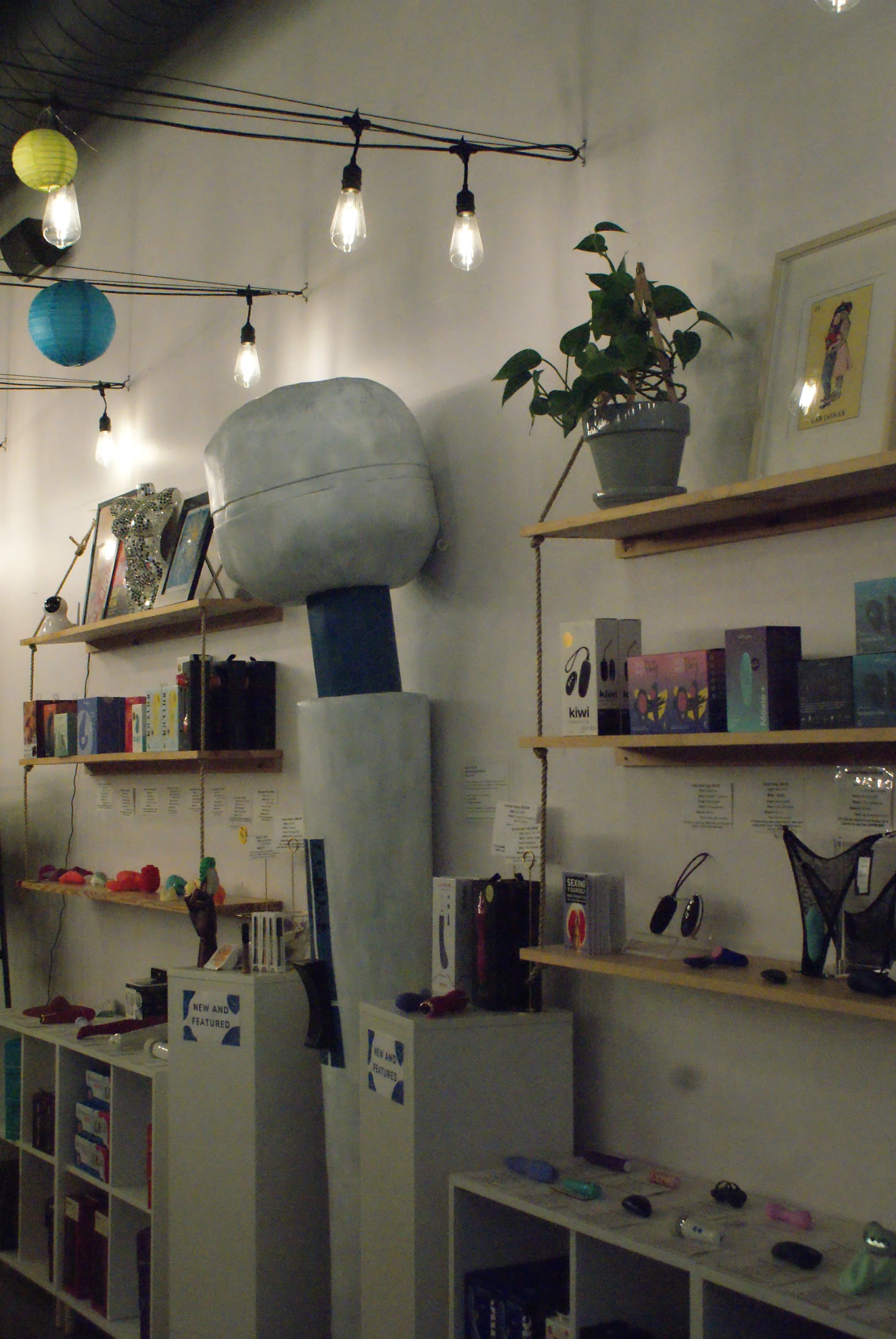
A wall of vibrators, plants and dildos illuminates under the soft light in WinkWink Boutique on Oct. 22, 2025, in Bellingham, Wash.
WinkWink became that space for open conversations in July 2018.
Inside the shop, the soft scent of vanilla and flowers carries throughout. A rack of lingerie hangs in the corner: lace, mesh and satin in shades of burgundy, lavender and midnight blue. Books on mental health, gender, relationships and body acceptance form a small library near the center of the room. Quiet laughter drifts from the front counter, warm and unobtrusive.
Despite the welcoming atmosphere, customers often stepped in with hesitation, shoulders tight and eyes skimming shelves as if searching for permission. For queer customers especially, crossing the threshold itself could feel vulnerable.
“Going into a shop as an openly queer couple can always be scary, even when you know that it is a safe space,” said Kiernan Langley, a customer at WinkWink. “Having a space where everyone is included — all ages, backgrounds and identities — makes everything feel so much safer and comfortable.”
However, something happens after customers take that step. The silence softens. Nervous glances turn into questions. A shy laugh escapes and grows into genuine curiosity. Staff answer in their soft, comforting tone, making it feel more like a conversation than a transaction.
“You’re more afraid of what you heard about sex shops, and not what we are as one,” said Fanny Geaudrau, WinkWink’s regional operations manager, smiling.
She’s watched countless transformations unfold in the boutique.
“I see first-time toy buyers that are 18 and I see first-time toy buyers that are 80,” Geaudrau said. “When people try on their binders for the first time — the gender euphoria and joy they feel — those are all moments that remind us we’re doing the right thing and helping people live a more joyful life.”
Staff at WinkWink undergo sexual health training for their jobs. The courses build their understanding of sexual pleasure and health through the lens of serving all customers at a sex shop.
“We’re not selling vacuum cleaners,” Mason said. “We’re selling things that are deeply personal and connected to one of the most intimate private spaces in people’s lives.”
Robin Green, a fourth-year neuroscience student at Western, remembers his first WinkWink experience quite vividly.
“I first went to WinkWink looking for a binder. I was nervous, so I brought friends,” he said. “I had no idea what to look for, but the staff were informative, nonjudgemental and super friendly. They happily helped me figure out how to fit myself safely and figure out what I wanted.”
Weeks later, after realizing the binder wasn’t right for him, he came back to WinkWink. He paused a step away, unsure whether to speak first or wait to be noticed at the checkout counter, binder tucked under his arm. The employee recognized Green and sparked up a conversation.
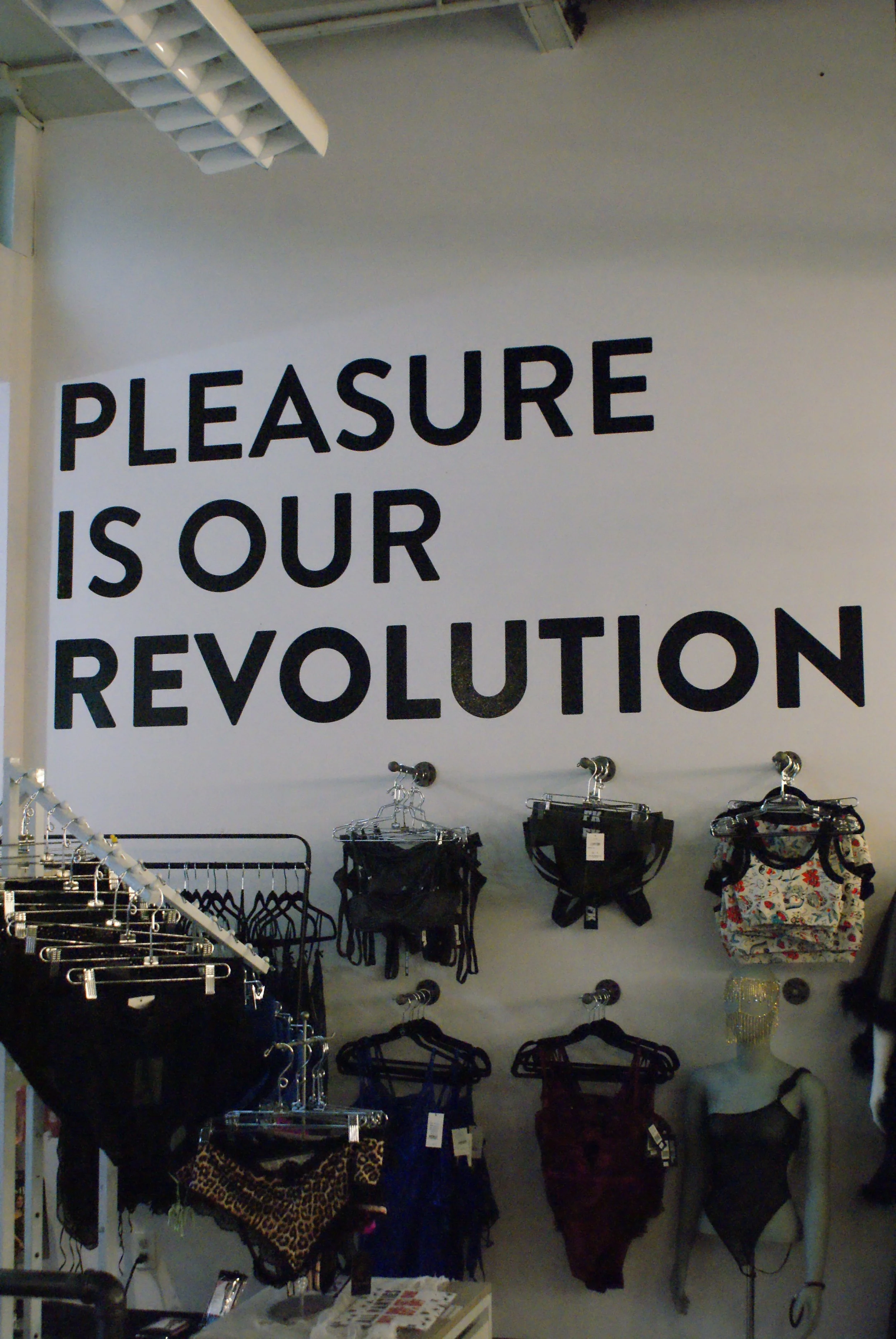
Lingerie section in all sizes and colors outlined by WinkWink’s motto, “Pleasure is our revolution,” on Oct. 22, 2025, in Bellingham, Wash.
“I was touched by the cashier wishing that I find what I'm looking for,” he said softly. “It meant more than they probably realized.”
Miles North, who visits WinkWink with their partner Langley often, feels that same care.
“As a queer-trans couple, representation is huge,” North said. “Kiernan is asexual, which also presents an extra layer of misunderstanding that we experience. The fact that (WinkWink has) so much in terms of toys, protection and education related to us makes us feel much closer to the community.”
These quiet, sincere and deeply human moments are the threads that bind WinkWink together as a community in the Bellingham queer scene.
As the shop continues to grow, so do the conversations surrounding it. In 2022, parents and young adults began reaching out for resources and education. Questions like: “How do I talk to my kid about puberty?” or “How can they build trust to come to me as a safe space?”
From that came the Uncringe Academy, a WinkWink-run education program that teaches 9- to 17-year-olds about gender, relationships, consent, sex and puberty.
“We know that so many people have subpar sex education, they come into adulthood with shame or inaccuracies in what they know about sex,” Mason said. “The education piece is important for people, not just what we sell on our shelves.”
Hunt sees this education as transformative. “Starting to talk and treat people like they are autonomous and capable at a young age engrains that they’re able to make these decisions about their bodies and personal intimate lives,” she said.
As evening falls through WinkWink’s windows, the symbols of hearts and lightning bolts painted across the glass glow softly. On their door, the words “Pleasure is our revolution” catch the last golden light of the day.