Drifting Near the Edge
Rally drivers push their limits and speedometers
Story by Ben Magnus
Published Sept. 24, 2026
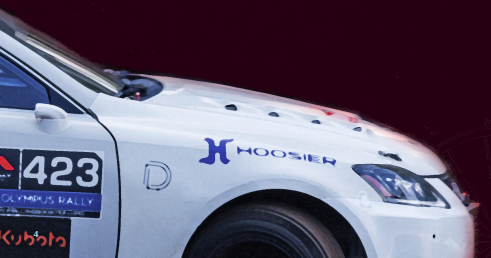
A gutted-out race car is barreling down a loose, dusty gravel road at 80 mph. In a split second, the car is completely sideways, drifting around a hairpin turn. Fans are screaming, cowbells are ringing, camera flashes are firing off in the driver’s peripheral vision. The steering wheel is fighting their hands and gravel is shooting out from the back tires in every direction.
All they’re focused on is the 1 1/2-inch gravel rocks making up the trail ahead and their co-driver’s voice over the headphones: “Right three,” “handbrake.”
This is rally driving, a sport in which split-second decisions can be the difference between getting carted into an ambulance and uncontrollably smiling while standing on the first-place podium covered in champagne and confetti.
Rally racing, also known as stage rally, is a sport that has been around for over a century, evolving from the Monte Carlo Rally in 1911 into modern races like the Olympus Rally. The cars raced back then were large and heavy, lacking modern safety features.
Winners weren’t selected based on time but rather by a subjective panel that evaluated the cars’ elegance and condition upon arrival. Cars traveled at speeds near 15 mph.
Today, rally is almost unrecognizable compared to where it started, although the rules are similar.
Here’s the rundown from Scott McKee, head of marketing communications for the American Rally Association: Rally driving is a timed race, it’s not wheel-to-wheel like NASCAR or Formula One (F1); drivers race one at a time and compete for the best cumulative time across all stages of the race.
A national event will take place over two to three days and can have up to 15 stages across 200-plus miles on mostly private land. In between stages, drivers must transit from one stage to another.
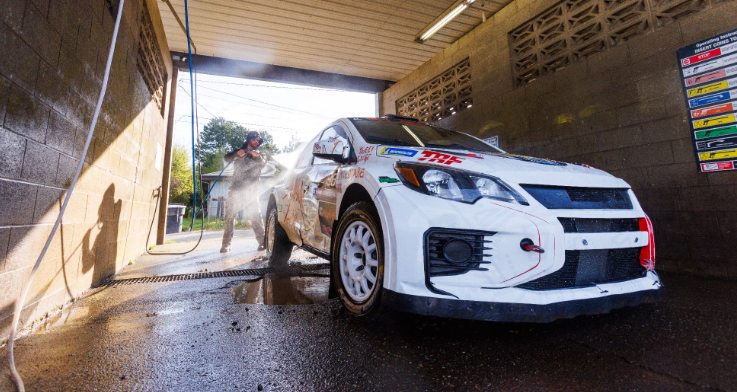
In America, through the American Rally Association (ARA), racers drive top-of-the-line, road-legal, production-based cars that are highly specialized, turbocharged and durable — capable of reaching speeds of over 120 mph.
“You do not have to have a $200,000 rally car. You can buy a logbook-ready car for $20,000 and go out and have just as much fun as the guys who are in the $200,000 car,” said Drew Coley, a rally driver and business owner from Kalama, Washington.
For $26,000 all-in, one can be race-ready. That includes the price of the car, race fees and miscellaneous expenses. Surprisingly, this is affordable in the racing world. Compared to NASCAR, where annual costs reach millions of dollars, or F1, where costs are in the hundreds of millions, rally isn’t all that expensive. Rally’s lower cost of entry proves one does not need to be a millionaire to be a race car driver.
You just have to be kind of crazy.
“I mean, just as a kid, right, like you see this and you’re just fascinated with it,” Coley said. “It never crossed my mind that I’d actually be driving a rally car.”
Coley, a lifelong adrenaline junkie, first stepped into a rally car at DirtFish Rally School in North Bend, Washington, in 2018. Throughout the next five years, he went to a total of six rally days at DirtFish before competing in his first race in 2023.
DirtFish wasn’t Coley's first time behind the wheel of a fun rig. He grew up riding dirt bikes, although he had to hide it from his parents and was always looking for something to jump, whether it be on the bike or a snowboard.
“I was always intrigued with crazy,” Coley said. “And with age, you get a cage.”
So after getting a bit older, he made the change from dirtbikes to side-by-side vehicles.
Once he picked up rally driving, it took Coley a couple of races to get used to the swing of things, finishing mid-pack in his first two races. By the third, he finished in third place, an impressive feat for someone who's only been behind the wheel of a rally car a handful of times.
Fast forward three years to the Olympus Rally 2026 in Shelton, Washington, and Coley got first place in his division and sixth nationally.
Kathryn Hansen, a 70-year-old co-driver, shares a similar entrance into the sport.
Hansen grew up as an only child with a father who raced in motorsports, so she spent countless hours in the garage with him doing mechanic work. She was born into the motorsports world, racing dirtbikes and cars starting in the 1970’s. Hansen refers to herself as her dad's only son.
One day, while sitting on the banks at Pacific Raceways in Kent during a road race, a friend of a friend approached Hansen and asked if she was interested in co-driving rally.
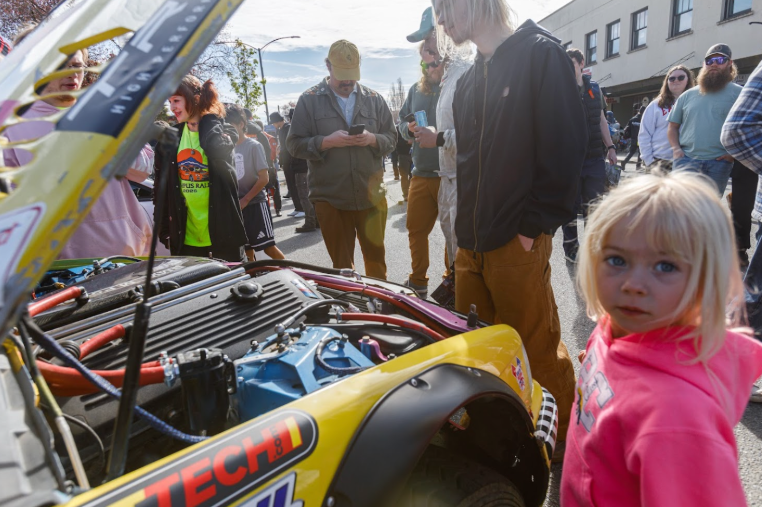
“I really didn't have to think very long to say yes,” Hansen said, looking back on the moment.
Her debut race was in a 1973 Colt, which was a legendary car in the Northwest rally scene at the time because it used to belong to renowned rallyist Ray Dimicchio.
Hansen recently placed first nationally in her division at the 2026 Olympus Rally. A race that saw multiple accidents and even a rollover from one of the top competitors, Travis Pistrana.
Luckily, there were no deaths, but one doesn’t have to look far to see death in the rally world. The ARA had its deadliest season in 2023, with three drivers losing their lives while competing.
“It’s a reality check, and it makes you think about the dangers and risks that you are taking willingly,” said Madelyn Tabor, a 23-year-old, third-generation rally driver from Oregon.
That same year, F1 had zero deaths, according to Formula 1 Wiki. The last death from an F1 race was in 2014. Twelve years after its second most recent death in 2002. NASCAR had zero deaths as well, with its most recent being in 2009.
This isn’t because rally drivers aren’t as good at racing; many fans might argue that rally drivers are, in fact, better drivers.
“Where we race is pretty remote, and it's very unstructured in that it isn't an oval track that's surrounded by fencing and concrete walls and grandstands,” said McKee. “Rally is very much more open.”
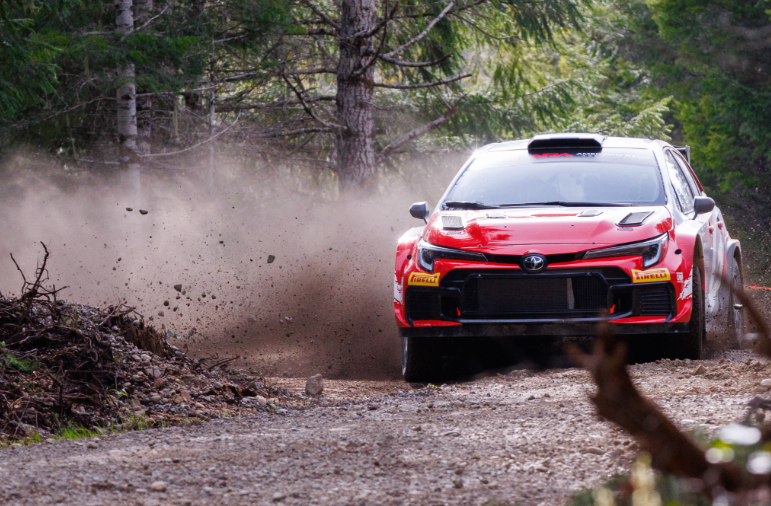
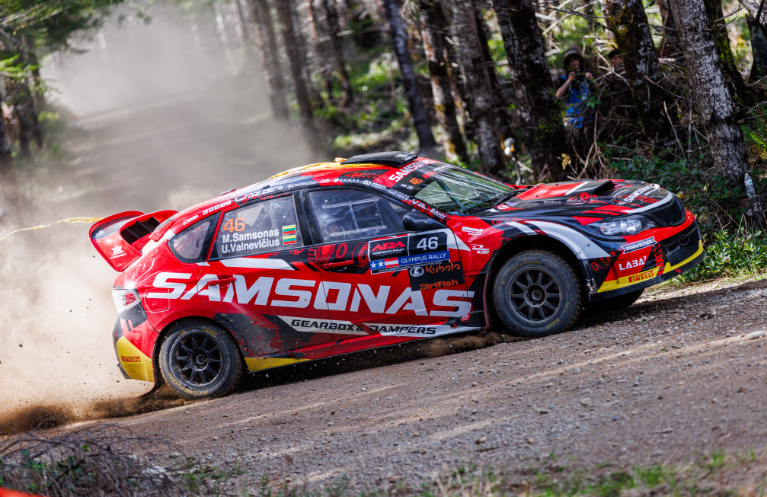
“We’re out in the woods. There’s trees, there’s cliffs, there’s rocks. There’s nothing between the car and the scenery,” Scott said. “If something goes wrong, you aren't 30 seconds away from a trauma center. You're miles deep in a forest. That isolation is part of the danger and the appeal.”
That precedent applies to spectators as well.
The spectators sit in the forest with dead silence. The only noise is the wind in the trees and background conversations, until what sounds like a humming airplane can be heard by everyone, silencing the crowd. The audience is listening to the same noise with anticipation. Some fans have been waiting for three hours before they get to see the first car race by.
The humming grows louder. By the time the car passes, the noise turns into a scream so deafening it induces winces and squints. It’s hard to keep attention on the car flying by.
Within a span of 30 seconds, the thrill is gone and it’s back to anticipation.
Meanwhile, inside the car, the drivers are in a flow state.
“It’s a feeling you can’t really get anywhere else. When everything is clicking, it’s just — it’s the best feeling.” Tabor said. “The time you’re thinking about crashing ... that’s just taking away from the right now, and you need to be in the moment.”
Flying down an unpaved road doesn’t allow much time for the mind to wander, with danger being the last thing on drivers’ minds.
In racing, there are endless factors to be thinking about such as speed, position, and danger. Come race time, drivers can’t afford to be thinking about any of that.
“I just have to focus on the right now because all that really matters is what I can control, which is literally right in front of me and in my hands on the steering wheel,” Tabor said.
The flow state, fueled largely by adrenaline, is one aspect of racing that draws in drivers. It’s similar to why athletes fall in love with sports like rock climbing and skydiving. Being so close to danger is what allows the brain to open up while shutting everything else out according to Steven Kolter.
Hansen describes rally as her happy place. During an event, her mental state is elevated.
“It’s the thrill of victory. It’s the adrenaline. It’s doing my job well. It’s witnessing my driver — my partner — doing his job well. The team camaraderie. There’s just so much that goes into the joy of rally.”
To someone on the outside, it can look like a dance with death across numerous stages of varying terrain, in different locations around the world, against different competitors in top-of-the-line cars. But it’s also a calculated art. An art that makes drivers willing to risk it all.