
From the Victorian Age to the Contemporary Pacific Northwest, the fading language of flowers in the art of floral arrangement
Story by Morgan Sharp
Published April 7, 2026
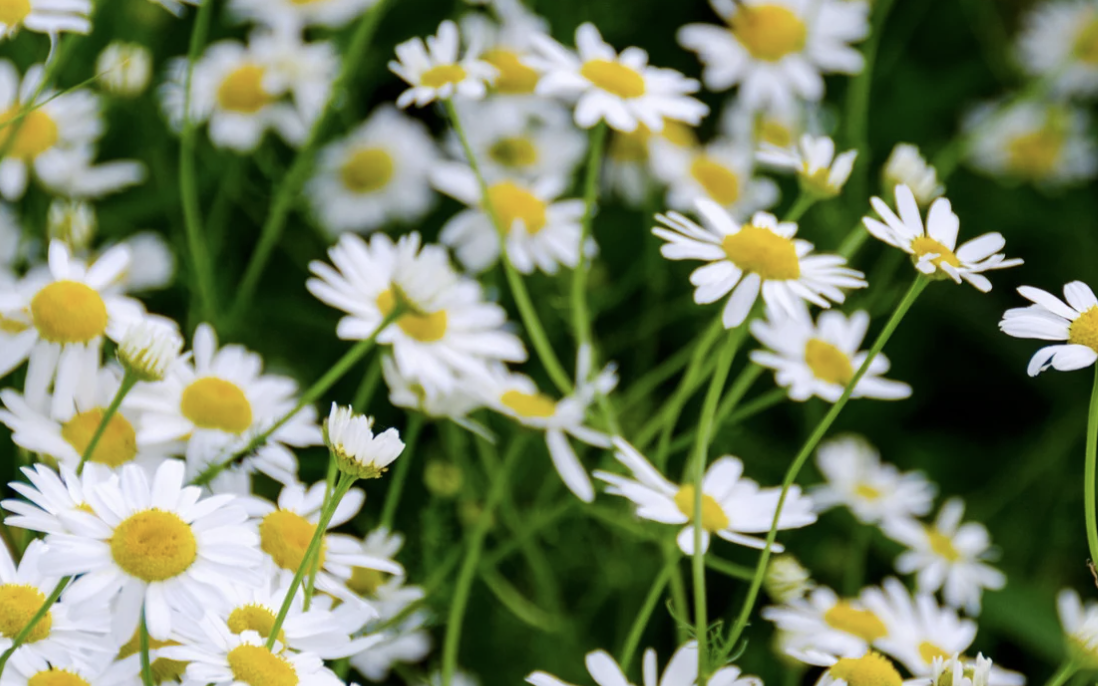
Courtesy of Alexander Zvir.
Imagine this: You receive a bouquet from an unknown admirer in the Victorian era. Luscious blooms of acacia, clover, fern, and ox-eye create a yellow, green and white composition before you.
What an odd arrangement, you think to yourself.
With the yellow acacia creating the feeling of a secret love partnered with the ox-eye daisy of patience, is this a secret admirer, waiting patiently to be yours, as portrayed by the clover and fern? This was how the language of flowers operated back in the 1800s. But how does it work now?
With over five acres of land, Amy Lentz and her husband, Steven, have dedicated their lives to the practice of floral arrangement and interior design through their newly opened downtown shop, Mod & Liv. The shop walls are bathed in a rich green with the warm, orange glow of various lamps illuminating a calm, inviting and creative environment.
Bouquets that are ready to be sent to their new homes wait in a lit-up display case, showcasing Lentz’s breathtaking work. Within this case, subdued whites, creams and a touch of purple complete her most recent bouquet: an ode to a 50th anniversary with the theme of an English garden.
“I’m always being conscious of what I’m pairing together,” Lentz said, describing a bouquet full of roses, thistle, hydrangeas and other white “English” blooms.
Lentz has been searching for a physical dictionary of the language of flowers. Bringing back these poetic traditions of intentionally using flowers could change the way floral arrangements are made.
The Language of Flowers
Floriography, or the language of flowers, originated in the Turkish Ottoman Empire with the tradition of selam. Selam is the ritual of gifting flowers to send specific messages, interpreted through rhymes and associations.
A similar practice appears during the Victorian era in Europe, brought over by Mary Wortley Montagu from Turkey in 1718. One of the first floral dictionaries was published nearly a century later, in 1819, by Louis Cortambert under the pen name Madame Charlotte de la Tour.
However, it was Kate Greenaway’s 1884 publication of The Language of Flowers that became widely known across the continent. Greenaway and fellow author Elizabeth Wirt connected the symbology of flowers to popular media such as theater, poetry and other books of the time.
Emily Cadger, an art history professor at Western Washington University, said this 19th-century Victorian age of the language of flowers was “constructed heavily from Christian, Greco-Roman, and Romantic influences.”
Cadger originally found her interest in the language of flowers through the children’s book author Walter Crane. “The language of flowers was heavily used throughout Crane’s work to make political and moral meanings,” she said, emphasizing how Crane was a socialist at the time. Cadger said that Crane’s implementation of flowers was a way to convey the debate between high art, low art and craft.
The academic use of the language of flowers remains a critical tool, especially in art history. As Cadger stated, the “language of flowers is very important as a connecting thread across temporal periods and material objects,” allowing academics and historians alike to connect culture, socioeconomic and political climates to the time artwork was made.
The use of the language of flowers in an art history context can be seen when examining the works of Rachel Ruysch (1664-1750) and her still-life floral arrangements. Antien Knaap, the curator of the Art of Europe at the Museum of Fine Arts, Boston, stated that the language of flowers was extremely pertinent to Ruysch’s paintings.
“Ruysch depicted flowers with great precision and accuracy so that botanists today can still identify all the species she depicted,” Knaap said. “She introduced newly imported flowers and insects in the genre of still life painting that originated in the early 1600s, about 80 years before she started her career. Her artistic excellence and the astonishing variety of her floral repertoire set her apart from her peers.”
Although renditions and interpretations of the language of flowers can still be found, their dictionary meanings have faded in the 21st century. The dictionary that was once a cultural staple in the Victorian age has turned into a vintage aesthetic prop found in shops around Bellingham, like Penny Lane Antique Mall or Worn Again.
“I think (the) trend has dropped off significantly since the 19th century, but it is still around today,” Cadger said. Similarly, florist Lentz from Mod & Liv said she doesn’t think the meanings persist, but continued to say the flowers we see still hold significance. “I think red roses always mean romantic love. Beyond that, I don’t think those (Victorian) meanings have really stuck around.”
Despite this move away from each flower having a deeper, more significant message attached to it, that hasn’t stopped a new avenue of floral interpretation from emerging. Rather than a specific sentiment, the color of a flower has become more important, relying more on aesthetic value than anything else when it comes to floral arrangements.
Lentz said she chooses what flowers to use for her arrangements based on the occasion, saying that there isn’t an “exact meaning, but when someone orders a sympathy bouquet, we’re usually using white, muted colors — nothing super bright.”
Subconsciously, she is always working with the color wheel and using it to create visually appealing compositions and arrangements. “Maybe it’s because I’m in the design industry,” Lentz said, “but I think I do a lot of color pairing.”
Although the focus has shifted from rigid definitions to aesthetics and color, modern florists still consider the emotional power a bouquet can hold. “Flowers can communicate a lot of things that words can’t,” Lentz said, “You don’t have to come up with a complicated card message. You just have to say ‘I’m thinking about you.’ That’s it. The flowers will say what you are trying to get across.”