
“And so what if I am 'no sabo?’”
Understanding how language assimilation can impact identity
Story by Julieta Larios
Published April 7, 2026
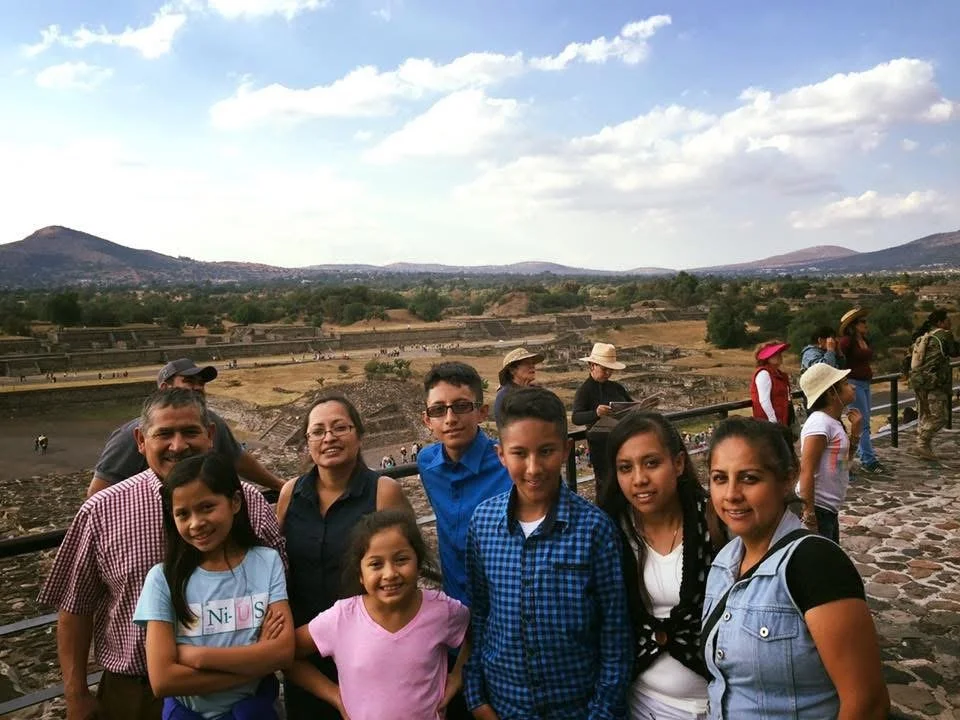
Julieta Larios (far left in the blue) with her family at the Teotihuacan ruins in Mexico.
“What are you?” is a question I have heard so often, and it's one I never get tired of answering. I am filled with pride as I respond: “I am Mexican, Peruvian and Dominican.” However, the satisfaction is fleeting, quickly replaced with a sense of dread.
I know what they are going to ask next: “Do you speak Spanish?” Every single time, I am left dumbfounded. What do I even say? I can give them the short answer, the only one I think they will understand, or my long-winded, rehearsed explanation.
“Well, I can understand Spanish fluently, I can read it, and write a bit, but when it comes to speaking it …” I trail off. I feel so ashamed. I make a mental note to practice my Spanish later; maybe I will finally call my grandparents.
I feel so Hispanic. I grew up eating tamales on Christmas, listening to Spanish radio in the car before school, watching “La Que No Podía Amar,” a telenovela with my mom and sisters in the living room, and rooting for “La U,” my dad's favorite Peruvian soccer team.
Being Latino is all I know, and what has always made me stand out living in predominantly white places, though I feel admitting I can’t speak Spanish makes people view me differently. Do they believe me, or do they think I am just trying to make myself seem more cultured?
For so long, I told myself I was not bilingual, even though I understood my mom’s Spanish when she yelled at me to clean my room, and my dad's directions when he taught me how to drive. I still felt that word did not apply to me because responding in English was what I knew best. My parents tried to teach me Spanish, but speaking it never stuck, and I didn’t understand why.
I don’t exactly remember the first time I was called a “no sabo,” but I do know it didn't always make me feel so “other.” It started as a cheeky thing my mom or my fluent older siblings said to me when I tried to roll my Rs, resulting in me blowing a raspberry instead. I found it funny.
The term shifted for me when I saw it pop up online, being referenced in skits of creators making fun of non-fluent Hispanic kids or video essays discussing the term’s impact. What initially amused me quickly morphed into confusion, introspection and shame.
I took a linguistics class at Western Washington University that forced me to indirectly break down my language proficiency and how it shaped me as a person. I couldn’t help but feel that when the professor was teaching language assimilation to our class of 30, she was speaking directly to me.
I learned that not being able to speak my heritage language fluently is not entirely my fault; instead, it is the result of feeling forced to adapt to the dominant culture and language that my family immigrated into — the one I was raised in.
I skipped a class to see Spanish Linguistics Professor R. Mata. After walking around Bond Hall's fourth floor, I finally found his office. When he opened the door, I was quick to introduce myself as Julieta: “JOO-lee-et-ta.” Simultaneously hearing “hoo-lee-EH-tah” in Mata’s warm greeting, it caught me by surprise. I’m not used to hearing the correct pronunciation unprompted.
I started going by the former pronunciation of my name when I entered kindergarten — not out of choice. I was too shy to correct my teacher, and it stuck. It's a weird feeling when even your name can be considered the “Spanish version.”
I find it difficult to speak about my language identity, fearing ridicule, especially from people like Mata, who are Hispanic and speak Spanish fluently. But as we began our conversation, I realized that my experience is much more common than I thought.
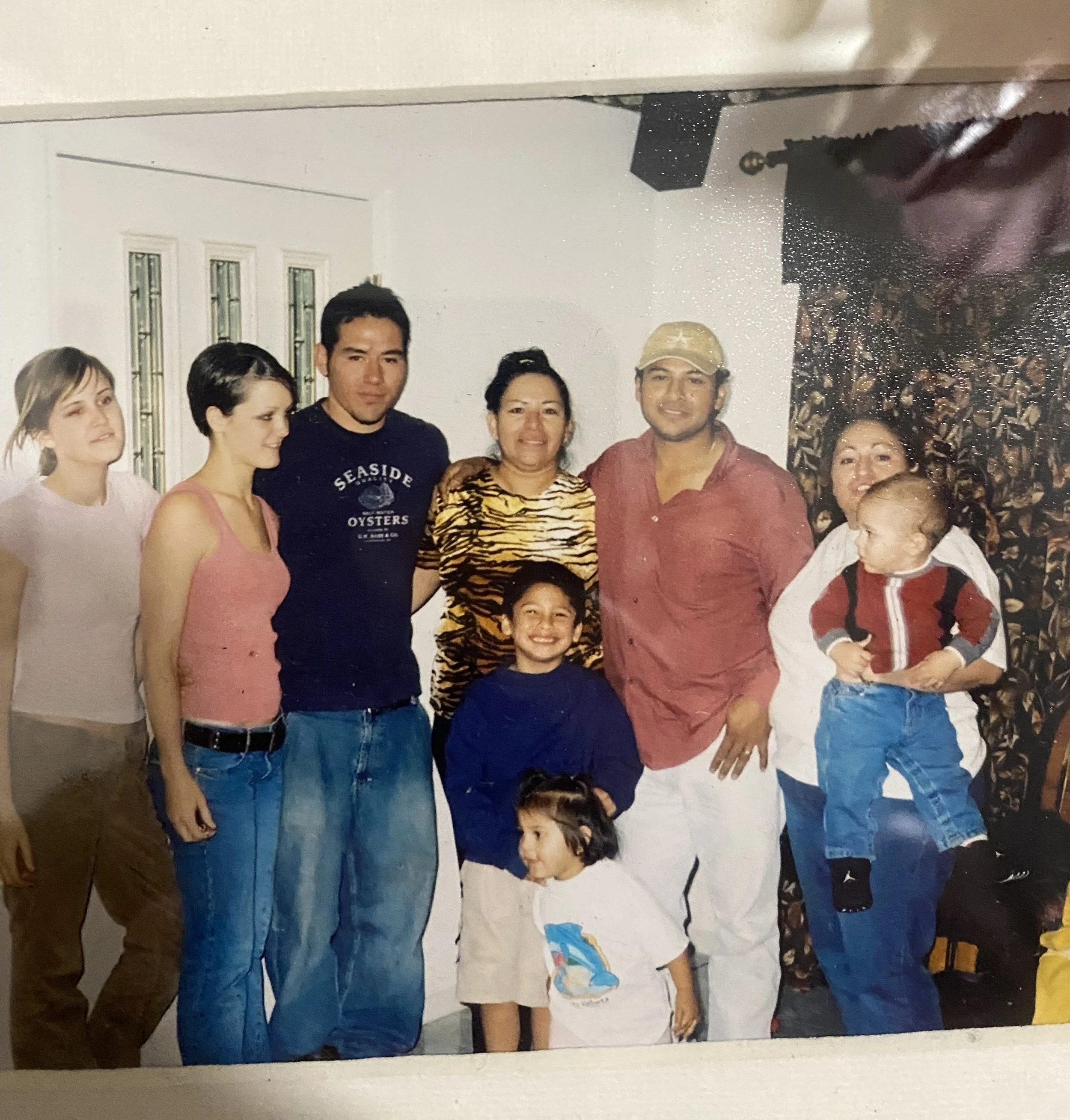
Jordan Echevarria, the baby in red, with his family.
“Some people might identify very strongly with a family language as it’s very much tied to their identity. But this family language may not necessarily be a language that they're very fluent in,” Mata said. “So they love hearing it, they love the sound of it, they love the music of it. They love being surrounded by it. It's a very strong part of their identity, but then they might feel, ‘I'm not fluent,’ so the productive aspect of that language is missing.”
The impact of this term has been felt by many. Jordan Echevarria, for example, sees “no sabo” and his lack of Spanish proficiency as a barrier preventing him from connecting with his Mexican heritage.
“I have a definite cultural disconnect from my heritage, and it's hard trying to reconnect to that, because I've lived my whole life not being very close to it,” Echevarria said. “Now that it's important to me as an adult, and I understand what it means to me — it's rough, it's kind of sad.”
I couldn’t help but empathize with Echevarria’s confusion about his identity. He added that being “no sabo” introduces an element of imposter syndrome, making it feel as if being unable to communicate in Spanish fluently equates to not being Hispanic at all.
According to Mata, productivity in a language means being able to express yourself through speaking and writing. Someone like me, who can understand Spanish but lacks the active ability to produce it, would be considered a receptive bilingual. This range of bilingualism can result from many factors. Linguists, such as Mata, examine both external and internal factors to explain this phenomenon.
External factors include school, media, and family dynamics, with internal factors largely determined by attitude. Family dynamics especially influence an individual's mindset. If guardians recognize the importance of passing down their heritage language and instill that value in their children, it can shape both the level of bilingualism and the likelihood that the language continues into the next generation.
Mata referenced a phenomenon from the 1950s that helped shape these attitudes.
“What a lot of parents (didn’t) understand is that kids actually have the capacity to have both languages equally,” Mata said. “Many of these parents who came from other countries think that the two languages are competing in the brain; they're not.”
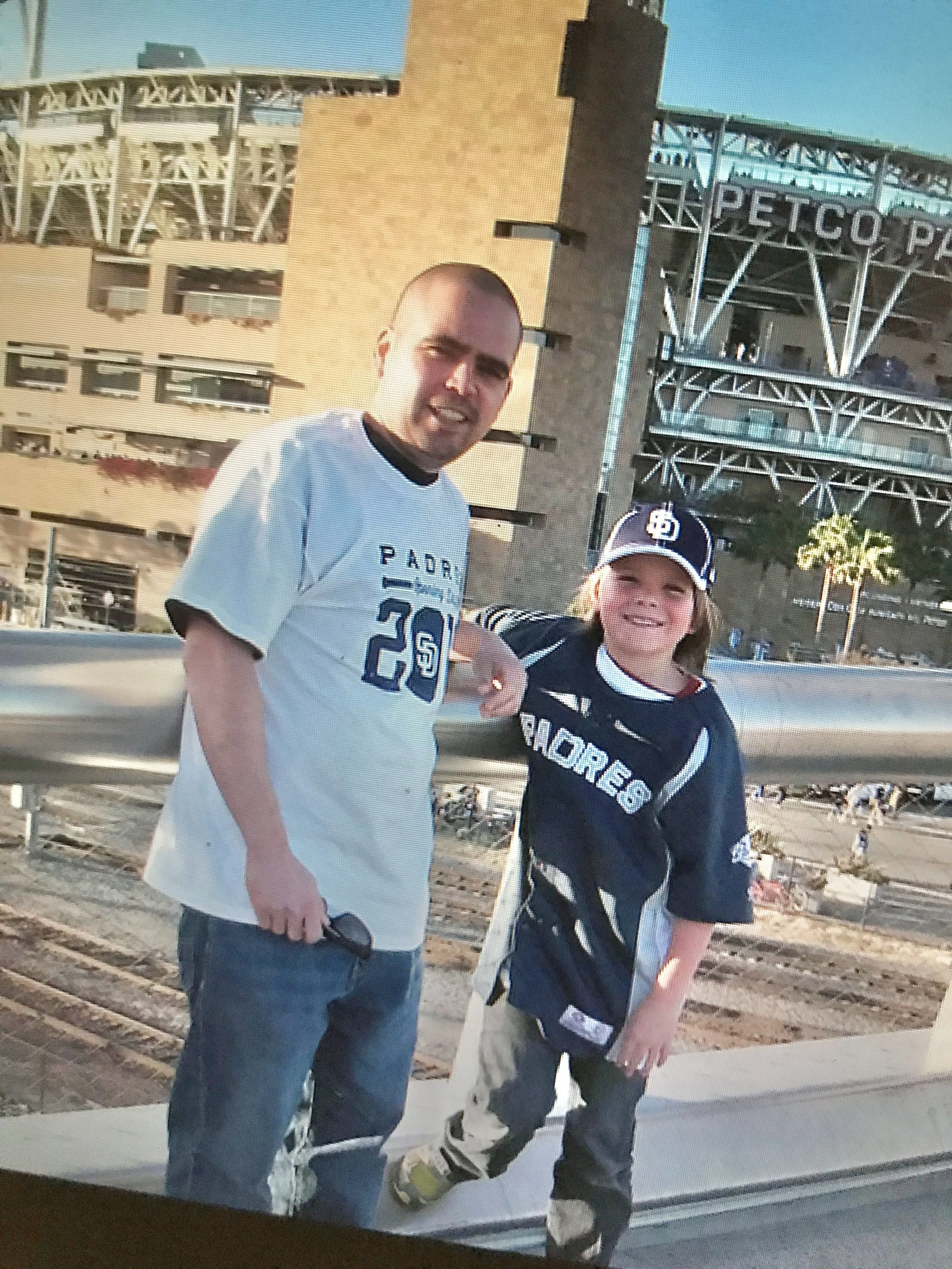
Zen Hill with his dad outside Petco Park in San Diego, California.
This misconception, however, is not formed in isolation. Language shift is not entirely the family’s fault; external forces outside the home heavily influence bilingualism. As schools increasingly offer a wider range of language courses, they play a role in signaling which languages are valued. That makes it important not only for prospective second-language learners but also for heritage speakers to see their language as worth maintaining and becoming proficient in.
Zen Hill agrees: he is neither productive nor receptive in Spanish, but his dad and grandma are, and his great-grandma, who first immigrated to the United States from Mexico. As someone originally from Imperial Valley, California, where over 85% of the population is Hispanic, according to Data USA, he said part of him feels he should be able to speak Spanish as well.
“At this point in my life, to even try to start learning the language, or even to try and start associating with that, it feels like it just won't be worth it, because at the end of the day, I feel like a fraud,” said Hill.
Language and identity are deeply intertwined, yet many people live their entire lives without fully recognizing the extent of that connection. For children who grow up speaking a heritage language in a space dominated by a different majority language, that link is almost impossible to ignore.
“I wish there were less of that barrier between the culture and the language,” Hill said. “I wish that as a Mexican American, I can be proud of being a Mexican without having the ability to speak Spanish, and I probably can, and maybe that's on me for not doing more.”
The media is another factor that often goes unnoticed. For dominant language speakers, such as English speakers in the United States, it may not be apparent that heritage language bilinguals have limited access to their native language in the media. This constant outside pressure can result in language assimilation, which is when a group of heritage language speakers accommodates to the dominant society by speaking the majority language.
That is partly the reason why Bad Bunny’s halftime show got so much love and attention from Hispanics across the United States. A Spanish-speaking Latino headlining the Super Bowl feels otherworldly. This level of representation is something that, for many Hispanics, felt impossible.
According to ESPN, Telemundo, a Spanish-language broadcast in the United States, broke viewership records. Its broadcast of the game averaged 3.3 million viewers, peaking at 4.8 million viewers during the halftime show, making it the most-watched Super Bowl on a Spanish channel and the most-watched halftime show in Spanish-language history.
Bad Bunny's halftime show felt personal on so many levels, not only through his artistic symbolism and lyrics depicting Latino culture, but also for something as bare minimum as performing in Spanish. His halftime performance demonstrated to Spanish speakers that their language is valuable and necessary.
Though I would be remiss not to mention that the term “no sabo,” which originated in the United States — a country with the third largest number of Spanish speakers in the world — is used predominantly by Spanish speakers. The term's existence, Mata said, points to a type of internal linguistic discrimination within the same group of speakers, but among those with a higher level of proficiency.
Guadalupe Venegas shared similar sentiments. They first encountered the term “no sabo” online around middle school. Like me, they are also considered a receptive bilingual — unable to speak the language productively, but able to understand it.
“I guess we communicated mostly through Spanish, but it was always very slow and simple sentences. And if we were talking about something specific, we could just point to it,” said Venegas regarding how they used to communicate with their mom, who only understands Spanish.
Venegas can’t help but feel resentment towards the term “no sabo” because it disregards the forced assimilation that many families, like their own, endure to establish themselves within their community. Venegas said they grew up in a predominantly Latino area, and it was not until coming to Western and being around mostly English speakers for the first time that they really felt the weight of the term.
“While I understand to some degree that there does have to be some personal responsibility in terms of learning Spanish, it still hurts,” said Venegas.
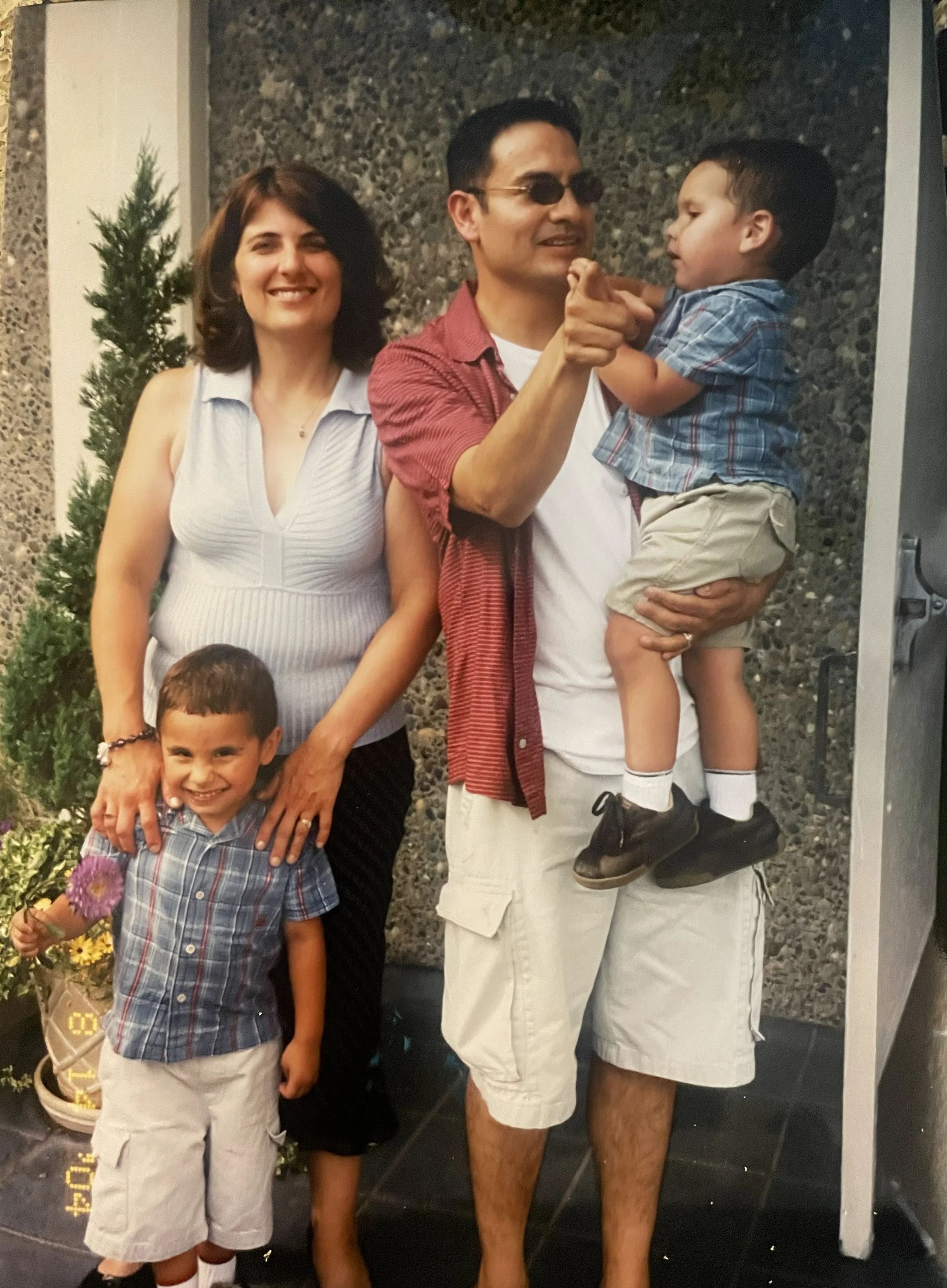
Antonio Mejia-Wolf with his parents and brother.
“The fact that this term exists is, kind of in some ways, a failure of the education system that fails to give heritage speakers access to their own language,” said Mata. “In many cases, it's actually a human right to have access to your family language, and the fact that they're denied it leads to these kinds of things.”
Antonio Mejia-Wolf feels that the term “no sabo” motivated him to learn Spanish. His dad immigrated from Mexico, and his mom is European. He explained that growing up, his dad tried to teach him Spanish, but being around English-speaking family members more than Spanish-speaking ones made it hard for him to grasp the language.
“I visit my family all the time in Mexico, except that the problem was I didn't know any Spanish at all. So my dad had to translate everything for me, as a little kid, like five years old,” said Mejia-Wolf. “But, when you're going into middle school or high school, and you can only talk to your cousins by saying sí or no, and you don't understand what they're trying to tell you, it's kind of a bit jarring.”
When Mejia-Wolf came to Western, he found a Hispanic community that supported him at the Ethnic Student Center. It was here that he realized just how important his Hispanic roots are, and how vital it is for him to learn Spanish. “In order for me to understand my family, I have to not be a ‘no sabo,’” said Mejia-Wolf.
Today, he can speak the language both productively and receptively, but it still comes with a struggle. From the extra step of planning out what he wants to say, to lacking confidence in his pronunciation, the ghost of being a “no sabo” lingers.
“Even if you practice, you learn, or you study, learning a language takes a long time. You have to rewire your brain to do it,” said Mejia-Wolf. “In my opinion, if you have the confidence to speak it, then you could understand and speak more than you actually think you can.”