
Learning language, building access
How the Whatcom Literacy Council is paving the way for adults learning English
Story by Ciarra Shaffer
Published April 7, 2026
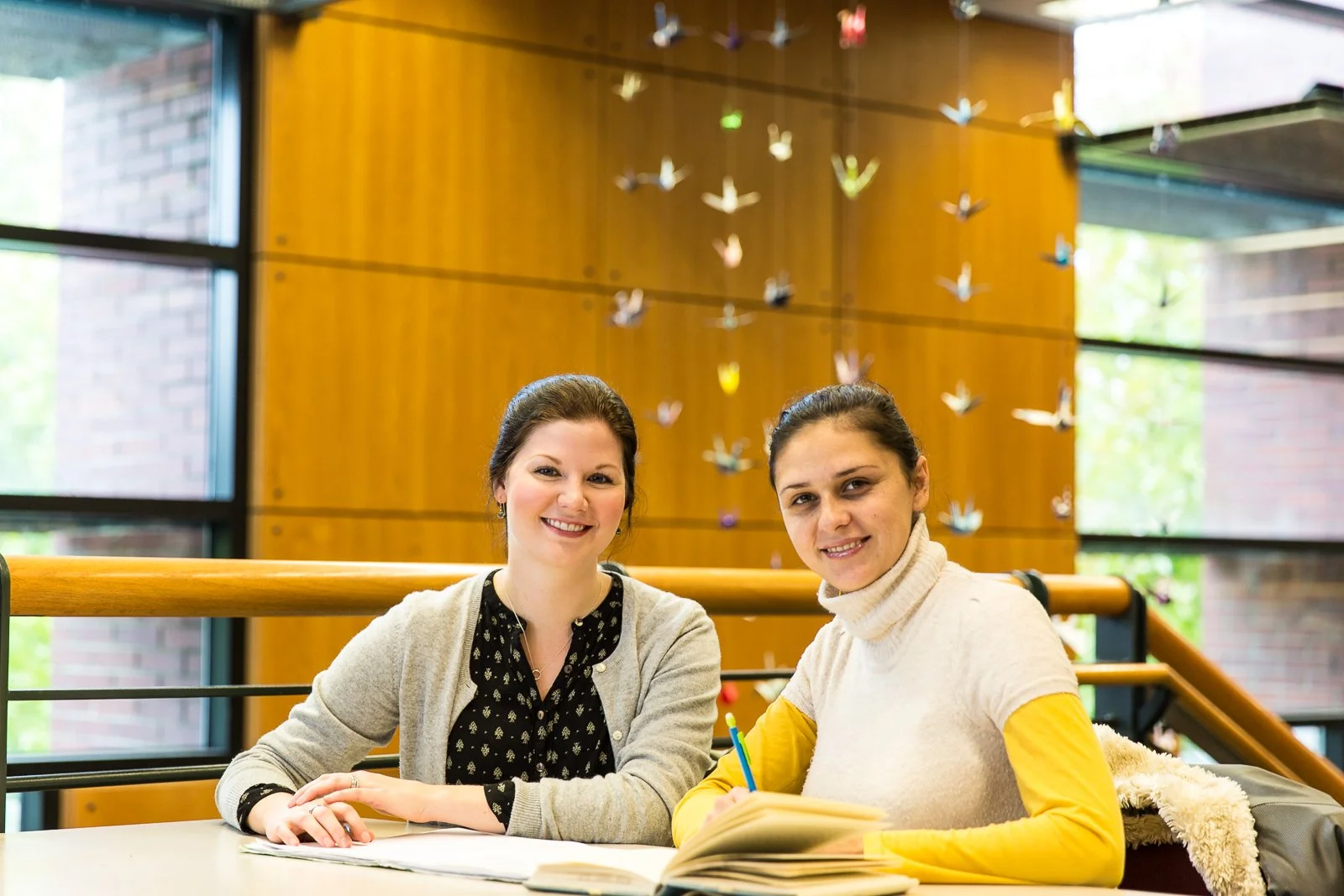
A WLC learner and her one-on-one tutor sit together at a desk during their English lesson. Learners and tutors are paired up based on their availability and often work together for a long period of time. // Photo courtesy of the Whatcom Literacy Council.
“Watch the way my mouth moves.” The instructor points to her lips and slowly sounds out a word as the class repeats it. Around the room, volunteers guide small groups of learners through English language exercises, helping students build sentences and practice pronunciation.
“Literacy is the platform for equity,” Katherine Freimund, executive director of the Whatcom Literacy Council, said. “When we teach a person English here in the United States, we help a person have their own voice.”
That belief has been the foundation of the council’s work since it began in 1983. Through one-on-one tutoring and small group classes, completely free for learners, the organization supports adults working toward everything from learning English and basic literacy skills to earning their GED. The classes also equip learners with the necessary skills to become U.S. citizens, obtain a driver’s license and develop computer skills.
According to the council, roughly two-thirds of the adults it serves are immigrants learning English for the first time, more than half don’t have a high school diploma or GED, and the majority lack access to a computer at home. For many participants, limited literacy is not just an educational barrier; it affects employment, health care, civic participation and daily stability.
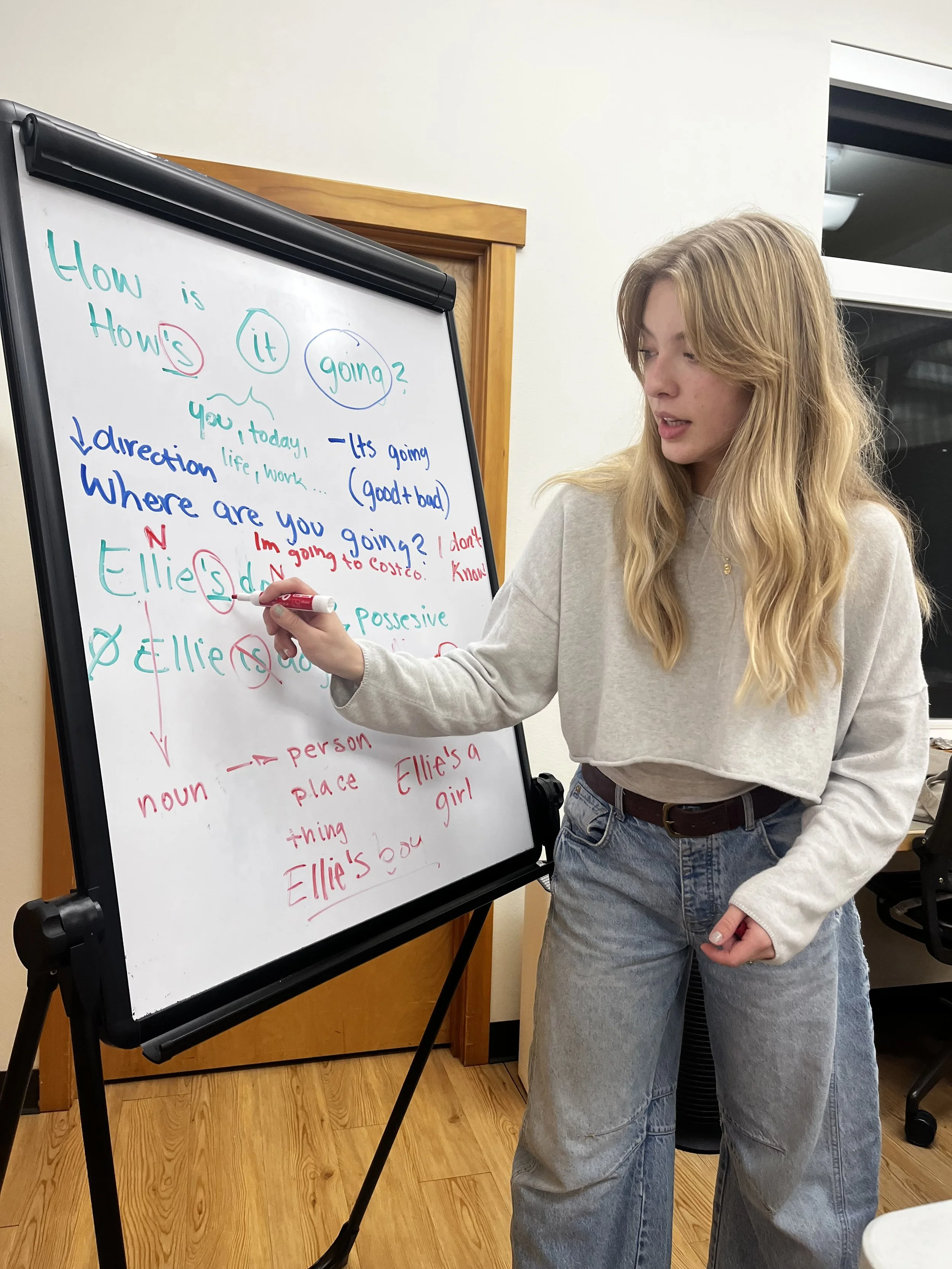
A volunteer tutor circles letters on a whiteboard as she guides a small-group class through learning contractions. // Photo courtesy of the Whatcom Literacy Council.
STARTING OVER, ONE WORD AT A TIME
While children have support learning English through various school and community programs, few organizations in Whatcom County support adults learning English. In addition to a lack of resources, the council said that learning English is much harder as an adult because, at that point, preexisting listening comprehension and speaking have all been learned in a different language.
Andres Parra is familiar with this challenge on a personal level. He immigrated to North America with his family after fleeing violence and instability caused by narcotrafficking and guerrilla conflict in Colombia. There, Parra owned an automotive accessories shop, and his wife worked as a dentist. Despite having stable professional lives, they left everything behind in search of safety.
They first moved to Vancouver, British Columbia, where Parra said they faced the uncertainty and emotional toll that often comes with immigration. “We had faith and hope, even though we knew we were starting again from zero,” Parra said in an email. “We eventually found the peace we longed for, but at the cost of not being able to practice our professions.”
After years of exams, licensing procedures and board requirements, Parra’s wife started a dental residency. They lived in Miami, Florida, then Yakima, Washington, before eventually moving to Bellingham. Parra was unable to work during this time because his immigration status depended on his wife’s sponsorship. To support his employment efforts, he began studying English as a second language at Bellingham Technical College. It was there he learned about the one-on-one tutoring offered through the WLC.
Through the WLC, Parra was paired with John Whitmer, a retired chemistry professor from Western Washington University. “John supported me for four years with incredible patience, commitment and compassion,” Parra said. “He understood how difficult English was for me and helped me find a path forward.”
Parra got his GED, earned an office assistant certificate and later enrolled at Bellingham Tech, where he graduated with a degree in instrumentation and control technology and later completed a second degree in operations management. Parra explained that his life was forever changed because of Whitmer’s support, something he could never repay.
Today, Parra serves on the WLC board and works with the agricultural community, helping families access resources and navigate the challenges of immigration. “I joined the board because WLC changed my life,” he said, “but also because of the extraordinary humanity I witnessed within the organization.”
WORKING ALONGSIDE LEARNERS
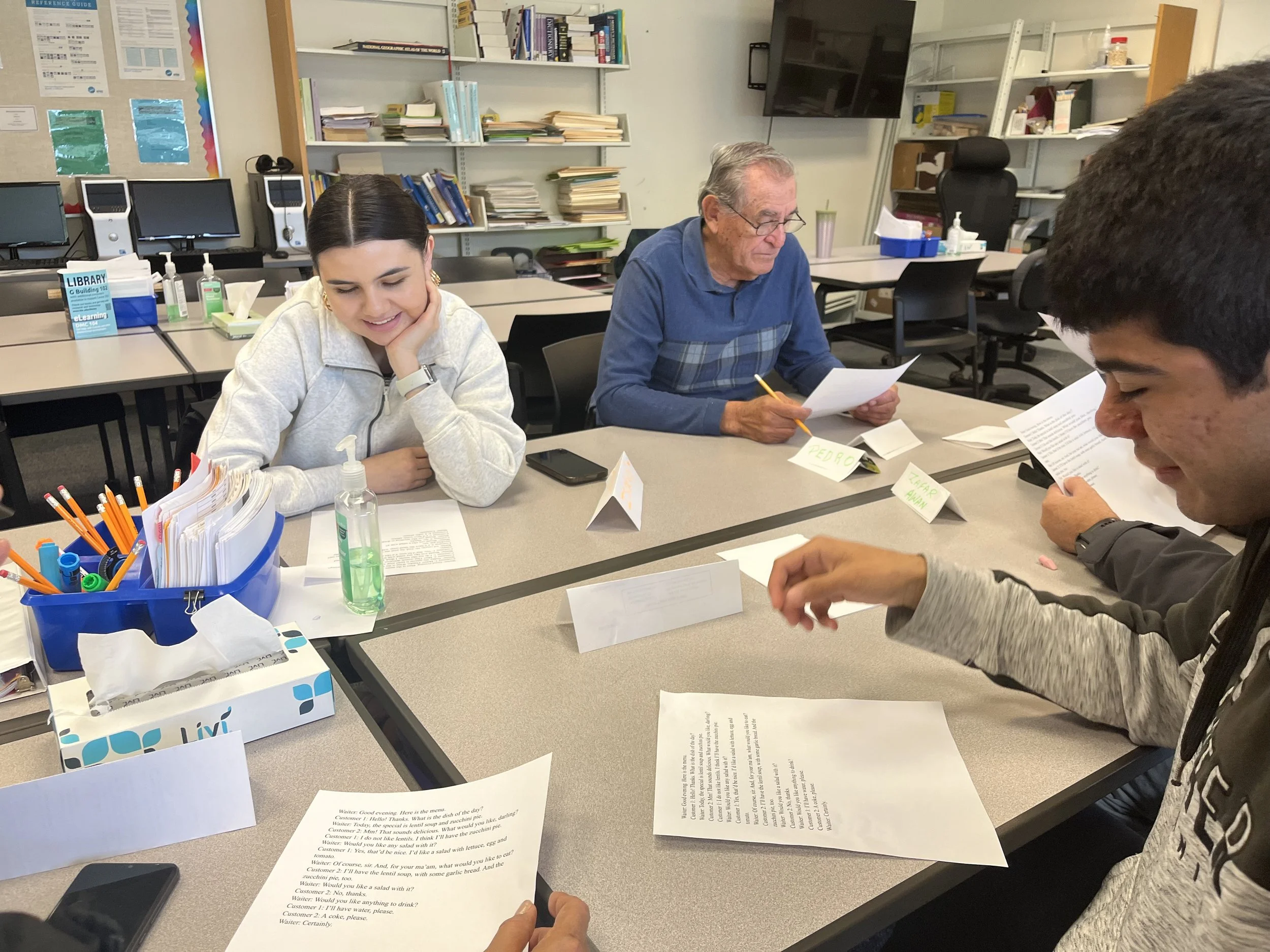
A small group class practices a mock restaurant conversation during an English class. Learners practice real-world situations to help apply their lessons outside the classroom. // Photo courtesy of the Whatcom Literacy Council.
Initially volunteer-run, the WLC had little to no budget. Today, it’s grown into an organization with staff, a board and volunteers actively working to help people improve literacy skills. In 2025, the organization had 116 volunteers and served 1,187 learners.
The council partners with other local literacy programs, such as the courses offered at Whatcom Community College and Bellingham Tech. Here, the council places volunteers in the college's English language learner and English language acquisition classes to guide conversations and build relationships with learners over time.
One of those volunteers is Bill Gerritz, who began working with the council about four years ago when he moved to Bellingham and was looking for meaningful work that aligned with his background in education. Gerritz also serves on the WLC board, tutors learners one-on-one in English and helps immigrants prepare for the U.S. citizenship test. In recent years, he has assisted more than 50 learners in passing their U.S. citizenship test, and is currently working with his 51st.
In WCC classrooms, Gerritz works alongside English for Speakers of Other Languages instructor Carina Kozaczuk, supporting students ranging from 18 to 72 years old. He described them as some of the most motivated learners he has worked with, noting that every new piece of English learned can open doors.
“The general political environment is pretty depressing for me, but the guaranteed uplift I get twice a week is to go and work with these people,” Gerritz said. “There's a lot of fun. They're working hard. You can see the learning. And these are people who are going upward. They're full of hope and optimism, and they're just wonderful to work with.”
Freimund said that volunteers are central to WLC’s approach. Applicants must be at least 18 years old and have a high school diploma or GED. Beyond that, the organization provides training, lesson outlines, resources and ongoing staff support.
“Anyone can do it,” Gerritz said. “You just have to have a good heart.”
THE PATH TO LITERACY
Most learners find the WLC through word of mouth. Current and former learners frequently share information with family members, co-workers and friends, spreading awareness through personal connections. Libraries also serve as a key access point, especially for people who are new to the area and lack established connections.
The council’s approach begins with an assessment of each learner’s literacy level and learning style, followed by a conversation about personal goals. Tutors and staff then design learning plans tailored to these goals, allowing adults to take an active role in their education.
“When someone is an adult, and they are working on their own goals, they feel like they’re driving the bus,” Freimund said. “It’s a very effective approach to learning.”
In a region where more than 75% of jobs require education or training beyond a high school diploma, the WLC recognizes the role that literacy plays in long-term economic stability.
“Literacy is power,” Paqui Paredes Méndez, secretary of the WLC board, said. “We know that it's incredibly difficult to get a job if you don't have basic language literacy, and in this country, basic English literacy.”
That’s why the council introduces a model that partners with local businesses to host classes directly at job sites. The curriculum centers on improving employees' workplace vocabulary, strengthening literacy skills and improving their English. This on-site education approach improves workplace communication while providing employees with skills that extend beyond the job, all without learners sacrificing work hours or navigating transportation barriers.
The council also offers “Talk Time,” a structured English conversation class that helps learners practice real-world scenarios such as grocery shopping, workplace interactions and everyday communication. Facilitators guide situational dialogue, focusing on sentence building and relevant vocabulary.
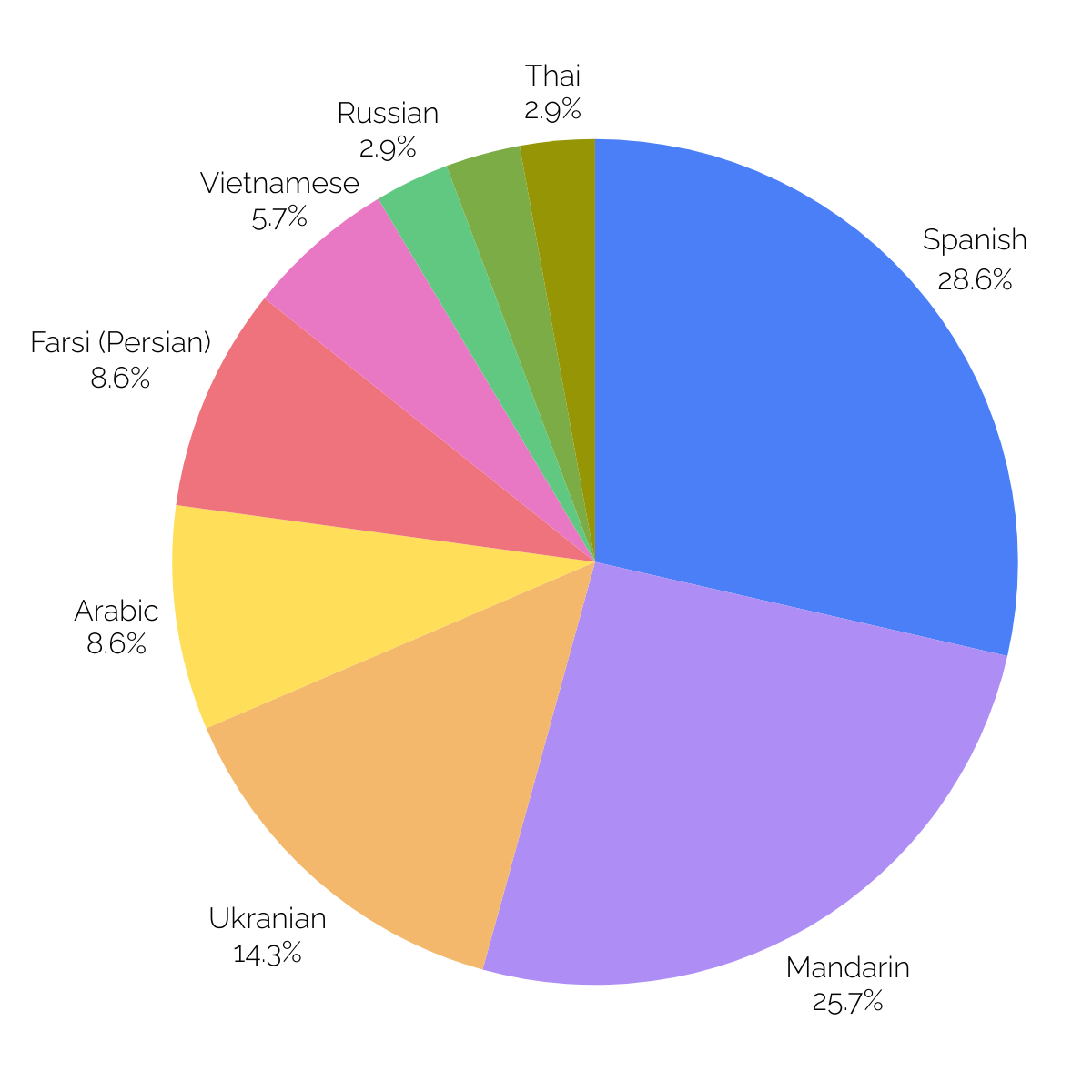
This graph shows the primary languages spoken by learners in the Whatcom Literacy Council’s English Language Learners program. The unlabeled section on the graph is Swahili, and represents 2.9% of learners in the ELL program. // Graph courtesy of the Whatcom Literacy Council.
COLLECTIVE APPROACH, COLLECTIVE IMPACT
According to Freimund, WLC operates within a collective impact approach, partnering with local agencies to communicate, share information and focus on complementing rather than duplicating services. Learners move between programs depending on what is affordable and accessible, and when an organization is not the right fit, referrals are made to others in the network.
Coordination with other organizations has become even more important over the past year, as shifts in the political climate have increased uncertainty for many people who utilize the WLC services. While WLC doesn’t provide immigration or legal services, federal policy changes have still indirectly shaped aspects of its work. In response, organizations serving adult English learners and immigrants joined forces to identify needs and share resources.
“I was very proud of all the partner agencies who are serving that population here,” Freimund said. “We all just started really connecting,”
That collaboration has taken many forms. WCC partnered with Skagit Legal Aid to present “Know Your Rights” information in English language learning classes, distributing red cards outlining legal protections. Local businesses attended workshops on how to respond if Immigration and Customs Enforcement appears at a worksite and how to communicate clearly with employees about their rights.
Freimund also attended workshops to support and inform people in the community about the WLC. Council staff also ensure volunteers understand that they may be working with people in vulnerable situations and know where to refer learners for legal or social services when needed.
The current political climate has also affected instruction. When the U.S. citizenship exam was expanded and made more difficult, WLC was quick to adjust. As Gerritz began working with a new learner from Iran, English Language Learner Coordinator Brandi Adams developed new study materials quickly to reflect the revised test, ensuring learners were not left behind as requirements shifted.
WLC does not receive federal funding, which has insulated it from recent funding cuts affecting partner institutions such as colleges and workforce programs. Still, nonprofit funding remains unpredictable.
“One of the most difficult things about running a nonprofit is that things are incredibly unpredictable,” Freimund said. “How do you get money for something that nobody knows is going to be there next year?”