
Finding warmth below 40°
A reason to dive in during the chilly months
Story by Claire Mayne
Published Feb. 12, 2026
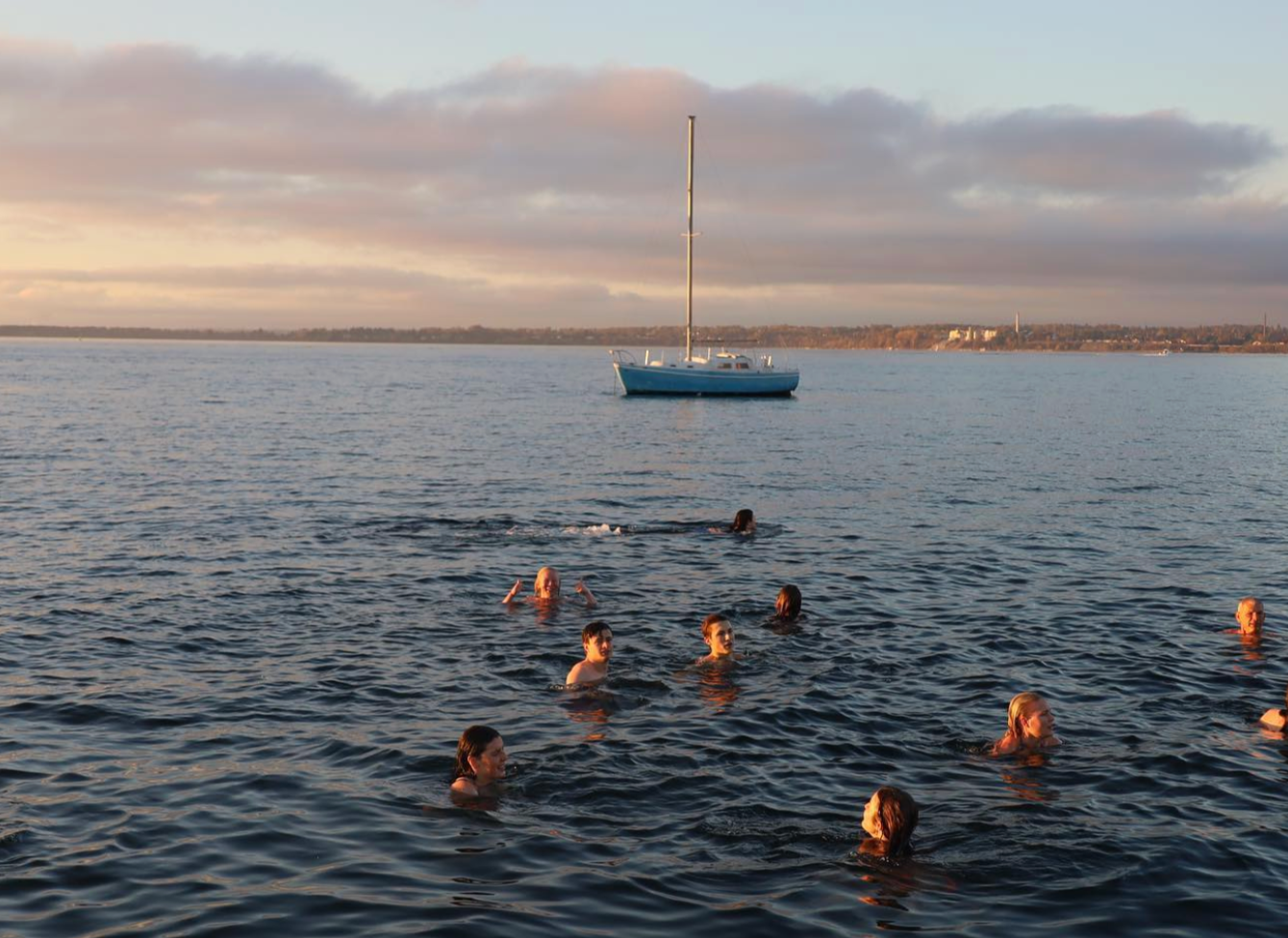
Photo courtesy of Jaden Miller.
The dock rocked beneath me as I stood shivering, wrapped in a towel, dreading what was to come. I didn’t have to touch the dark, murky water to know it was cold. The cool breeze sent ripples along its silky surface and its salty taste into the air. As the sun streamed over the horizon, we discarded our towels. There was nothing left to protect us from the morning chill. I grabbed my neighbor's hand. Three. Two. One.
The icy water stung my skin. I fought the numbing water and surfaced for air, gasping and spitting out the salt that breached my lips. The shock consumed my concentration as I lost sensation in my limbs, until I heard the spluttering and bright laughter bubble up around me. That’s the beauty of cold plunging — you’re not suffering alone.
“In the cold, the only thing you can do is breathe,” said Renate Rain, a certified cold water guide and owner of Cold Confidence LLC, an ice bath and sauna studio. “You can be nowhere else, especially under 40 degrees. There's a peacefulness and a calm that I don't have anywhere else.”
She went cold plunging for the first time at Sunnyside Beach in Steilacoom in September 2021, after a physician recommended it for her metabolic health. There was no easing or slowly wading in for Rain. Her only goal was to get in and get out as quickly as possible. Buzzing with nerves, she ran into the polar waves, her muscles tensing as she shrieked from the piercing cold and counted down for 60 seconds.
“As I was walking back to my car, I had this strange moment where I stopped and noticed something was different or off, maybe like a deja vu moment,” Rain reminisced. “It took me a second, but I realized I didn't have any pain. At that point, my chronic pain had been going on for 20 years.”

Photo courtesy of Reid Hunter.
Cold plunging is a way to practice deliberate cold exposure by intentionally immersing oneself in sub-40-degree Fahrenheit water for a short period. Two to three minutes submerged in water is recommended to see the benefits manifest.
Along with chronic pain relief, inflammation in the body is decreased by cold water immersion, which is linked to muscle recovery. The blood vessels constrict in response to the low temperatures, improving circulation. Cold plunging helps reduce anxiety by triggering a fight-or-flight response and increasing adrenaline levels, which, through repeated exposure, trains the mind to remain calm under stress as the body's tolerance to discomfort increases. Dopamine levels can rise to 250%, norepinephrine levels can rise to 520% and sleep can be improved, Rain said.
“I recommend you make it a practice if you want to get benefits,” Rain said. For some people, going once a week is enough. However, for people with ongoing chronic conditions, sleep or hormonal problems, Rain recommends two to three times a week as a sweeter spot. At first, Rain was just in it for the benefits. Now, she's in it for much more: the people.
Currently, Rain is a certified cold water guide and teaches anyone willing to take the plunge how to embrace the cold and reap the benefits. She founded the Puget Sound Plungers, a community that meets for weekly plunges. For a safe and enjoyable plunge, Rain recommends not going alone.
“It's a great way to find a community of folks who are comfortable getting uncomfortable,” Caleb Barville said. Initially interested in the benefits of cold plunging, Barville founded the Cold Plunge Club at Western Washington University. It turned out to be the most social five minutes of his day. The Cold Plunge Club schedules regular cold plunges at Taylor Dock in Bellingham Bay.
“It's just human nature to kind of gather together,” Rain said. Cold plunging gives an opportunity for individuals to share the benefits of cold water immersion while keeping each other accountable to do uncomfortable things.
At the edge of the dock, each person is facing the same emotions of uncertainty and hesitation, bracing against the sharp air stabbing their skin, until they finally drag each other in and experience that raw discomfort together for a minute or two. Whether you're swimming around, chatting it up or focusing on trying not to sink, as long as you're in the water and breathing together, you’re doing it right. The shared thrill is what brings friends and strangers together, Barville said.
“People are not necessarily worried, but apprehensive to do it. Typically, it takes one person just sending it and then others follow,” Barville said. The hardest part is just getting in the water. Sometimes you just need someone else to push you in. Cold plunging is a form of self-care accessible year-round. All you need is a swimsuit, a towel and a biting body of water.