
A Coast Salish portrait of history
“This is how it was here in Xwot'qom”
Story and photos by Malia Fraser
Published Jan. 24, 2026
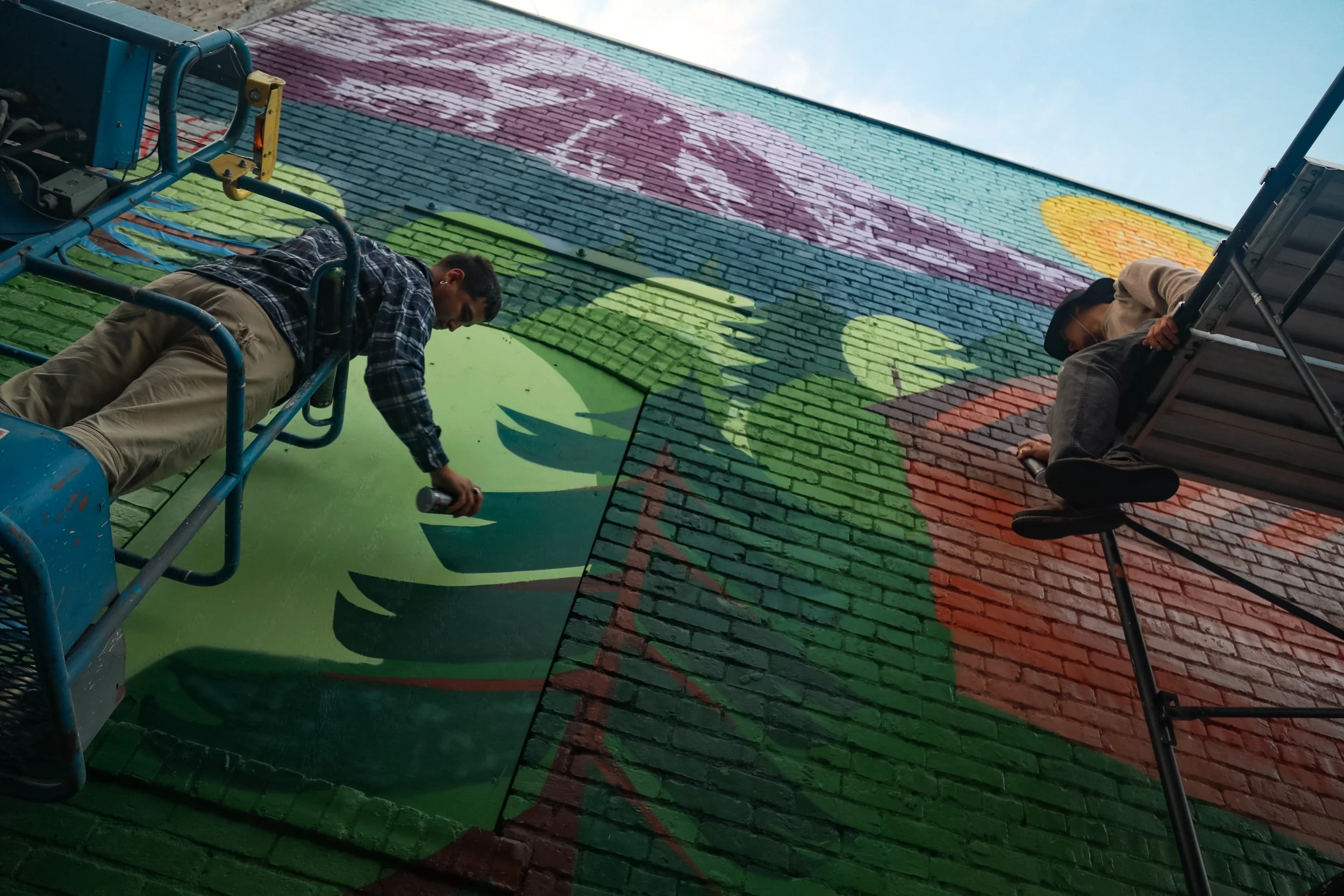
Free and Raven Borsey add detail to a tree and a longhouse roof. This section of the mural depicts the Nuxwkw'ól7exwem village getting ready for the cold season.
An Indigenous storytelling organization, Children of the Setting Sun, received a grant from the City of Bellingham’s Downtown Activation and Beautification Project to install an 80-by-20-foot Coast Salish mural in the alley of their new location at 210 W. Holly St.
Darby Galligan, senior planner for the City of Bellingham, said the program is relatively new. The competitive grant, funded through lodging taxes from hotel and motel stays, came from the mayor's efforts to focus and revitalize downtown. Of the 30 applications reviewed, Children of the Setting Sun’s project ranked first among the proposals.
Galligan said the mural and cultural center will create opportunities to expand the broader community’s understanding of the region's history.
“To be able to engage people and to get them curious, and to be able to tell some of those stories and hopefully draw them into the building — it's really exciting for our community,” Galligan said.
Between developing their designs, curating the piece and identifying the story they wanted to tell, it took the three artists about a year to bring their ideas to fruition. Roy Nicol, a Nooksack tribal member, along with Free and Raven Borsey of the Lummi Nation, completed the mural in October 2025.
Raven, a cultural anthropology researcher for the organization, says the mural’s title means “This is how it was here in Xwot'qom”. “Xwot'qom” is where the word “Whatcom” comes from, which means noisy rushing water. He says the mural represents what is now one of the most populated areas in the county as it existed traditionally. Nuxwkw'ól7exwem is a village site that was in the area, and is where the word “Squalicum” comes from.
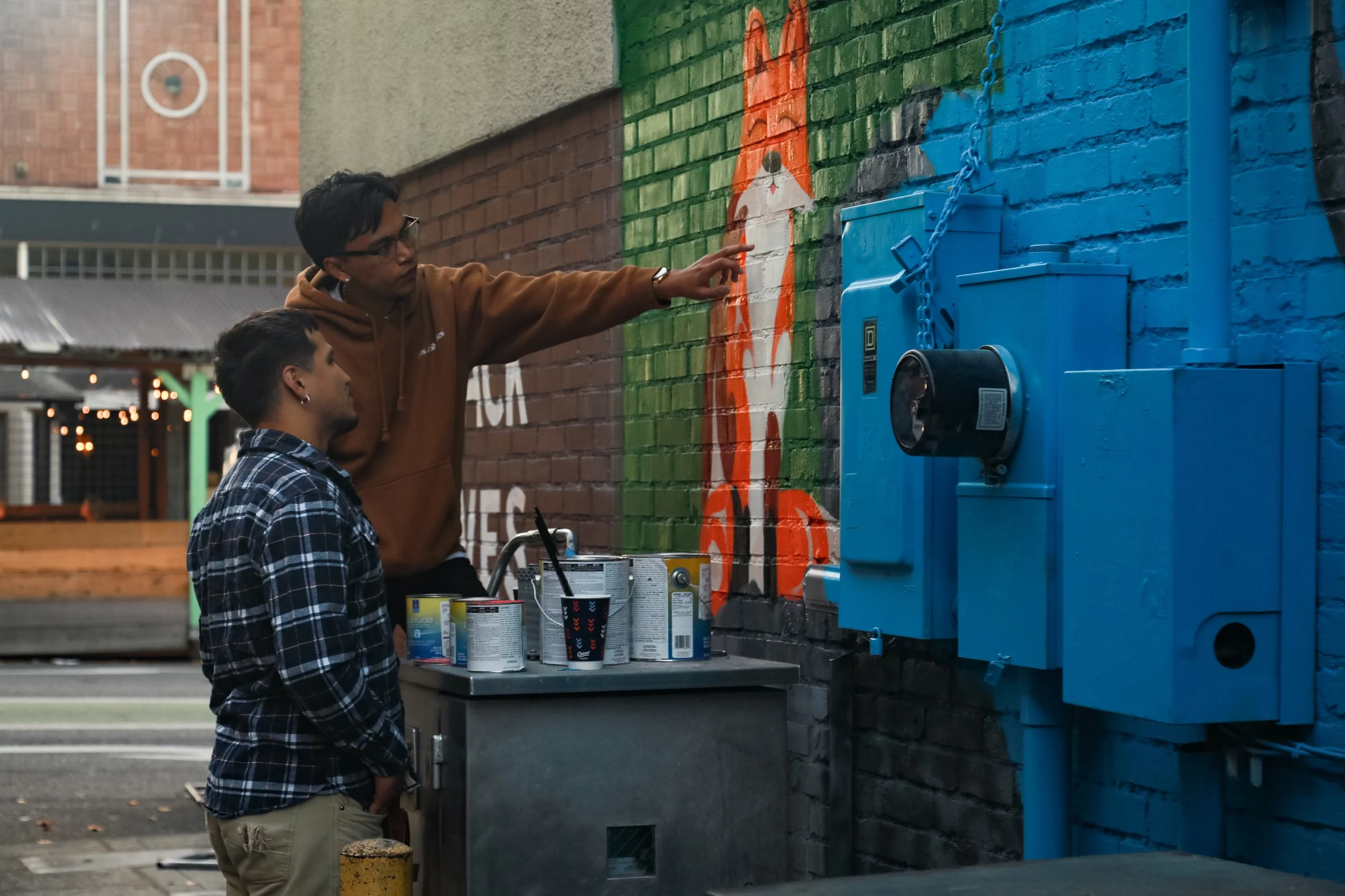
Roy Nicol examines his fox with Free Borsey. Nicol is a storyteller for Children of the Setting Sun and works on music, film and graphic design, with a focus on Indigenous and environmental issues.
Even before the mural was finished, Children of the Setting Sun hosted six third grade classes to learn about the artwork. Raven said a lot of the kids were engaged and already knew a lot about Indigenous culture and traditions. He credits this to the Time Immemorial Curriculum, required in Washington State public schools since 2015.
Amy Roselli, who has taught in the Bellingham Public Schools for 25 years, brought her 3rd-grade class to Children of the Setting Sun’s new location to learn from the mural. She says the Time Immemorial Curriculum impacts every aspect of her teaching.
“I learned so much more about different ways of being and different ways to look at things,” Roselli said. “I'm so grateful that my own perspective has just really been broadened by listening and learning from our Indigenous friends.”
Children of the Setting Sun regularly hosts community events. Roselli described how she felt every time she attended one of their events. “I just feel such an immense amount of gratitude for the partnership with Children of the Setting Sun,” Roselli said.
She said she appreciates their willingness to come and teach her students by sharing stories and cultural traditions.
“We have a responsibility as guests on this land to learn how to live on these lands,” Raven said. “Being tribal and nontribal, we have the same responsibilities to support the surrounding environment, and I think that comes with reeducating on how to connect. And, you know, what better way than going to the first peoples and sharing that?”
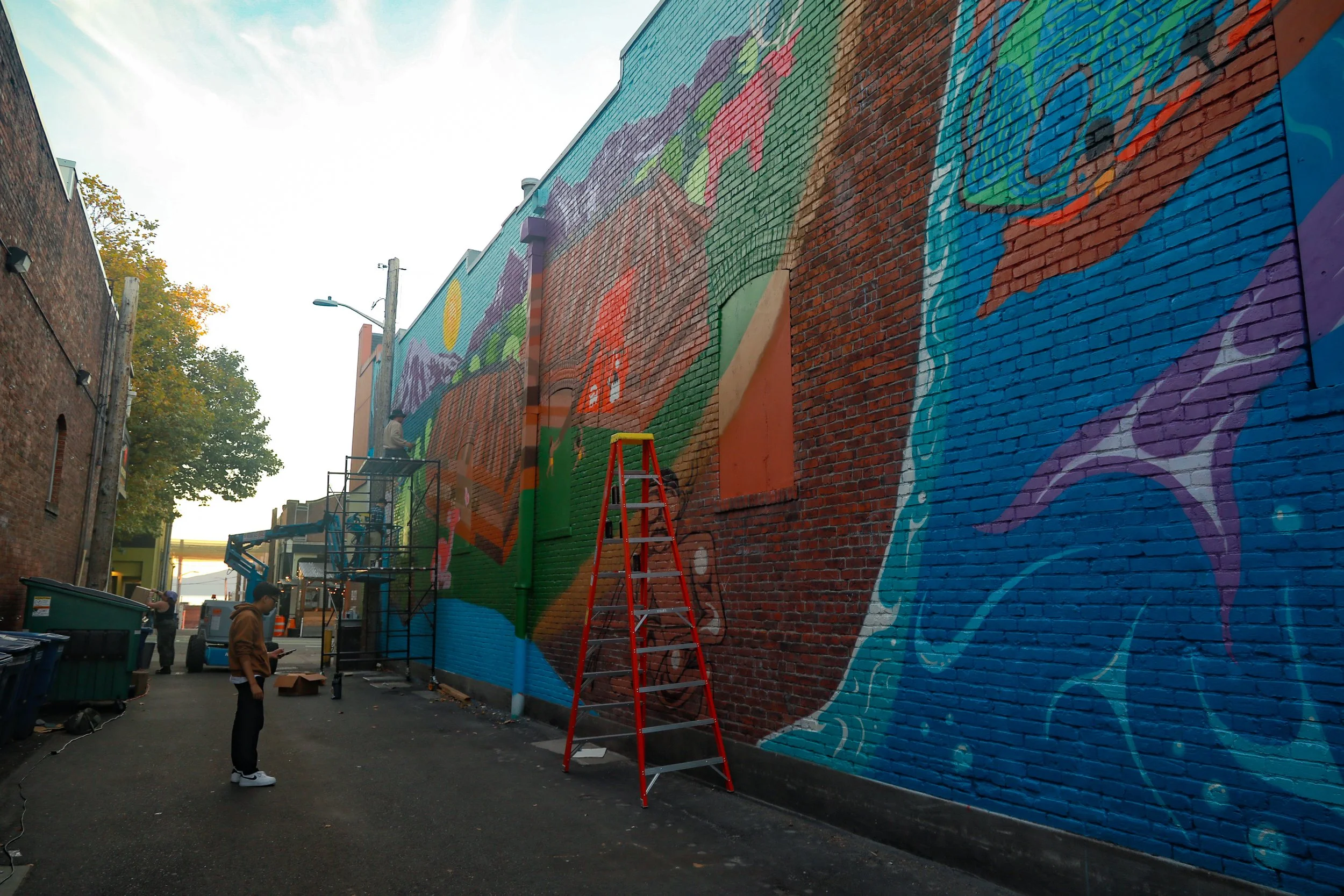
Roy Nicol takes a break to switch the music. The right side of the mural pictures villagers fishing from a canoe using the reef net style of fishing, used primarily for catching sockeye salmon.