Living History: A Visit to Goree Island
A thoughtful time traveling to one of the relics of the Trans-Atlantic Slave Trade
Story by Roan McAuley
Published Sept. 24, 2026
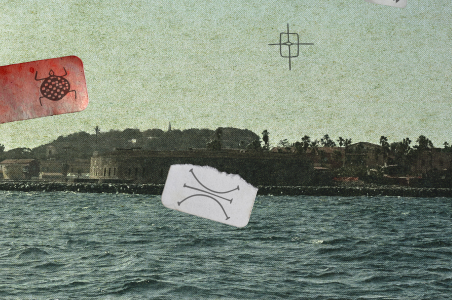
The sky was completely cloudless. The sun beamed down from its comfortable perch, almost directly above where we stood. The group of us – all Western Washington University students – swayed back and forth among the crates of onions, beer bottles and assorted supplies bound for the island.
We’d been in Senegal for less than a week, though it had felt longer. A world away from our normal lives, on a study abroad no one studied for, we sailed out into the Atlantic. The small local ferry from the city of Dakar headed towards a speck of land just off the country’s coast, Gorée Island.
It’s a minuscule and barely populated place, so tiny it’s unlikely to be found even on official maps of West Africa. Today, some parts of the island remain in ruins, abandoned to erosion and decay. It’s not especially unique in its history, either. Countless places on this long and troubled coastline share its ghosts.
Five centuries ago, swift sailing ships sent by Portugal’s kings traversed these waters. Other nations sent fleets and troops to take control of it throughout the so-called Era of Exploration: the Dutch in 1667, Britain in 1782 and France in 1789. The French kept it for six generations, and even today French control lingers in living memory. So why fight so hard for such a tiny place?
For trade, of course – trade makes the world go ‘round, after all.
I knew parts of the island’s dark history, but from an ignorant perspective this might seem like any other tropical paradise. The crowd from the ferry – mostly Senegalese, but also European tourists from Spain and England and wherever else – all disembarked.
A sign above us read “BIENVENUE À L'ÎLE DE GORÉE”; “Welcome to Gorée Island.” Nearby shops lined the avenue. Local sellers of t-shirts and touristy trinkets performed their opening acts as we passed.
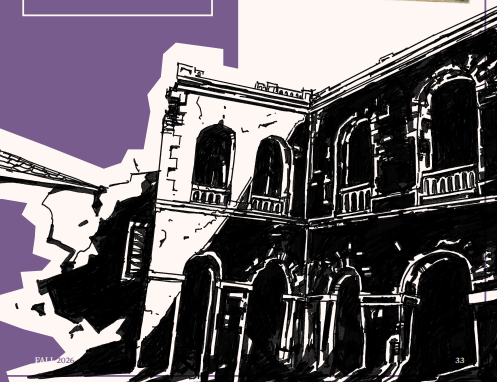
Through some winding streets and across a stone courtyard, where French soldiers once gathered at attention, was a crumbling structure. It was old and decrepit but had clear echoes of its former grandeur. Several stories tall, with large, arching windows, it bore the same style as Versailles. This was the old Governor-General’s Palace, abandoned many years ago. The once decadent mansion was the official residence of the French colonial governor of all of French West Africa for a time in the 1860s.
Nearly a quarter of the entire continent, stretching from Dakar to the center of the Sahara, all once controlled from this building.
Rotting staircases led to floors beyond our sight as we walked past, and behind the palace was the sea. Looking out across the tranquil midday water, you could see the hills and buildings of the mainland – modern-day Dakar. To imagine this ruined palace as the center of power for all the lands for two thousand miles is to imagine a different place entirely.
We walked through the streets and alleyways, arriving at a chapel built by the Portuguese in the 1400s marked by a small plaque. Today, the building serves as the local police station.
The main attraction on Gorée Island – and the reason most people outside of Senegal bother to visit – is, however, a monument to the part the isle played in one of the darkest chapters in human history: the Transatlantic Slave Trade.
Humans have traded the in currency of other humans for almost as long as hierarchical societies have existed, but the transatlantic slave trade was unique in its cruelty. Prisoners of war and ordinary civilians were abducted from their homes, beaten into submission, and whisked away from everything they’ve ever known, taken to a foreign land on the other side of the planet. They found themselves in a world surrounded by strangers, death, and pain. Forced by the whip to work on sugar and coffee plantations while European nobles got rich beyond their wildest dreams.
This was the fate of millions.
One out of the 28 different slave houses that once existed still stands on Gorée, serving as a museum to educate about the history. Visitors walk in the footsteps of the untold number of souls sold into bondage there. It’s become a pilgrimage site, especially for the descendants of those who survived the terrors of the Middle Passage.
The main area was covered with placards and posters explaining the complex nature and interconnected geopolitical forces that sustained the trade of human beings.
It was that human trade that drove the Portuguese, the Dutch, the British and the French to wage war after war over this tiny speck of land off the West African coast.
Whoever controlled Gorée Island controlled the slave trade in this part of the world.
The House of Slaves was built in two layers: The first level, where men, women and children in chains were taken; and the second level, where prospective buyers could gather, survey and negotiate prices on the merchandise of the day. Around the perimeter of the lower level, cut into the stone walls, were the holding cells.
I felt uneasy and jostled by the crowds as we descended into the dark. Light did not touch the deepest corners of this place.
The tour guides addressed their groups in different tones, some somber, some upbeat. Ali spoke to us matter-of-factly about the history of the slave houses where the enslaved were brought in, counted and weighed, and which rooms were reserved for the women and infants.
The sick, we were told, were given to the sharks.
The rooms were cramped and strangled by shadows. It took my eyes a moment to adjust from the bright and sunlit land we’d just left behind. Tiny, slit-like windows offered mere glimpses of the outside world and small streams of fresh air. The walls, floors and ceilings were all made of the same dark grey stone.
One room, directly under the stairs that separated those in shackles and those in suits, had a window in the back, barred like a jail cell. Ali explained that it was for virginal girls, brought in purely to satisfy the physical desires of the visiting sailors and captains.
The children of these encounters were declared free, along with their mothers, and grew up to exist in a perpetual state of social purgatory. Wanted by neither African or European societies, these mixed-race individuals would grow up to create a new class of elites on the island, even becoming sellers of slaves themselves.
They would live their entire lives never far from the slave trade; products, profiteers and propagators of it.
Within the pillars supporting the structure, there were other rooms; tiny, even by the standards of the slave house, low to the ground and half the height of an average person. The fate of those who disobeyed or resisted was to be nearly suffocated by stone, squished into these crevices until their punishment ended.
After seeing more of the space, I assumed our tour would be wrapping up, but once we left the slave house, we continued walking through more narrow alleyways and palm trees out in the open sun.
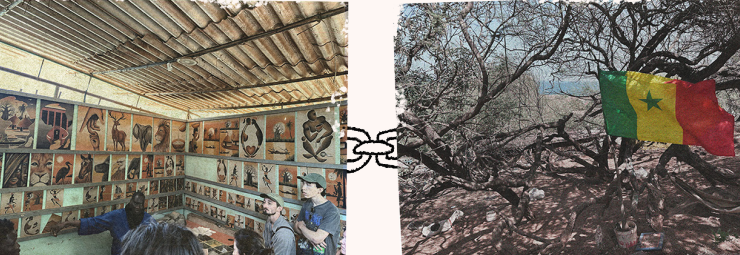
Beautiful, vivid paintings in various shades of brown, orange and black hung on the walls of a little path-side shop. A man sat behind a large desk, supplies strewn around him, working on his latest piece for a small smattering of tourists.
He excitedly demonstrated his artistic process to us, despite the language barrier. As we watched him work, it quickly became clear that he wasn’t making paintings at all. Instead, they were detailed images carefully created completely out of sand.
He had plastic trays with different sands of all sorts of colors – all from different parts of Senegal, he explained through Ali’s translation. He began by precisely placing patches of glue on a small wood canvas, forming the base. He would then sprinkle a certain color of sand over it, creating the initial shapes. This would be repeated with different colors until a full image emerged. It was stunning, and many of us purchased some of the man’s art almost immediately. I bought two of his pieces.
It felt odd, all the same. This man lived and created art in a place haunted by ghastly atrocities in its past, but his life was not defined by those things. He spent his days making it a more beautiful place, and spreading that all across the world – after all, the art I bought now hangs in my room, on the other side of the planet.
Gorée Island may be a museum, but it's not a mausoleum. It’s alive, vibrant and growing, in spite of its scars. The local buildings of worship are far from ruins. People make their lives here. It struck me how paradoxical yet sensical it all felt. This island has been the site of centuries of blood, of death and tears. Yet today, it feels like a place that has awoken from that nightmare, and adopted a life of its own.