
Making Waves 50ft Deep
Story by Peyton Perdue
Published Sept. 24, 2026
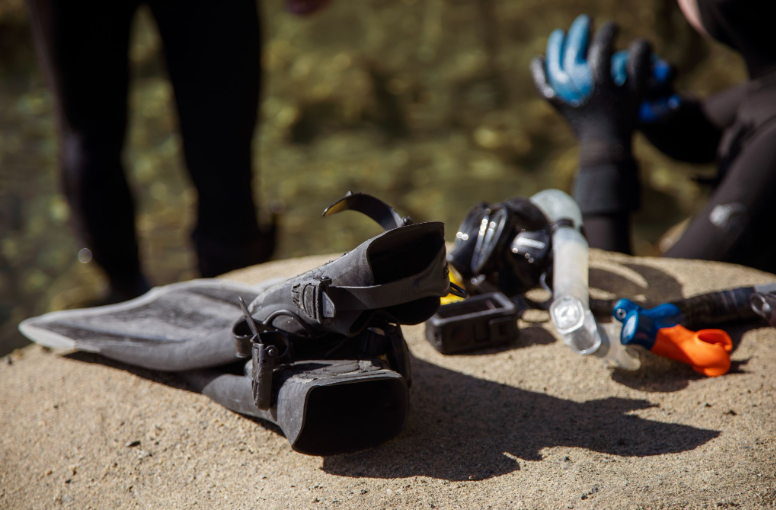
Haunreiter and Lotka’s fins, mask, snorkel and underwater camera rest on a rock near the dive entry point. Longer fins allow for better propulsion downwards when freediving. In water like this divers wear 5mm wetsuits. // Photo by Peyton Perdue
It’s always on his mind. Watching the smallest hand on the clock pass the minute mark, he holds a little longer. The little hand hits the six. It's getting harder and now he can feel it, his lungs shrinking, his head dizzying.
Inhale.
90 seconds.
Not bad.
It's always on his mind. Just a little longer.
Adam Haunreiter tells me he often sat in class watching the clock, training his breath to slow down.
He had to find a new way to train after passing out in class.
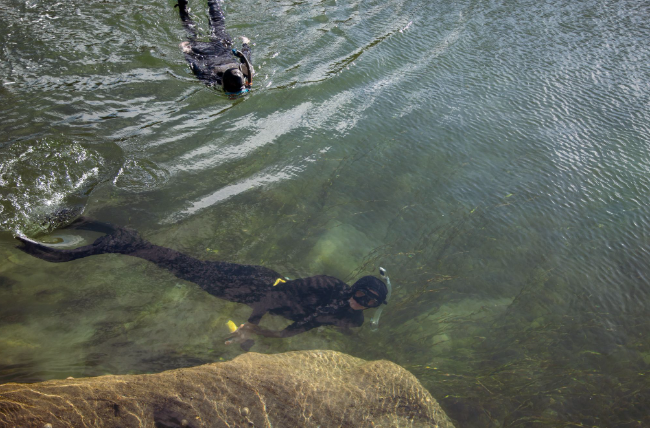
Adam Haunreiter and Kendall Lotka do an initial lap around the pond at Clark’s Point in Bellingham, WA to scope out visibility. On a good day, visibility in this area can be anywhere from 10-12 ft. The deepest part of the water is around 10ft at low tide and nearly double that at high tide. // Photo by Peyton Perdue
But what his classmates don't understand is that he is preparing for the feeling of the waves breaking over his head, the cold rush of the frigid sea on his fingertips. They don't understand that time is valuable when freediving. The rush of breath held past a comfortable 15 seconds is nothing compared to the rush he feels descending into the mysteries of a giant kelp forest. The lack of oxygen is worth it when coming eye to eye with a perch drifting by, or feeling the bow of a shipwreck last seen above water over 100 years ago.
The Salish Sea offers miraculous marine gifts, for those willing to bear the cold waters hugging the cliffs. Adam is one of those willing participants. He got PADI Open Water certified at 18, but has always been in the ocean.
Between the two, he prefers freediving. “You have so much more freedom,” Haunreiter said.
“I was always playing on the beach and swimming in the ocean for as long as I can remember,” Adam said. He remembers swimming off the back of his grandparent’s home in Gig Harbor for crab.
Now a resident of Bellingham, Haunreiter spends his free time exploring down below. He shares his expeditions on Instagram using the handle @surferdude_adam, allowing people on the shore, far and wide, to join in on the magic. Social media has connected him with other enthusiasts in the area, Haunreiter explained.
“We have dive group chats, and I even got to go out on a boat with someone I met through Instagram,” Haunreiter said.
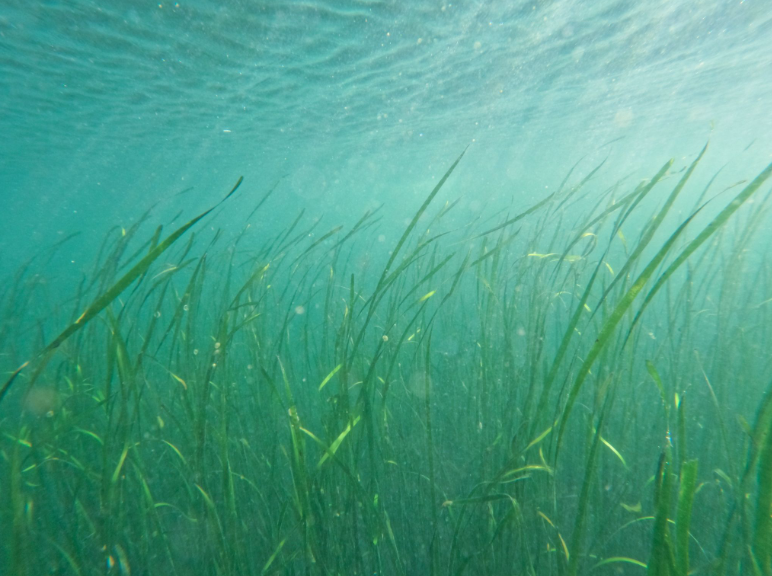
Eel grass sways gently side to side at Clark’s Point. Eel grass provides habitat for species spanning from fish like perch to crustaceans like crab and shrimp. // Photo By Peyton Perdue
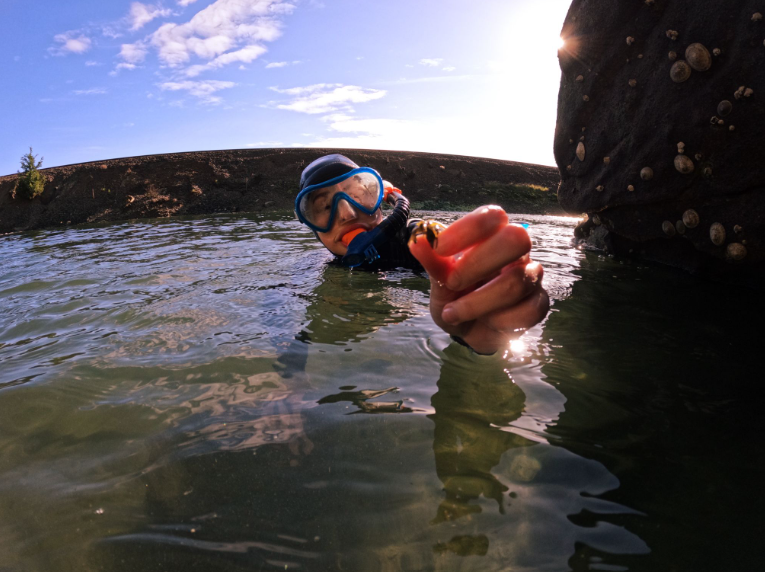
Lotka holds up a hermit crab. Crustaceans like these tend to enjoy private rock crevices and other materials they can blend with, often sporting a shell passed down from a snail. // Photo By Peyton Perdue
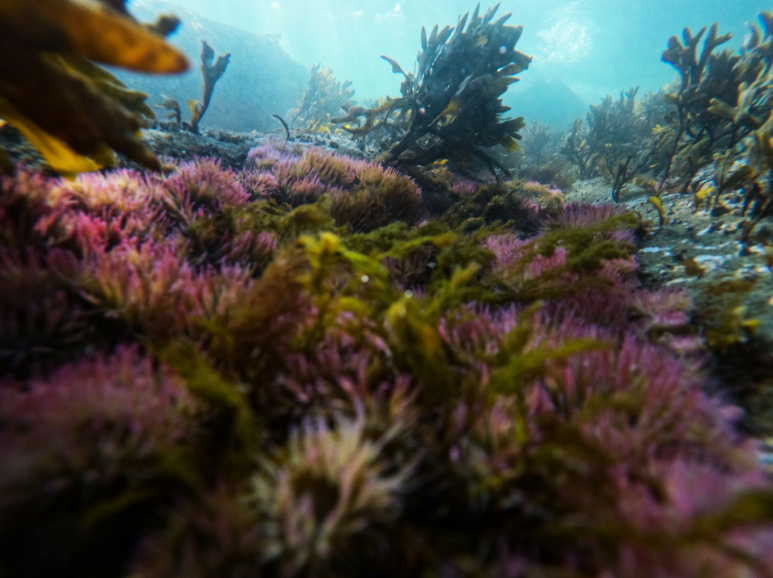
Anemone and kelp sit illuminated by sunlight filtering through the water offshore near Clark’s Point. Large groups of anemone can be found under rocks and inside tide pools during low tide. When the tide is in, they provide a vibrancy to the palette around them. // Photo By Peyton Perdue
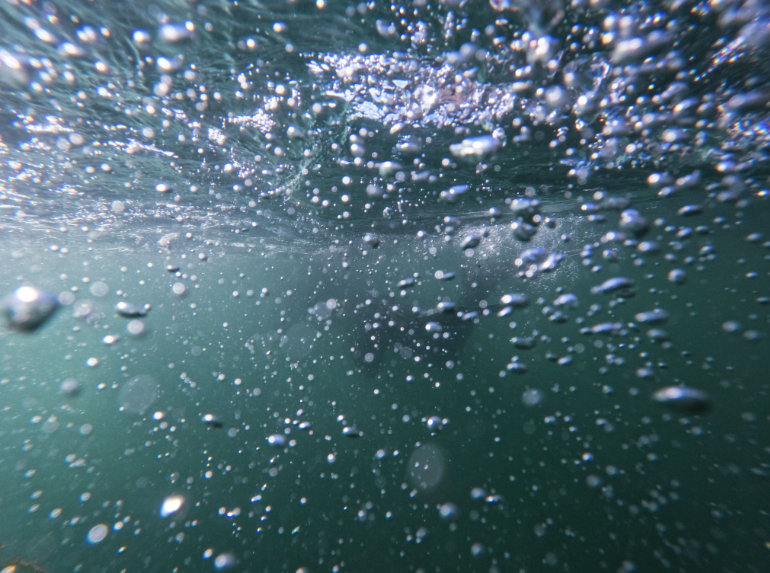
Bubbles trail behind Lotka and Haunreiter as they kick through the water. Divers have to practice kicking with stiff, straight legs for ideal speed. It’s important to minimize what you touch as sediment kicks up easily and provides less visibility. // Photo By Peyton Perdue
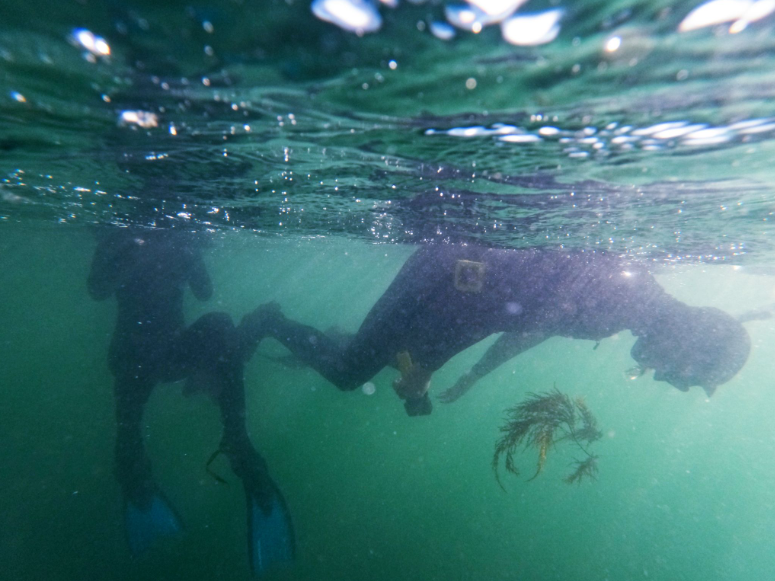
Haunreiter breaks the surface to dive down. He optimizes his time underwater by getting to the bottom quickly. // Photo By Peyton Perdue
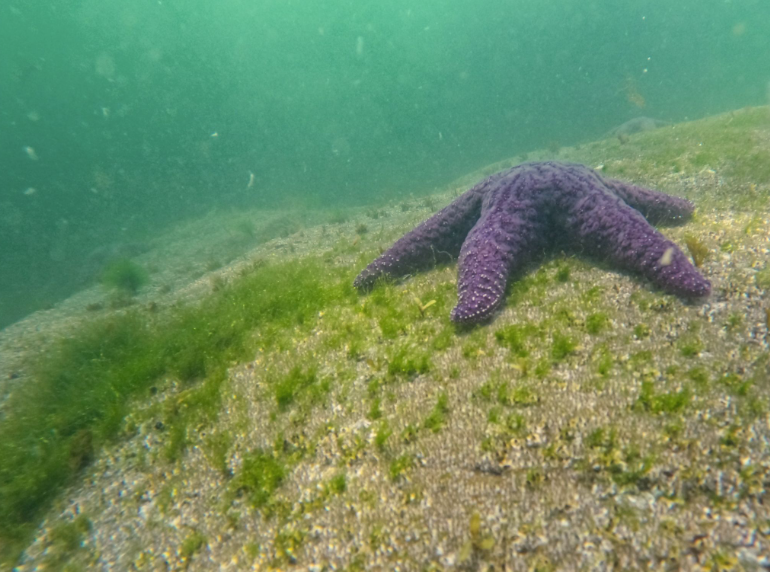
An ochre sea star clings to a rock in the Bellingham Bay. One of the most frequent sights while diving in the puget sound are sea stars. Often, they are huddled and packed into corners together. These creatures also add a bright pop to the muted landscape’s colors. // Photo By Peyton Perdue
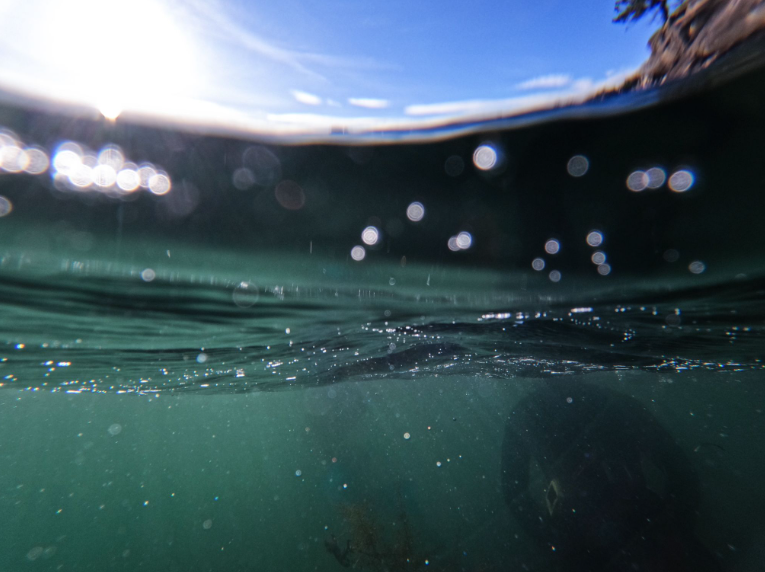
Haunreiter floats near the surface of the waves. Above him is the rocky chuckanut formation, below him is kelp forests and an intertidal biome. // Photo By Peyton Perdue
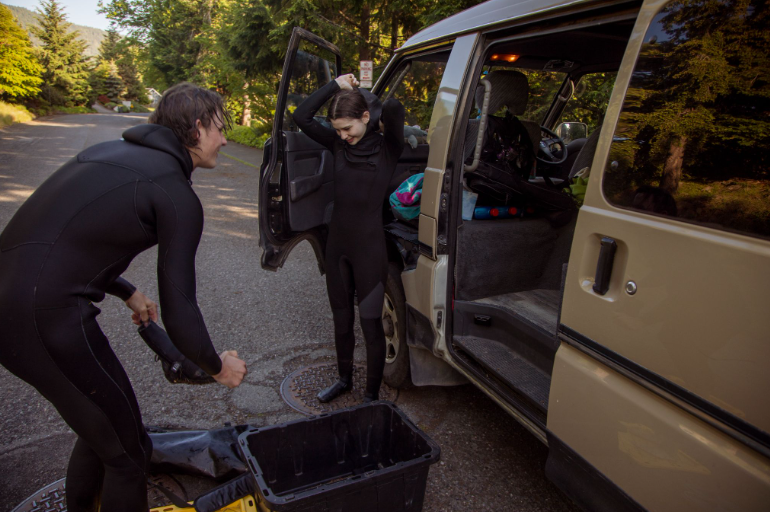
Haunreiter and Lotka pack their gear and strip their wetsuits after the dive. Haunreiter aspires to, “build a tank filling station in the back.” This way, he can always have a tank of air on hand for his next dive. // Photo By Peyton Perdue