Speaking for the Forest
How a researcher, photographer, and conservationist all help preserve wildlife
Story by Ben Magnus
Published Sept. 24, 2026
Massive, old-growth cedar trees taller than school buildings, in legacy forests and the northern spotted owls that live along the Cascade Range are at risk amid uncertainty under the Trump administration.
Despite this hardship, there are a strong group of people in the U.S. working tirelessly to ensure the country’s animals and public lands remain protected.
Notable names and groups are former President Theodore Roosevelt, who established 150 national forests, and the Sierra Club, America’s largest grassroots environmental organization.
Alongside the big names stand local figures and organizations putting in the grind day-to-day to protect public lands and wildlife. The work they do may vary in practice, but they all work toward the same goal: conservation.
Art Wolfe
Art Wolfe’s contribution to conservation is through fine art photography.
Wolfe is a deep-seated Seattleite who was given a paintbrush early in life, and soon accompanied by a camera. He started applying what he learned from painting into his photographic compositions. Today, he is a fine-art photographer with 120 published books
He believes powerful images can affect people on a gut level in ways words cannot. They can capture people’s attention and encourage them to engage with environmental issues, regardless of their political beliefs.
As an active and curious student at the University of Washington in the 1970’s, Wolfe took up climbing, from rock walls to volcanoes, fostering a close relationship with the outdoors.
Wolfe’s connection to photography and nature has taken him to all seven continents, where he has documented wildlife, landscapes and Indigenous cultures.
“I never really thought of myself as an environmentalist as my main job,” Wolfe said. “My main job is bringing the world to people.”
Wolfe’s work has become a valuable tool for conservation efforts around the world. Raising awareness for elephants in Chad, Africa, gray whales in the Pacific Ocean and tigers in India.
"In a world of terrible politics... It’s good to remind people that there are great stories out there, “ Wolfe said. One doesn’t need to do hands-on field work to contribute.
Dave Werntz
Dave Werntz is similar to Wolfe in the sense that he helps animals and lands, but in an entirely different way.
Werntz is the science and conservation senior director at Conservation Northwest, a conservation organization with three main objectives.
“Connect the big landscapes, restore iconic wildlife and protect our natural heritage for future generations.”
One of Dave's early jobs was with the Forest Service doing surveys in dense, cathedral forests for northern spotted owls, a species that has been identified by the Forest Service as an indicator of old growth, according to Werntz.
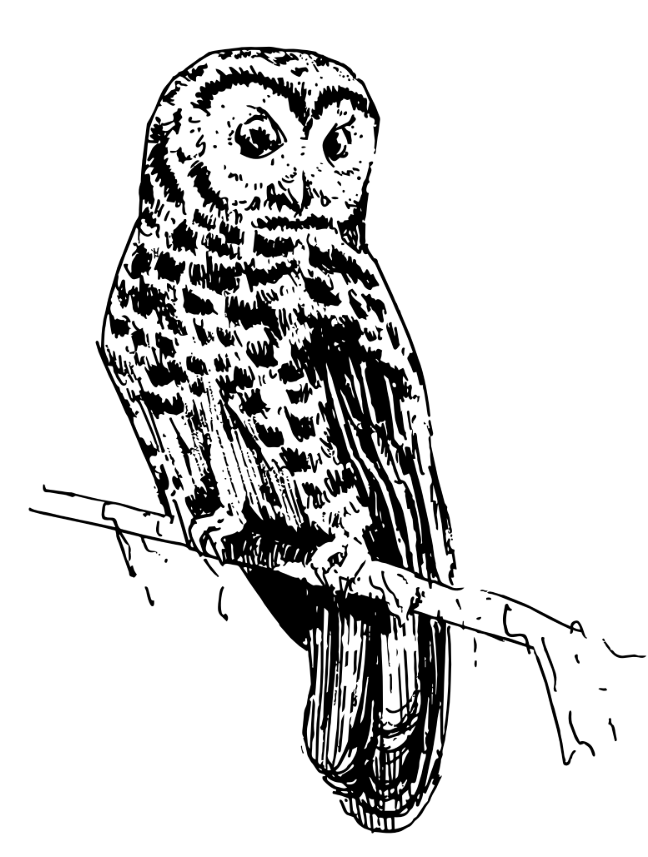
The surveys required Werntz to visit the forest four times. When he came back between the third and fourth visit, the once diverse and lush forest was clear-cut, leaving the environment destroyed.
“That was the moment that I realized I needed to work towards conservation, that being a scientist wasn't enough. That just being a researcher wasn't enough,” Werntz said. “That if we didn't take action, we would lose these forests and all of their values that support wildlife, but also us as people.”
Werntz does a little bit of everything at Conservation Northwest. He is the director of the Forest Field program, where he manages regional and national policy and conservation efforts, oversees specific reintroduction and recovery projects for various species and conducts hands-on field work.
“The field work is what fills me up, and allows me to push through some of the office work that we have to do in order to be effective in the field,” Werntz said.
He described that after all the planning, permitting, coordination, vets and equipment, finally opening the lid to a fisher container and watching it run into the Olympics for the first time in decades is incredibly rewarding and comes with relief that the ecosystem is now more resilient.
Dr. Stephen Nyman
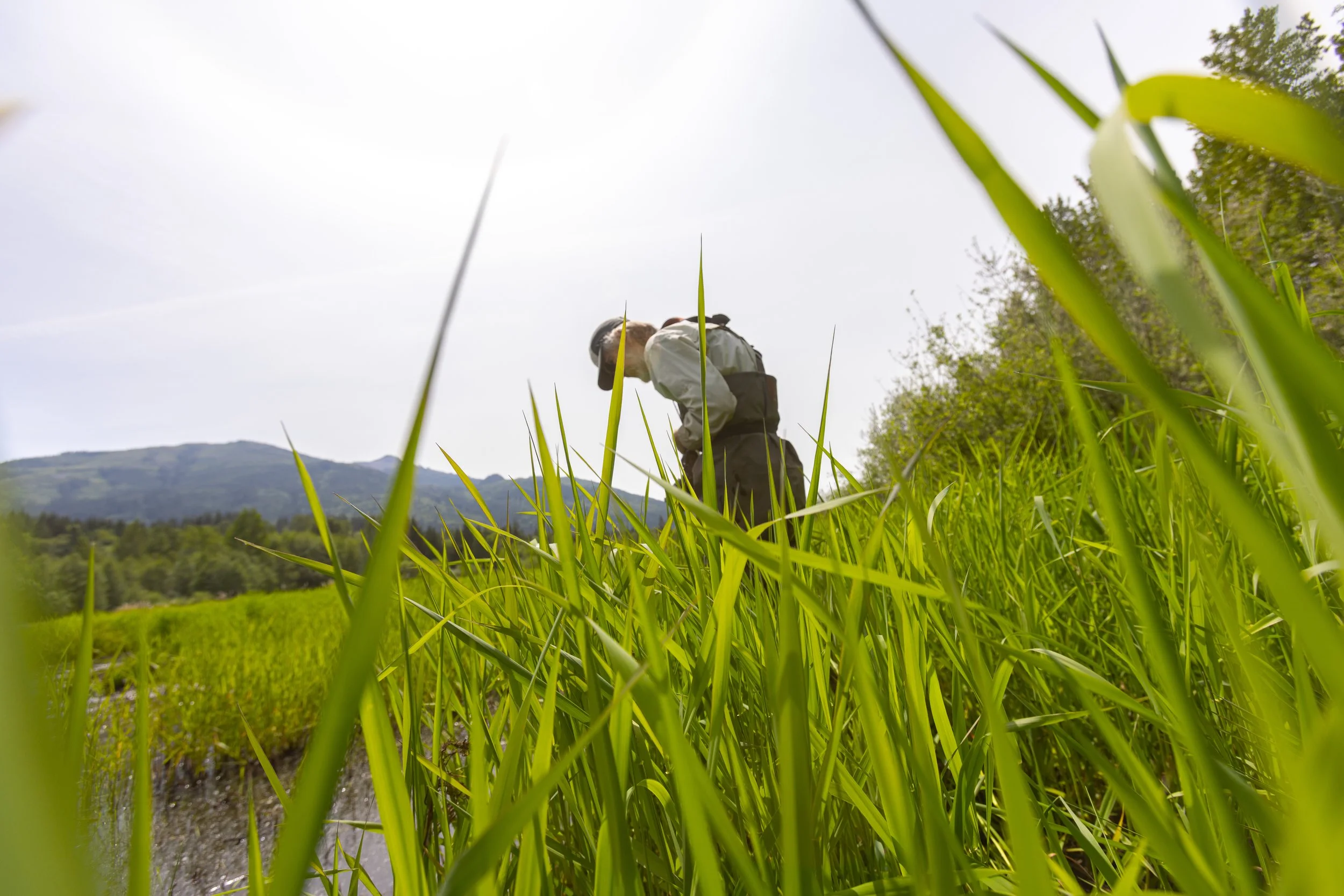
Stephen Nyman is a researcher-turned-conservationist. With a master’s degree in ecology and a Ph.D. in biological sciences, he spent much of his career working with amphibians. It wasn’t until after his career that he began working on their behalf.
Nyman grew up in the 1960s and 1970s, a time before a legal framework existed to list species as endangered or threatened. Nyman heard stories about bison and whooping crane populations declining.
When President Richard Nixon signed the Endangered Species Act of 1973, it inspired Nyman’s early interest in conservation. Since then, he has grown from intrigued to a full-fledged conservationist.
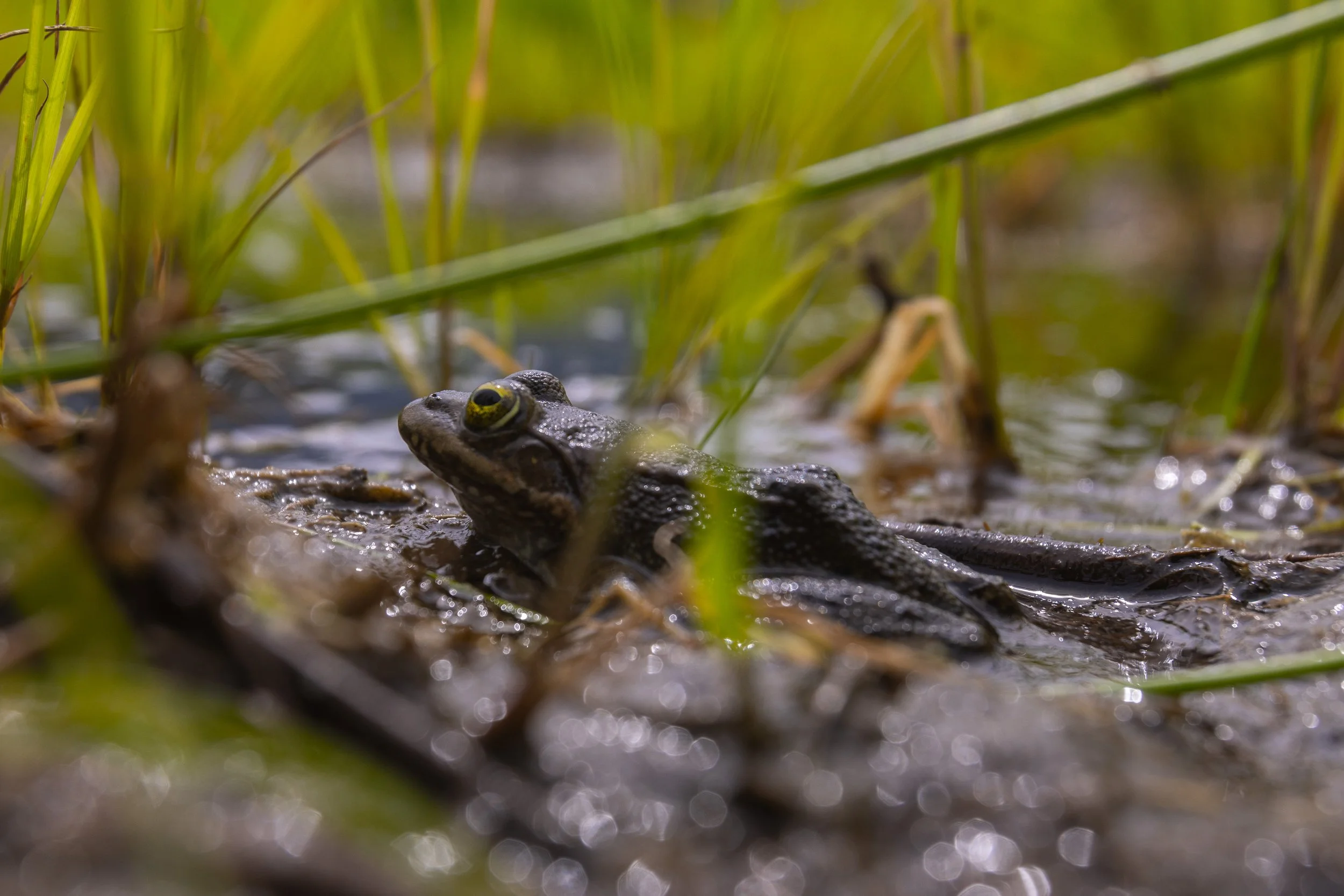
Nymans work varies seasonally, beginning in late winter with monitoring and surveying the Oregon spotted frogs breeding sites. In spring and summer, the focus is on tadpole sampling, habitat restoration, invasive species control, and creating new pools and mini-pools to support frog populations.
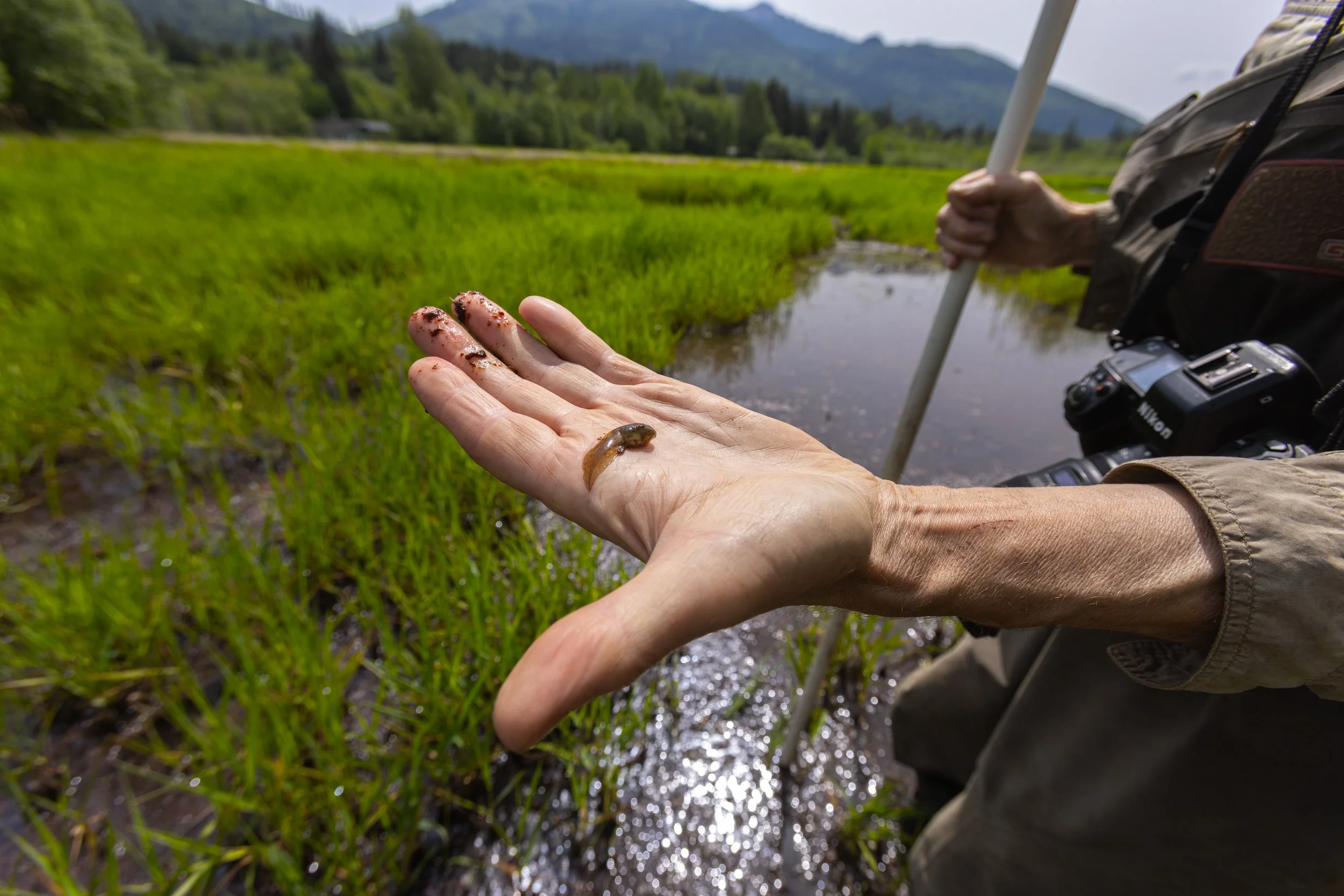
From late June through September, work intensifies with daily field operations, volunteer work parties, native plant restoration and large-scale habitat management projects. Fall and winter are spent wrapping up fieldwork and completing required reports for U.S. Fish and Wildlife Service permits and grants.
During the summer, he spends up to five days a week at the Oregon spotted frog conservation site in Acme, Washington, collecting data on water levels, counting frogs and expanding ponds.
In 2016, Nyman and his colleagues created the first pool for the frogs, measuring 30ft in diameter. Ten years later, the site has 11 pools, totaling around 0.58 acres of aquatic habitat. The pools are created by cutting into the ground with a hand saw or gas-powered machine and extracting the grass roots. It’s then hauled off with a sled that gets dragged over the grass.
Getting rid of the invasive grass allows water levels to rise, creating a more habitable place for the frogs.
“This is my legacy,” Nyman said. “Everybody makes choices about how they live their short lives,” and he’s proud to leave something behind.
Nyman’s experience, as well as Werntz’s and Wolfe’s, show how conservation comes in many forms, and if someone is looking to contribute to those efforts, there are plenty of ways to do so.