
The lingering shadow of film noir
Written by DuPree Nugent
Photos courtesy of Troy Schulz and Kieran Parnell
Published October 3, 2025
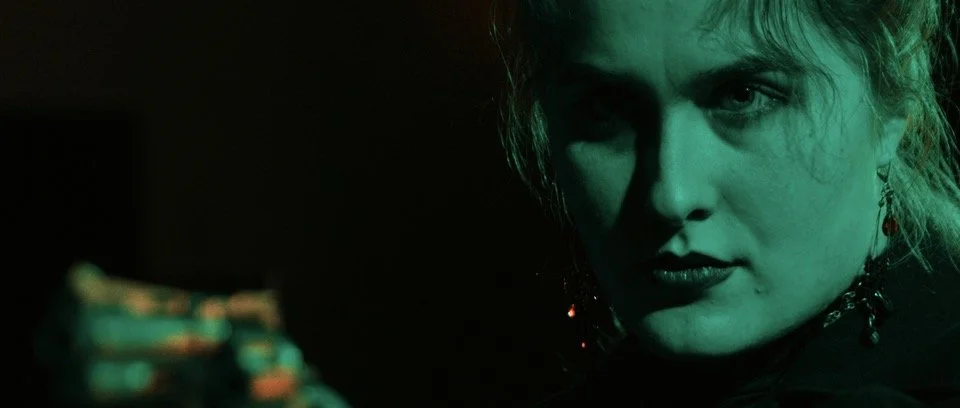
From Kieran Parnell’s upcoming film Pinku. The film is set to premiere Nov. 20, 2025.
A cynical private eye with a sordid past and a hopeless future, strolling down the foggy, rain-drenched streets of a seedy city. A femme fatale luring a gullible man into committing the perfect crime, only for it to unravel and spiral into chaos. A crooked police force and corrupt officials frame an innocent citizen with the crime of being in the wrong place at the wrong time, while they make dirty deals with mobsters behind closed doors to satisfy their greed and opulence.
These are just a few of the tropes that are often associated with the film noir genre, a style of filmmaking that became prominent during the 1940s and 1950s. The genre is noted for its shadow-drenched photography, cynical plots carried out by amoral characters driven by personal gain, desperation or impulse; and so many twists and turns, back stabbings and double-crossings that one can lose track of what is going on.
Noir is more encompassing than the plots and archetypes that first come to mind when the genre is mentioned. The plot may not involve a private eye or feature a femme fatale, and the crime and mystery may take a backseat to the human drama. Sometimes there won’t even be a crime at all and the story will be purely focused on the inner conflicts of the characters.
“Sometimes it's a straight-up sports movie about a boxer or a professional wrestler,” said Troy Schulz, an independent filmmaker in Bellingham and writer of the independent film noir “Pinku(2025).”
“The nostalgia factor when people are looking at films from the past, there's this tendency to think that like, ‘Oh, they were so innocent back then’, or ‘They didn't really know what was going on as much’ or something,” said Melissa Tamminga, program director at Pickford Film Center. “There's a kind of tendency to see a sort of naivety in older films. Whereas if you really do immerse yourself in some of those films, they're as dark as anything that's being made now.”
The irony of the nostalgic view is that many of the noirs of the 1940s and 1950s were considered trashy and immoral at the time of their release. Many of the noir films of that era were relegated to low-budget productions. That low-budget status could at times work to the filmmaker’s benefit, allowing them to mostly fly under the radar of film censors. Filmmakers could explore controversial topics and show conflicts that couldn’t be resolved easily or even ethically. Filmmakers working within the noir style began blurring the lines of good and evil, presenting characters who were morally flawed, yet sympathetic.
“We have anti-heroes, people who are outside of the law, yet they're the main character, and we kind of root for them,” Professor Youmans said.
Though outdated aspects of the genre cannot be ignored and certainly deserve to be viewed critically, noirs still manage to maintain their allure for filmmakers. That allure could be the nostalgia for the so-called “good ol’ days,” simply spinning the same yarn of chain-smoking tough guys in trench coats, socking each other in the face. But that would be leaving out how the films explored themes of greed, paranoia, disillusionment, and alienation, which challenged audiences and film censors.
“I think to a degree, refusing to engage with those themes in art kind of also means you're refusing to engage with those themes in reality,” said Kieran Parnell, an independent director in Bellingham, who directed and co-wrote the independent film noir “Pinku” with Schulz.
Drawing on the archetypes of 1940s and 1950s noirs, Parnell’s film focuses on Ivy, a Generation Z private eye who vapes instead of smokes, drinks Jello shots instead of whiskey and is described by both Parnell and Schulz as a “fail girl and drowned rat.” But outside of the character being a parody of a famous archetype, Schulz said in writing the film, he also considered the kind of world that Ivy inhabits. Similar to classic noirs, “Pinku” depicts a world of unstable morals and identity, only looking through the lens of social media and the “hustle” culture of modern times.
The variety of plots often raises questions and debate about what films qualify as noir. The term itself was coined by a French critic in 1946 and retroactively applied by American critics later on.
“There's always been a debate. Is it a genre? And it is if you think about certain films, but all genres are like this. At the edges, they bleed, and then it becomes confusing. But people talk about it as a style, sometimes more than a genre,” said Professor Greg Youmans, a film studies professor at Western Washington University.
Perhaps that ambiguity adds to the intrigue of noir. Maybe the identity of noir is something fluid, something that formal qualities can’t easily define and classify and can seamlessly fit and capture the mood of its time and place. Noir could be seen as an attitude that reacts and comments on the world around it. The style itself derives from the German Expressionist films of the 1920s, which communicated strong feelings of malaise and horror in their stylized sets and lighting, according to Professor Youmans.
“There's usually a protagonist with a warped perspective, or they're dealing with some sort of trauma, and then the whole film gets distorted in this really stylistic way to reflect that sort of trauma, and noir continues to do that,” Professor Youmans said.
The noirs of the 1940s and 1950s are now firmly entrenched in American culture. They are often retrospectively praised by critics and for some they can be viewed nostalgically as emblematic of a heteronormative America where “men were men” and women were either evil and conniving or damsels in distress.
“I don't think the world of 2025 is really that much different than the world of 1945. It's the same things that people are preoccupied with now. It's just now arguably worse because there are so many more layers of compounding factors that everyone has to think about and process every single day,” Schulz said.
Out of the 1930s came a number of seismic shifts to the social, cultural and political landscape of not just the United States, but the world at large. The Great Depression had a stranglehold across the globe, creating economic uncertainty and social upheaval. In the U.S., urban crime seemed to be on the minds of the public. This gave rise to the popularity of pulp crime stories, most prominently from the likes of Dashiell Hammett, Raymond Chandler, and James M. Cain, who wrote novels in the “hard-boiled” style. The stories often painted unglamorous and unsentimental portraits of humanity and expressed disillusionment with systems that were becoming increasingly more unstable. All the while, the film industry was enacting new guidelines — known as the Hays Code — to combat the depictions of violence, sexuality, nudity and to ensure that good morals and justice prevailed.
Meanwhile in Europe, a grave threat was looming: the rise of fascism and the Nazi Party in Germany. Many artists and directors who would become associated with film noir, such as Fritz Lang, Robert Siodmak and Billy Wilder, fled Europe to the U.S. The films they released offered a cynical look at American society and ideals of moral absolutism and structure, unconvinced that this identity was anything more than artifice. Similar to the hard-boiled writers, many filmmakers explored repressed impulses that emerged out of desire or desperation by depicting morally gray outsiders.
“If you're coming from a country where there's authoritarianism or collapse, and you can't trust in these institutions, that's going to be certainly brought to America, where this might be the land of the free, the home of the brave and we've figured out democracy. But if you've just watched your own country collapse, you know that it can happen anywhere,” said Tamminga.
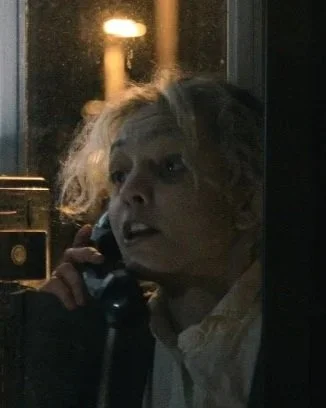
Image from Pinku (2025)
————————————
By the end of World War II, the U.S. had achieved a newfound economic prosperity, an image of itself as one of the heroes that won the war and a desire to return to a sense of normalcy through promoting conservative values with the image of the “traditional” family. However, new fears and anxieties would arise out of this supposed peace and prosperity.
Tensions between the Soviet Union and the U.S. gave rise to paranoia around nuclear annihilation and possible communist influence within the U.S. The House Un-American Activities Committee set its eye on Hollywood and began to go after and blacklist many actors and filmmakers for supposed ties to communism. These accusations could range from associations with anti-fascist organizations during the war period to supporting civil rights.
Many filmmakers who were targeted or challenged by the House Un-American Activities Committee were often the same filmmakers who left their homes in Europe to escape authoritarianism in the 1930s. Like the film noirs released during the war period, the noirs of the post-war period expressed cynicism and disillusionment. Some films of this period indirectly criticized the House Un-American Activities Committee with plots mimicking their questioning of individuals’ values and alliances, and the antagonists were authority figures and informers.
“The general atmosphere of simultaneous jingoism and paranoia that can emerge during a period like that permeates a lot of the classic film noir,” Schulz said.
By the 1960s, the film code had become a thing of the past, and films were able to be more explicit in sexuality and violence, which made way for exploring darker themes and signaling the transition from classic noir to “neo-noir.” When the 1970s rolled around, distrust and cynicism of American institutions had reached their peak with political unrest over the atrocities in Vietnam and America’s humiliating withdrawal, the Watergate scandal and an economic recession made worse by an oil crisis. This was reflected in plots revolving around traumatized veterans taking on a life of crime or vigilantism, complex political conspiracies and the fear of being under surveillance.
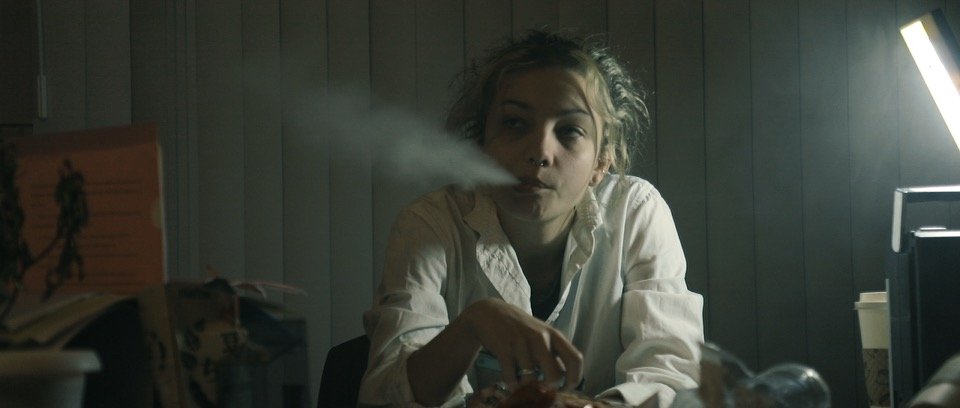
Image from Pinku (2025)
————————————
“Neo-noir is really preoccupied with disillusionment about institutions and disillusionment about Americana,” Schulz said.
The development and deconstruction of film noir has, in many ways, kept the genre from simply being a dead artifact and has allowed for parody and blending with other genres. Critical reevaluation has also brought classic noirs into a different light by taking many of the more regressive ideas — especially concerning gender — and flipping them on their heads. These reevaluations give rise to interpretations of the archetypes of noir having queer undertones as a product of the artifice and exaggerated expression of their gender.
“I think queerness has always been an innate part of noir as a genre because the characters, especially those in classic noirs, are often these very highly gendered, hyper-masculine or hyper-feminine archetypes,” Schulz said.
Out of these interpretations emerges the opportunity to take elements that were undertones and bring them to the forefront to poke holes in and confront preconceived notions of gender and identity, as Parnell does with the representation of LGBTQ+ people.
“I just feel like we are kind of reaching a critical point of representation in all kinds of media,” Parnell said.
Film noir still maintains a sense of fluidity and finds ways to better reflect people and their fears, while also providing a cathartic outlet for those anxieties.