Fem skaters strive to form a supportive community
Story by Adeline Roesler-Begalke
Photos by Miranda Grogger
Published October 3, 2025
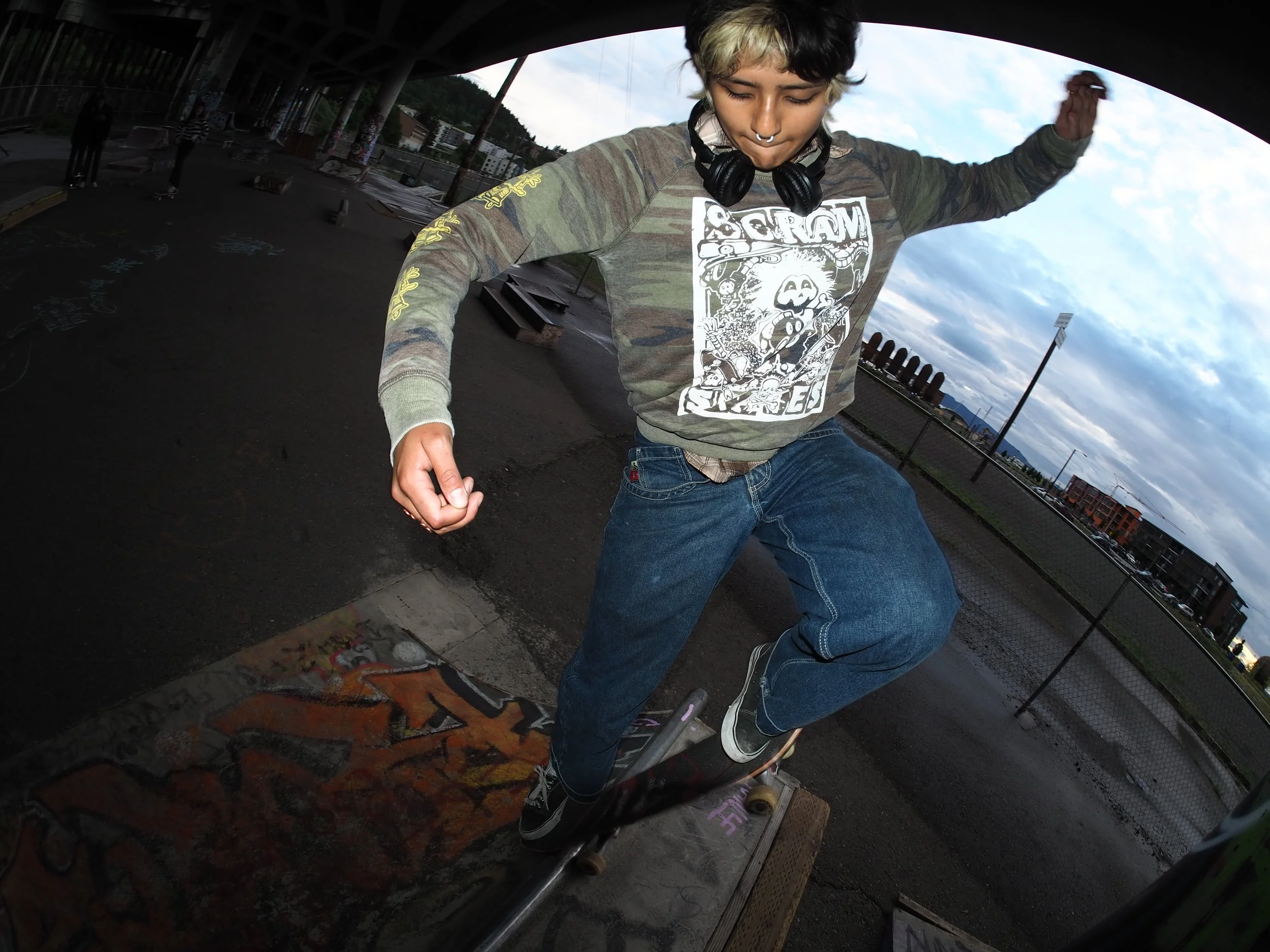
Nina steadies herself on the edge of the quarter ramp, arms outstretched—poised between calm and chaos, ready to drop in.
The sun is hidden, rain pounds down onto the streets of Bellingham and I think to myself, “Who would be skating in weather like this?” But as I pull into the parking lot and look over at the skate park under the Roeder Avenue Bridge, I see them. There they are, a group of four girls. They’re unfazed by the weather, even as the wind drives the rain directly at them beneath the bridge. I make my way from the parking lot over to them, walking along the tall chain-link fence that borders the park. As soon as I walk through the opening in the chain link, the girls stop skating, pick up their boards and turn to me with big smiles, ready to chat about skate life.
The girls all have that classic “skater look” — shaggy haircuts, baggy jeans and oversized tees. Their boards are adorned with stickers, logos and artwork from the local skate store, Unknown Board Shop.
Two of the girls, Nikki Araya and Lily Cornaggia, are originally from Spokane, Washington, where they became friends after multiple run-ins at the skateparks there. They quickly found common interests over the video game Tony Hawk: American Wasteland, YouTube skate compilations and their favorite, Supreme’s “Cherry,” a 2014 skate documentary.
“That’s how I got into some of my favorite skaters,” Lily said, in reference to “Cherry.” “It was like a New York skate scene, so I was really into Supreme skate videos, but then they just became a hypebeast brand.”
Nina Aguilar and Veda Allen, on the other hand, are both from Bellingham. As they both spent a lot of time exploring the local parks, they happened to meet at the Civic Athletic Complex Skate Park off of Lakeway Drive. They clicked right away and have been friends ever since. They’ve skated together all throughout the Bellingham area and have gone down to Seattle to skate in competitions together. Once, they even competed in WitchHunt, an annual female-focused skating scavenger hunt inspired by the Thrasher and Vice YouTube skate show, “King of the Road.” In the show, teams of skateboarders race across the West Coast competing in challenges for their team. Whichever team has the most points at the end of the race wins $50,000 and a feature on the cover of Thrasher Magazine.
To prove their participation to me they both pulled up their pant leg to show me the matching tattoos they received on top of a half-pipe to earn points for their team. The tattoos fit the occasion: two little dogs wearing witch hats.
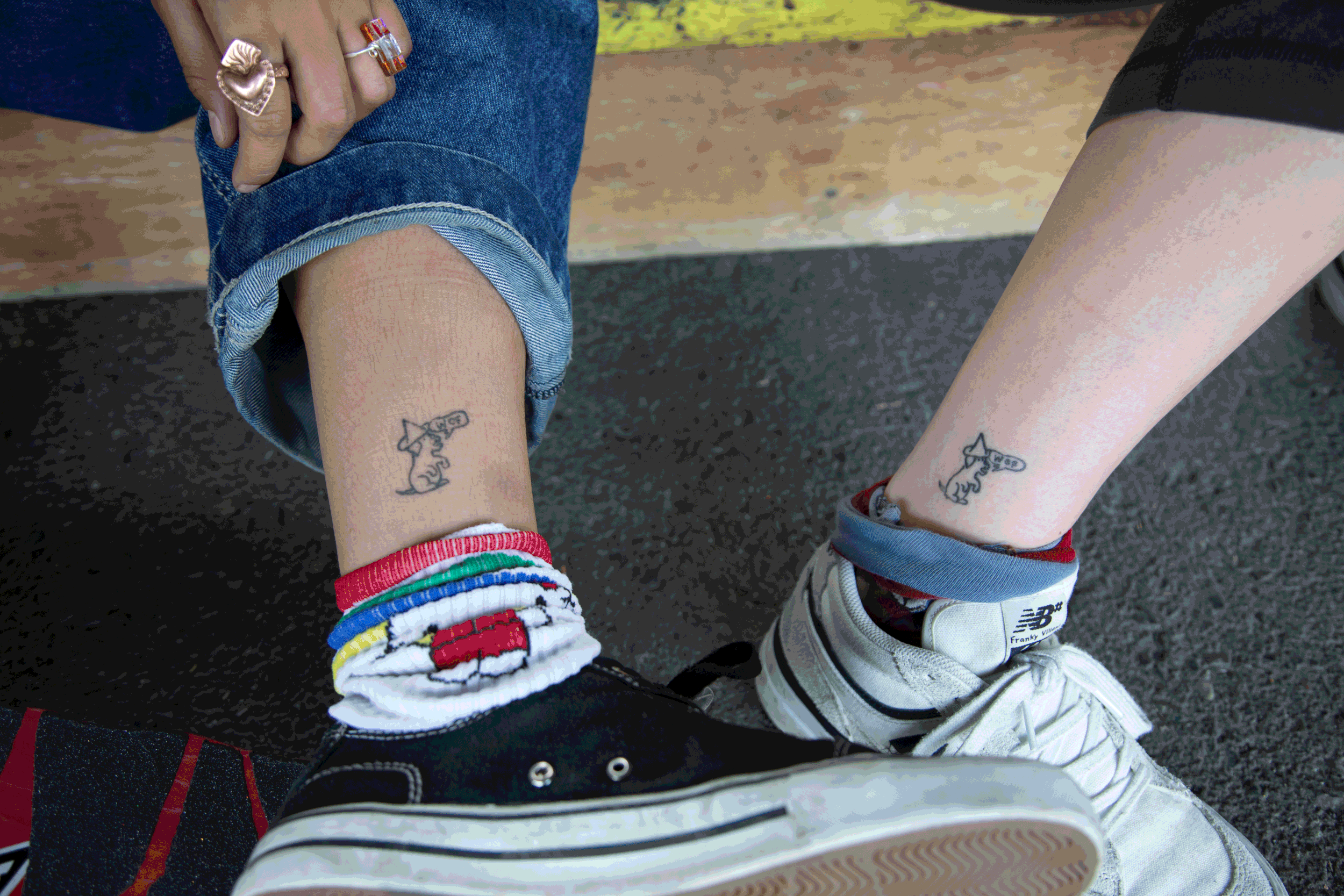
Veda and Nina pull up their pants legs, proudly showing off the tattoos they received while participating in WitchHunt.
Nina’s parents, originally from Mexico City, have been involved in the skate community since before any of the girls were born. Her dad has been skating since the ‘90s and got her interested in the sport.
“I grew up in a skater family, you could say, so I thought it was normal to see girls around,” Nina said.
And Nina was right, it is normal. According to a 2023 survey done by GoSkate, they found that 40% of all skaters identified as female, which made me wonder what it’s like to be a woman in these spaces.
“Sometimes you’ll go to the park and there will be no girls and that kind of sucks,” Nikki said. Being the only girl skating can be isolating. “It kind of feels like you’re not welcome and that you shouldn’t be there.”
Civic skatepark is a popular spot for skaters, but according to the girls, it’s an intimidating place to skate and hang out at, especially if you’re new to the park. Nikki pointed out that when she first came to Bellingham, she would go to Civic for fem skate meetups and it was not a welcoming atmosphere for the group. According to Nikki, the fem meet-up group was picked on for either being too good at skating or for not looking fem enough.
The girls said they have been cat-called, ridiculed and mansplained to.
“When I came here, there was a lot of interesting characters at the park,” Nikki said. “I got called names and slurs, which is something that just didn’t happen to me at my old skatepark.”
When Nikki got to Bellingham back in 2021, she joined the girls’ skate club at Western Washington University — it fell apart quickly, though, both from students getting busy with school and the struggle to find a club leader. The girls felt that they would form a group and get a strong following in Bellingham but time after time they withered away. This is attributed to a lack of motivation and feelings of unwantedness from the skate community.
“Those same people who used to hang out at Civic have basically bullied every woman out of the skate park…which is why they [the girls] don’t come back,” Veda said.
But it’s not just at the park that the bullying occurs; it has extended to social media as well.
“If you go on Instagram and look at fem skaters, they get so much hate for being at the level that they’re at and posting,” Nikki said. “Where it’s like, maybe a boy who was at that level wouldn’t get as much hate.”
Nikki went on to explain that fem skaters who are slightly less advanced and post skate videos receive unwarranted hate compared to posts from guys who are at the same level. The girls believe the hate comes from being fem and that it has nothing to do with their skill level.
Though maintaining groups of fem skaters can be a challenge, the girls continue inviting newcomers and sharing the fun of the sport.
“Eventually, you do find your friends,” Nikki said. “We have each other and we’ll all go by ourselves and it’s good.”
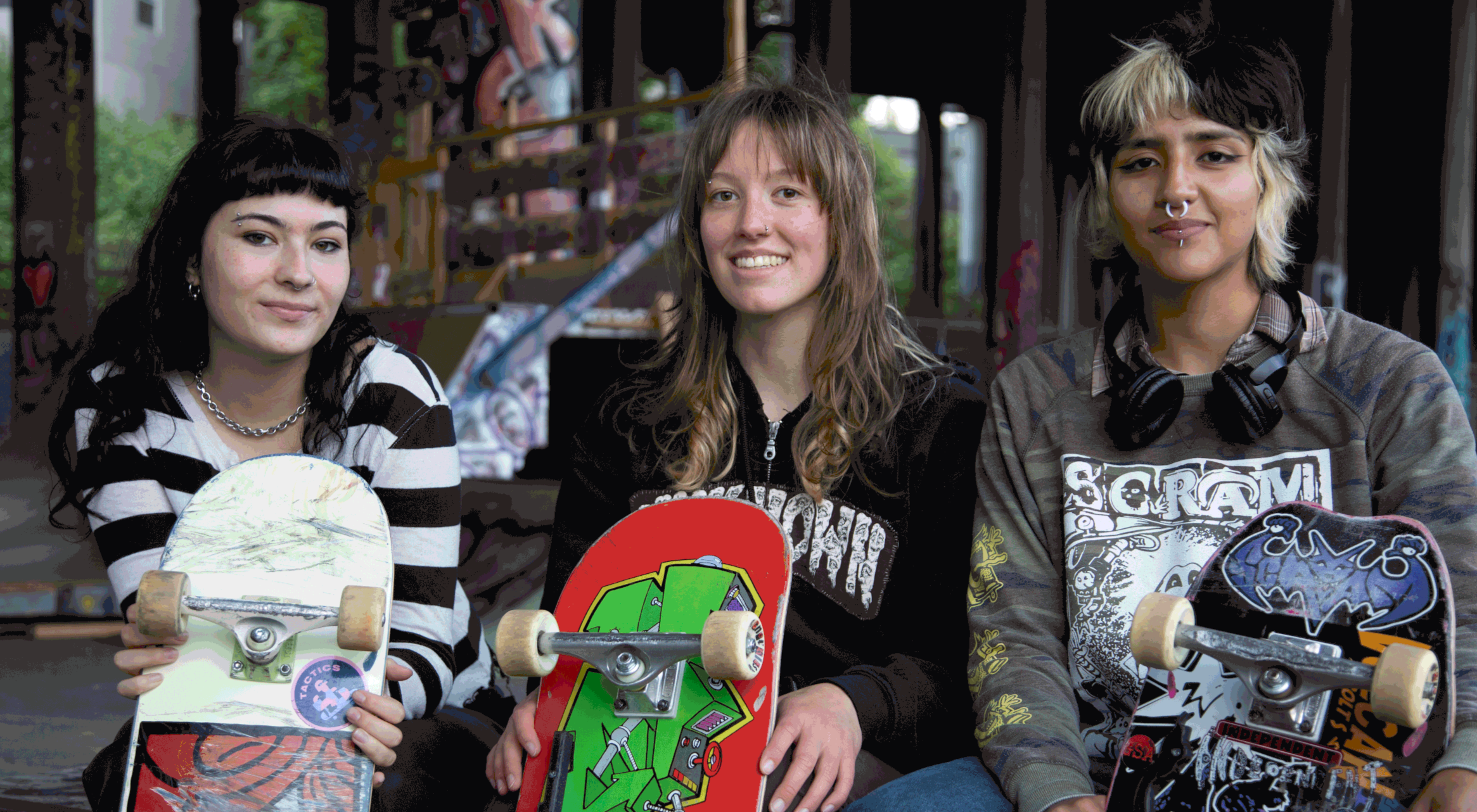
(From left to right) Nikki, Veda and Nina pose for a portrait between skating sessions. The girls all hold up their boardss, smiling and laughing with one another.
During the summer, when school lets out and the college crowd heads home, the parks start looking a little desolate. In search of fem skate groups, the girls will head down to Seattle to check out the parks.
In Seattle, fem skate teams are making their mark. Through organizations like Skate Like A Girl, there are workshops and events that focus on fem and transgender skaters. They aim to make skate culture a more inclusive and welcoming community for everyone.
Skate Like A Girl is a nonprofit with three chapters located in Seattle, Portland and the Bay Area. They create a safe space for women and transgender people to learn how to skate and cultivate their skills.
Hayden Smith, the senior program lead at Skate Like A Girl, sat down with me to share more about the organization, its mission and why inclusivity is so important in the skating community.
Hayden started skating in middle school after not finding mainstream sports to be their cup of tea. She was drawn to the counterculture that the sport presented her with and found self-expression to be a constant presence when skating.
Hayden kept skating because she was able to find her community of non-traditional skaters through the sport. Her first time attending a Skate Like A Girl event was actually as a participant. She immediately fell in love with the organization and the people she met there.
So when Skate Like A Girl put out a flyer about hiring, Hayden immediately put in her application. Soon after she was hired as the organization’s program lead.
Hayden does outreach programs that are geared toward the youth in Seattle, for example, she hosts the weekly flagship, “Women &/or Trans Skateboarding Sessions.” Another one of Skate Like A Girl’s missions’ to provide a space for beginners to learn the sport.
“Regardless of your identity or your positionality, being a beginner at anything, especially in something like skateboarding, is really challenging…and really scary, and Skate Like A Girl provides a really cool space for people of all skill levels,” Hayden said.
When you’re new to the sport and looking for ways to learn on your own, you might wonder ‘How do you get good at this?’
I was curious to know about how the girls found new tricks to learn and how they mastered the ones they already knew. The response was short and sweet: “repetition,” they said. I should’ve guessed. To get good at anything, you have to dedicate time to getting better. They all shared stories about spending hours and hours working on one little thing until finally they’d get it.
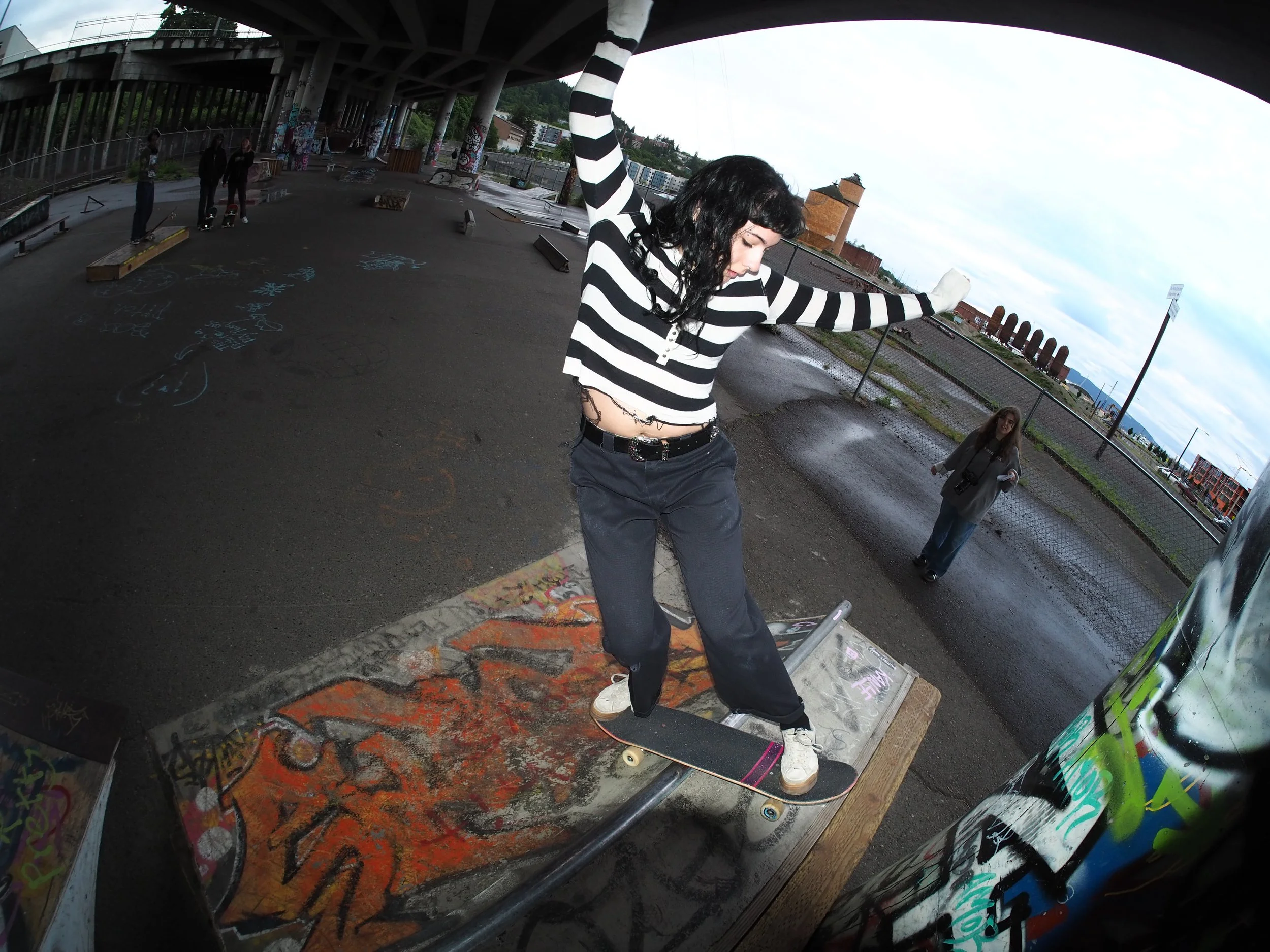
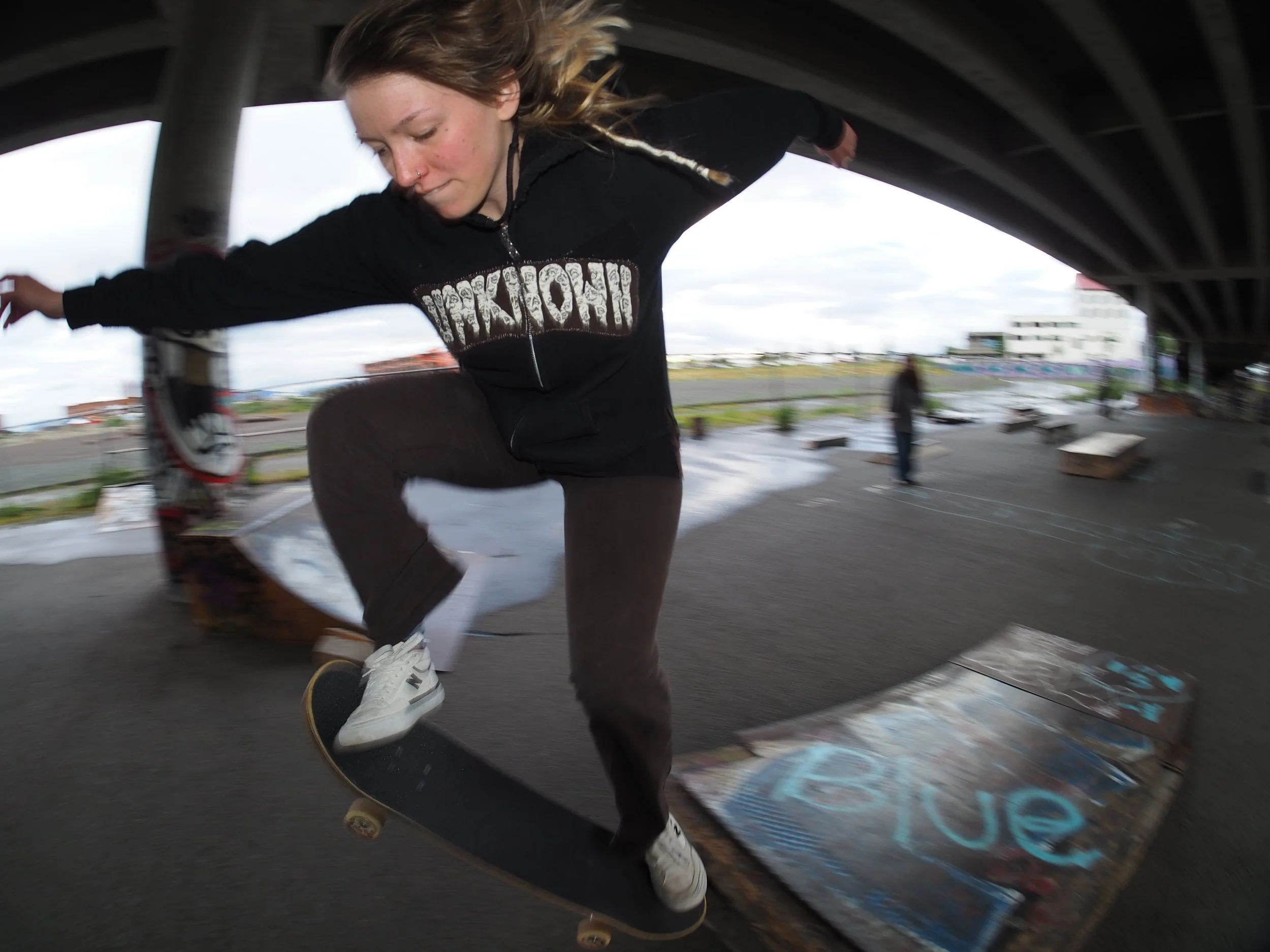
I got to see a bit of this repetition in action during our second meeting. The girls were working on their tricks; Nikki and Veda on ollies and Nina tried out a boneless. For nearly half an hour, I watched as they sped across the park and rode up the ramp, trying to get their tricks just right. They’d mess up, then, without batting an eye, turn and laugh with each other, before heading back across the cement to do it all over again.
Nikki said a lot of her tricks came from watching other people and seeing how they did them and then turning around and trying to recreate them herself.
“Or your friend being like, ‘You could do this if you wanted to’— and then I’m like — fuck, now I have to,” Veda said.
It’s about applying pressure, bumping up the stakes and having people to hold you accountable. They record videos of themselves skating as well. The pressure of the camera makes it harder to walk away and give up on the trick. If they want a good clip of their moves, they know they can’t quit until they get it right.
The girls skate not only for the cool tricks, but for the community and the friends they find through this shared interest.
“It’s so much more fun to skate when you have friends. That’s like the whole reason why I kind of started doing it,” Veda said.
No matter the weather, terrain or atmosphere of the park, these girls continue to skate. What they’ve found, beyond the sport itself, is a culture in need of a change, and through their commitment and determination, they are changing the game. They are making their own community, one that is built on encouragement and a disregard for what other people think.