
How intensive therapy programs have helped people move forward with their lives
Written by Courtney Sipila
Illustrations by Grace Maston
EDITORS' NOTE: This story includes discussion of self-harm, suicidal ideation and sexual violence. If you or someone you know needs help, please call 988 for the National Suicide and Crisis Lifeline and 1-800-656-4673 for the National Sexual Assault Hotline in the U.S. A link to the Suicide and Crisis Lifeline can be found here.
Light creeps in through cracks in the drawn blinds and closed door. A young girl sits curled up in a ball, waiting for time to stop. Cheek to carpet, she hugs a blue checkered blanket, nails digging into her palms. Tears roll down her face, soaking the floor beneath her head. I don’t want to be here anymore.
I’m alone in my mind. Thoughts repeat in my head, pleading with me to feel something. I look down at my thighs, the perfect canvas for my feelings. I paint strokes until the canvas is stinging.
What did I just do?
I snap back into reality and look at the white popcorn ceiling above me. I hate how my brain works.
Months go by slower than they ever have. Days feel like weeks, weeks like years. Life has no meaning; I exist without it.
I’d become a frequent painter, at least three days a week. It made me feel something.
My breaking point: May 30, 2024. I sat in a comfortable position on my bedroom floor: blinds drawn, door shut. I texted my sister — I knew I shouldn’t be alone.
My phone rang: my mom. I cleaned up my easel and answered the FaceTime call.
“Did you already hurt yourself?” she asked sternly, already knowing the answer. I nodded a weak yes. “OK. I’m bringing you home.”
That night, my mom and sister drove four hours round-trip to bring me to my childhood home. The next day, my mom brought me to the Swedish Hospital’s emergency department for suicidal thoughts. There, I found my new muse: getting help.
On July 2, 2024, I started an Intensive Outpatient Program (IOP). Nine hours of group therapy with one hour of individual therapy a week for three months. There, I learned I don’t need to self-harm to feel better. I can process my feelings through therapy, journaling, friends, family, pets and skills I learned along the way.
Therapy taught me I’m not alone in my struggles.

S’s Story
During their junior year of high school, S went to the hospital for exhibiting symptoms of a manic episode. After going to the hospital, they were diagnosed with bipolar disorder. They were first admitted to a psychiatric ward and later enrolled in a Partial Hospitalization Program (PHP) and IOP.
“The thing that helped me most initially was having people to socialize with around my own age,” S said.
Before starting PHP and IOP, S felt like they didn’t fit in with their peers. It didn’t help that they had paranoid thoughts about the people they knew, leading to their anxiety around others.
“Since it only happened once, it was weird for me to think about me as being bipolar,” S said. “The ‘poles’ aren't that defined, so I don’t know how to think about it.”
S started PHP therapy in January 2022, then IOP therapy a month and a half later.
“It’s just kind of taking space for yourself,” S said. “Not trying to force yourself through situations; you can take a breather.”
As a result of going through similar experiences, S felt connected to their PHP peers.
“Even though I was in a secluded place, while I was doing [intensive therapy programs], it took me out of my own head,” S said. “In some way it prepared me to look at the bigger picture.”
S is now a junior in college and planning on studying abroad in Spain starting in January 2026. S still faces challenges with their mental health but knows that there's ways to get help.
“As an adult, if you find yourself in that situation, it's a great thing to know that there's options,” S said.
Autumn's Story
Autumn Kasprowicz has been in individual therapy since eighth grade. In high school, she was diagnosed with Obsessive-Compulsive Disorder (OCD). Kasprowicz describes OCD as an obsession with certain things paired with a compulsion that is either physical or mental. For Kasprowicz, her OCD is an obsession with personal health and relationships.
Kasprowicz started Exposure Response Prevention (ERP) therapy at the start of college, which uses repeated exposure of anxiety stimuli to help OCD patients learn how to cope. She then transitioned into Eye Movement Desensitization and Reprocessing (EMDR) therapy, which wasn’t effective for helping her OCD.
“It’s hard knowing this is something I’m never fully going to grow out of,” Kasprowicz said. “If I can’t change it, there's no use dwelling on it.”
In winter 2024, Kasprowicz was facing a breakup, losing her grandpa and a bad reaction to new antidepressant medication. Similar to S, Kasprowicz and her family decided she would attend PHP therapy. She took part in PHP therapy for a week, six hours a day, attending various group therapies and learning Dialectical Behavioral Therapy (DBT) skills in the process.
“I've learned a lot more relationship skills: how to manage conflict and emotions,” Kasprowicz said.
Through her time in therapy, Kasprowicz has learned she needs to prioritize sleep and physical exercise to improve her wellbeing and keep herself at “baseline.”
“It's led me to understand myself a lot better,” Kasprowicz said.
Kasprowicz graduated from Western Washington University in August 2024 in Political Science.
“It doesn’t need to be as scary as you think it is,” Kasprowicz said. “Do not underestimate how much prioritizing yourself for a short period of time can impact your life.”
Harley’s Story
Harley Justice started individual therapy her sophomore year of high school after moving in with her dad. As a child, Justice endured being sexually assaulted by a family member and experienced mental health challenges during high school.
“As much as I wanted therapy, I was really unsure of where to start,” Justice said.
Justice got diagnosed with Complex Post-Traumatic Stress Disorder (C-PTSD) in June 2023. After doing research on different therapy options, Justice found that EMDR would be her best option. EMDR therapy is a psychotherapy treatment designed to alleviate the distress associated with traumatic memories, according to the EMDR Institution’s website.
At the beginning, Justice and her therapist would start with something as small as thinking of a memory regarding touch. She would then visualize it, talk about feelings the memory brings up, where she felt those emotions in her body and positive/negative self-talk concerning the memory.
“It may not work the first time, but I think it's all about repetition,” Justice said.
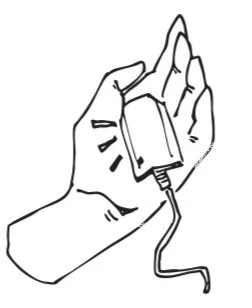
EMDR therapy has multiple methods that therapists practice. To stimulate bilateral eye movement, a therapist may ask a patient to follow their finger, light or a dot for 30 seconds at a time. Other processes include butterfly taps, crossing your arms and tapping your shoulders.
“It’s basically like having one foot in reality and one foot in trauma,” said Justice.
There are side effects to EMDR therapy which include vivid nightmares after a session and intrusive thoughts regarding past traumas. Despite all of the side effects, Justice continues to use EMDR therapy.
“I see them as a progress opportunity,” Justice said. “OK, this is what my brain finds scary and I know what to talk about in my next session.”
Justice is a sophomore in college and plans on applying to the Design program at Western. She’s made progress with how she processes her assault and plans to continue EMDR therapy.
“I don't want anyone to feel like getting help is a bad thing,” Justice said. “There's a huge stigma that outside help is frowned upon. I feel like with Gen Z going into adulthood right now we have the opportunity to flip the script … and I think we should.”
E’s Story
As a transgender man, E never felt right in his body before transitioning. For 17 years, E lived as a woman with long hair that he always put in a bun. E has consistently dealt with mental health challenges and has been to multiple therapists since February 2022.
E went to the hospital voluntarily for suicidal ideation in the beginning of May 2025.
“The first step is to talk to a social worker to determine what care would be best for you,” said E. After being in the emergency room for six hours, the social worker advised him to stay in the hospital as long as he needed.
E stayed in the hospital for three days where he participated in group therapy, talked with therapists and learned DBT coping skills. E had prior knowledge of Cognitive Behavioral Therapy (CBT) skills from his past therapists.
“CBT is client-led so I would bring up a problem and my counselor would empathize with it and give advice,” E said. “DBT is a lot of mindfulness: let me take a second, let me breathe and let me know that it's okay to feel something and logically know something and them being different is OK.”
E believes both DBT and CBT are important. DBT is good for short-term solutions; mentally slowing down and breathing while CBT is more effective long-term because it's all about mindsets.
“When I was a kid, I’d write down my problems in a diary kind of way,” E said. “Nowadays I do more problem-solving and trying to organize my thoughts. Like ‘What does this mean’ or ‘why am I...’”
E is studying psychology at Western and hopes to one day become a therapist. Because of E’s experience in residential care, he wants to be able to help others struggling with their mental health.
“Just know it’s you putting in the work,” E said. “Your therapist guides you and gives you great advice and perspectives but it's all you. And it's awful and it's terrible but it's a challenge. You’ll be emotional as fuck but it needs to happen sometimes.”
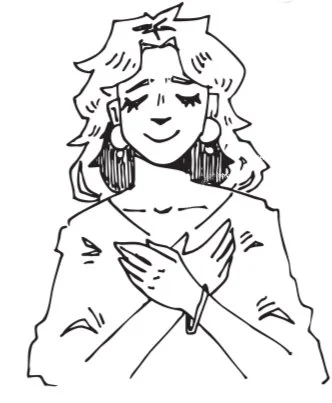
I look down at my easel, no brush strokes left behind. It’s been a year since I graduated from IOP therapy.
Being in IOP therapy wasn’t easy. I spent my summer afternoons sitting in my childhood room looking at the computer screen. I spoke about my trauma with strangers I’d only seen on Zoom — it was a strange yet rewarding experience.
Therapy hasn’t completely fixed my problems; I still struggle with falling back to old tendencies like ruminating and feeling unworthy of love. The difference? I know how to help myself now.
The living room was blanketed with light from the open window. A young girl — slightly older now — sits criss-cross on the sage green couch, laughing with her friends. Happy tears soak the blue checkered blanket covering her lap. I’m grateful to be here.