
I hope you can forgive yourself, too
Exploring institutionalized patriarchal language and its effect on women’s spiritual journeys
Story by Brenna Witchey
Illustrations by Royce Alton
Published April 7, 2026
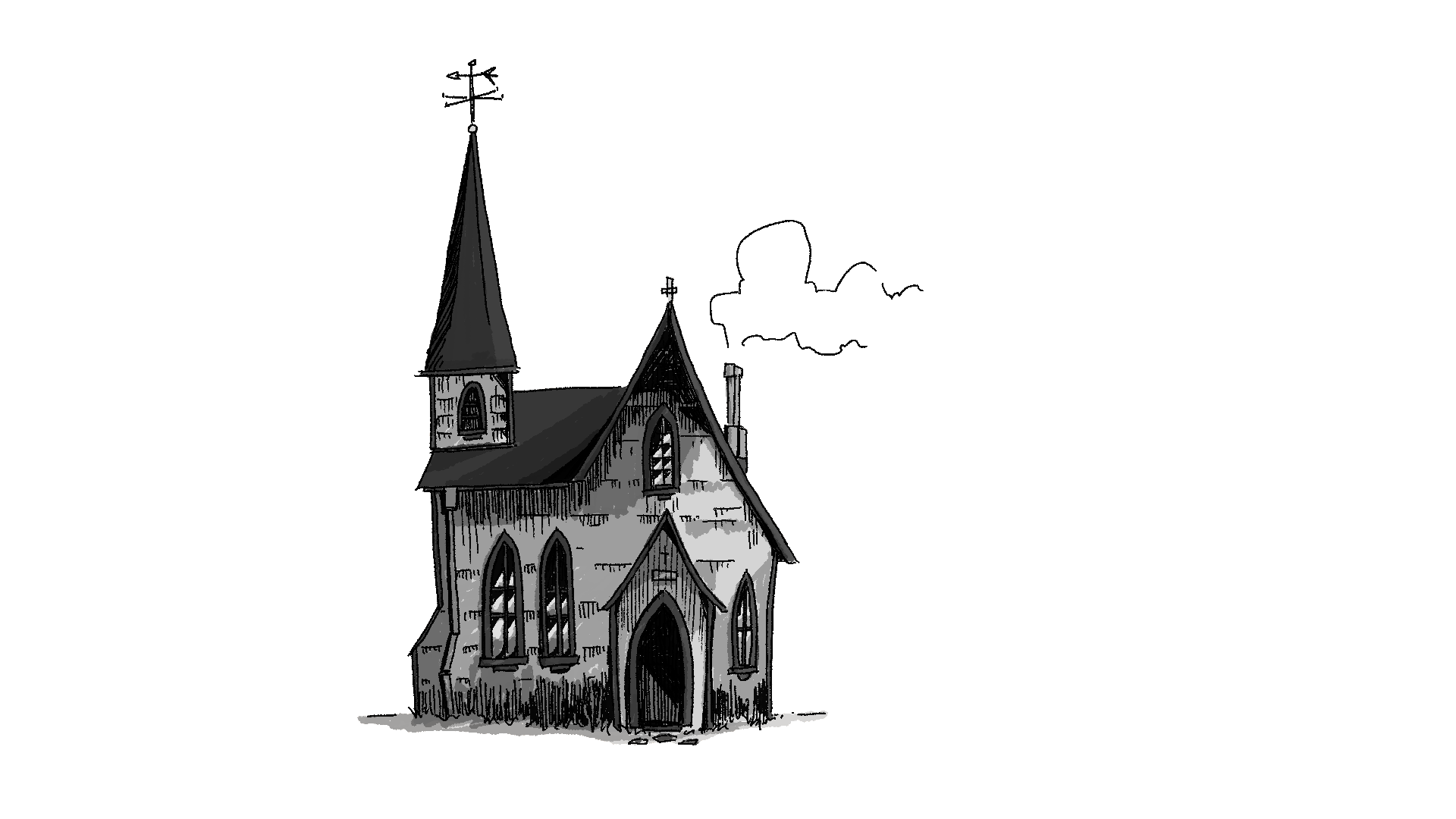
Forgive me, Father, for I have sinned. It’s been 2,557 days since my last confession. I’ve been judgmental. I’ve lied, been disobedient, superstitious, rude and prideful. Of course, I feel bad for being this way, Father, but not for the reason I used to feel bad.
It’s been seven years since I’ve been to church. Everything was pretty much the same when I attended Mass at Sacred Heart on a suspiciously sunny morning in January. The only differences were that:
I don’t believe anymore.
I was hungover.
The stained glass near the ceiling was yellow, and the sun cast a warm glow into the room throughout Mass, doing nothing to improve my headache. The wooden pews creaked, children wailed at the most inconvenient times and the sanctus bells were so shrill that I jumped in my seat as they signaled the opening procession.
I went to Mass that Sunday to examine my belief and see if anything had changed or would change in me afterward. The experience was like putting on a hand-me-down sweater: it fit almost perfectly, but was just a little itchy and smelled like someone my memory couldn’t place.
Somehow, I remembered the Penitential Act by heart, and standing too close to a woman I’d never met, we hit our chests three times with our fists in unison with the rest of the congregation. For the first time in my life, I truly wondered why Mass begins with a declaration that we are sinful.
By the Catholic standard I was taught, this is true: we are all born with Original Sin, and every day humans sin willingly and unwillingly. As a kid, sin manifested as a physical sensation. When I did something wrong, I had the distinct feeling that a dark, thick trench coat was weighing me down.
My throat tightened as a few little girls in the pews toward the front sang loudly. I was that little girl once. I felt my eyes getting hot, and I had to take my scarf off to stop feeling like I was going to suffocate.
I wonder if those little girls are worried about hell like I was. I wonder if they worry about being considered immodest when they want to wear a tank top in the summertime, or if they lie awake at night praying, begging God to make sure their mom gets into heaven. Or maybe they are truly happy and feel held by this all-loving God. Which isn’t a far-fetched idea to me because I once felt simultaneously comforted by and fearful of this God.
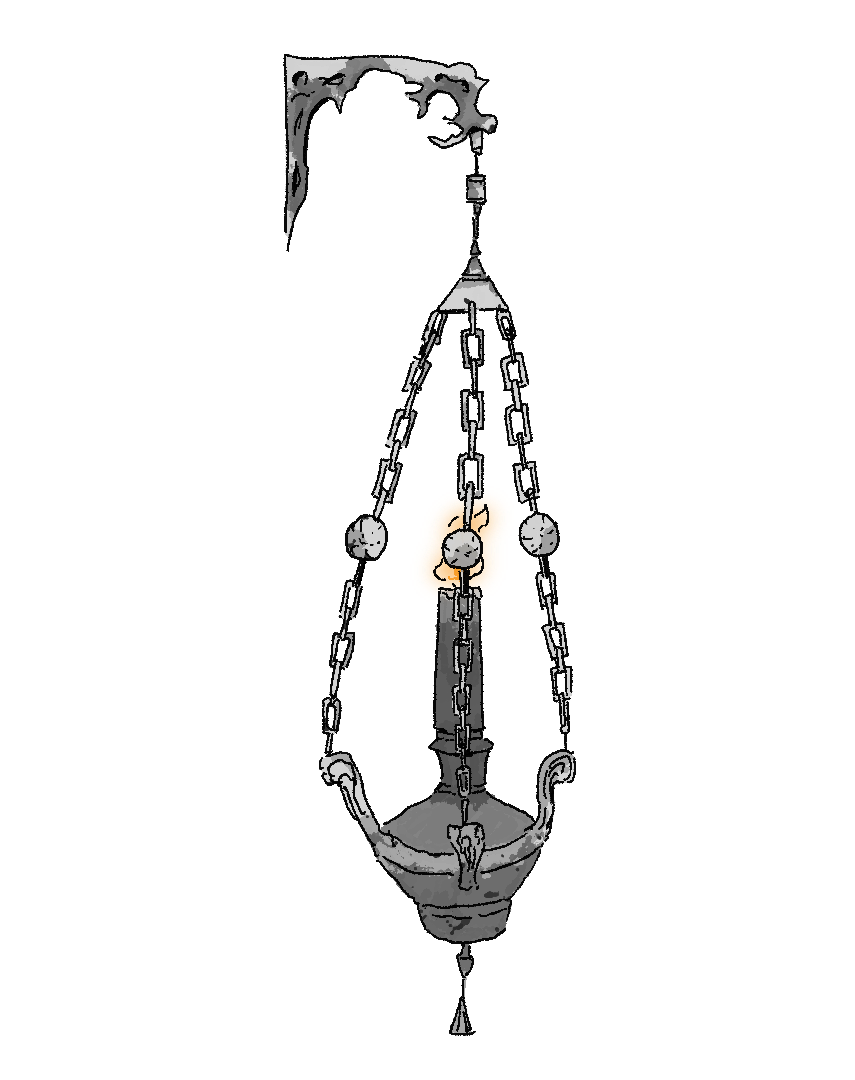
I see how it would be hard not to feel cradled in this particular room: the warm glow from the stained glass makes your mother look like an angel, the priest tells you that you’re the light of the world, that you’re special. The little green prayer candles flicker, signifying a physical manifestation of someone’s faith, and the red candle on the altar is lit: Jesus is home in the tabernacle. God, the real God that made everyone and everything we know, is in the room right now.
Kerry Wier had gone to Mass that day, too. Except when she arrived at the 9 a.m. service, she definitely wasn’t hungover. She is a devout Catholic.
A few days after my reattempt at Catholicism, we sat across from each other at Woods Coffee on Railroad Avenue. She wore a saint medal; it was Mary, and when I asked her who her favorite saint is, she said Joan of Arc. When I told Wier how I felt conflicted about the Penitential Act’s placement in the order of mass, she disagreed with me.
“We’re not perfect. None of us,” she said. Then she described the Penitential Act as an opportunity to examine one's conscience and be absolved of venial sin before having the opportunity to receive the Eucharist.
Venial sin is any sin you commit by accident. “You know, like, picking up your pencil thinking it was mine,” Wier explained. The Eucharist is the little wafer and the wine you consume as communion, which is believed to be the real body and blood of Jesus.
While venial sin can be wiped away by the Penitential Act, mortal sin can’t; you have to go to confession for that. And confession is only ever administered by men because only priests can give absolution, and women can’t be priests. Unlike me, Wier doesn’t have, and has never had a problem with this. “I think it’s mostly because I never aspired to be a priest,” she said. “I’ve never wanted to give a homily.”
Only a few days later, while sitting on a springy couch in a cozy office in Bond Hall at Western Washington University, Carrie Frederick Frost told me she’s never wanted to give a homily either, but that doesn’t mean women shouldn’t be allowed to preach.
“I think the church is really lacking and really missing out by not having that,” she said, referring to the lack of female leadership. Frost is a theologian and personally practices Orthodox Christianity. She teaches classes at Western on women in religion, ritual, spirituality and contemplative practices. Her office looks out onto Red Square and is littered with wooden bowls filled with stones and icons of saints.
While Orthodoxy and Catholicism have vastly different theological teachings, to me, she is a spiritual sister in that she experiences the great gendered divide that comes with the territory of practicing an Abrahamic religion.
One big doctrinal difference is that Orthodoxy does not believe in Original or Ancestral Sin, in other words, the big dark stain that all babies wear when they enter the Catholic world. But the expectation for women in the church is similar across Orthodoxy and Catholicism.
Both Catholicism and Christian Orthodoxy have historically had gendered roles that women and men play in and out of the church. The way I was raised, women’s purpose was to be mothers, wives and homemakers — and of course, modest, and never priests. Always the supporting role, never the star. And that was reflected in church teachings. “I find it isolating to be at church and look and see only men in the altar,” Frost said.
For Wier, who is 24 and has no current plans for marriage and children, there was some irritation and fear surrounding modesty and the reality of being expected to be a mother. She described the annoyance she felt when her mother would insist she wear a sweater so her shoulders wouldn’t be exposed in the summer.
“Come on, it’s 100 degrees. Are you kidding me?” She said. Now, though, she understands there’s a time and place for every outfit. You wouldn’t garden in a wedding dress. Growing up, Wier felt pressured to eventually get married and become a mother. But now, if it were the right time in her life, she would be a mom. She trusts God’s plan for her.
In comparison, Frost has been married for almost 30 years and has five kids. She has pursued a theological and scholarly career that not only challenges social tradition but also gendered teaching in the church.
She describes her frustration with how women were depicted in the church, or the lack thereof, as some of her earliest memories. She recalled hearing from another woman who practices Christian Orthodoxy that she was encouraged not to receive communion while menstruating. Frost didn’t receive this teaching.
That’s the funny thing about sin and shame sometimes: it kind of all depends on where you are, when you’re hearing the teaching and who you’re receiving it from. Frost described how it’s understood that Christ has done away with circumstantial sin: the political law about eating and drinking and menstruation.
“But then, over time in Christianity, there’s one exception, and that is women. And women’s bodies. It’s just patriarchy institutionalized,” Frost said.
I felt those institutionalized exceptions and feared them. That anxiety seeped into my bones. I was sorry all the time for making mistakes and wearing the clothes I wanted to wear. But this, Father, is why I don’t feel bad like I used to. I don’t believe in hell. That heavy trench coat has been boxed up and put away. And if all this is true, I won’t be needing it where I’m going.
Wier reflected on having nightmares of hell as a child. But she said that fear was from the devil. “Once I figured out how to pray, how to ask God for help, then I learned I didn’t really need to be afraid anymore,” she said.
Frost doesn't focus on hell because, in her practice, there isn’t much significance put on it. “There’s really no dogmatic teaching about hell in general,” she said. While she recognized that some people probably feel a lot of shame related to sin because of their upbringing, “What I was taught as a child is that repentance is kind of the key concept. And repentance is really understood as reorientation. And that’s what the Greek word means, is to kind of turn around and be reoriented.”
Wier recounted a time when she was in conversation with a priest about sin sending her to hell, “He said, ‘Don’t think about it. We’re all gonna sin. It’s gonna happen. Our entire lives. So just don’t think about it so hard,’” she said. The point isn’t the shame. It’s what you do with it.
When I went to Mass on January 25, we were in Ordinary Time on the Catholic calendar. But when you’re reading this, Lent has probably passed, and it might even be Easter. The time when Christians remember Jesus’ sacrifice and why that sacrifice matters: it frees them from sin, and they’re allowed to be forgiven.
When I am with Christian women, I am astounded by their ability to keep on forgiving. I feel there is an understanding so deeply rooted in my mind that I can’t separate myself. I might not know everything about them, but I have an inkling of the pressure these women have been under, and the accompanying expectation. I love them for finding their own practices and devotion despite it. I only hope they are as devoted to loving and forgiving themselves as they are to loving and forgiving others.
When I left the church that Sunday, I’d been invited to join a youth group by a woman, and in writing this, I couldn’t help but be reminded that we’re all here because women sacrificed their minds and bodies to bring us to the earth.
I don’t need to be forgiven, Father. I’m not scared to go to hell because heaven is here with me now — in the women who keep forgiving and opening their hearts, letting them bloom again and again, despite the spiritual roadblocks built by men in Your name.