
The silent art of mascoting
Western’s own Victor E. Viking explains the nuances of being the silent life of the party
Story by Cameron Riggers
Published April 7, 2026
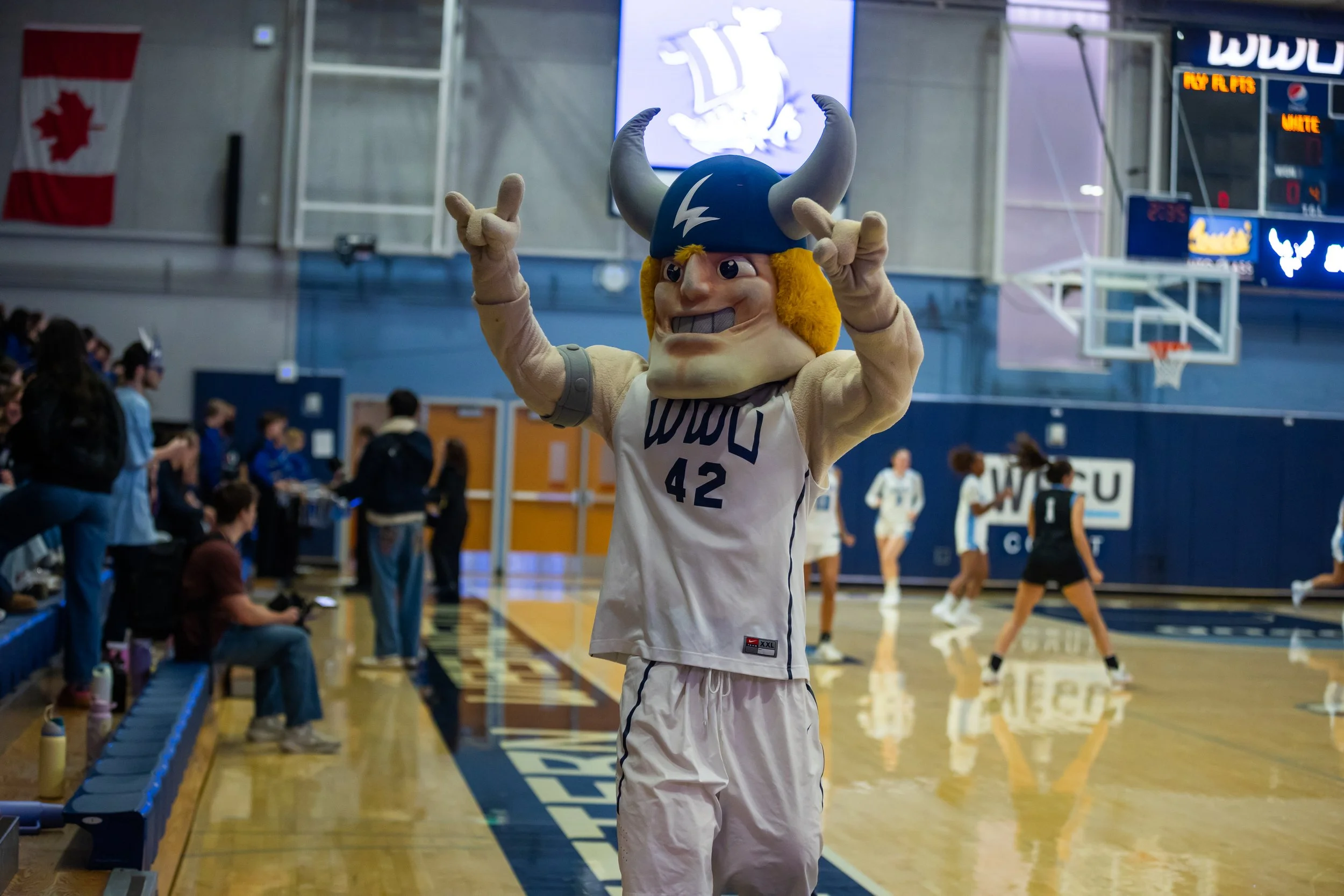
Victor E. Viking celebrates with his signature “horns up” pose during Viking Jam at Carver Gymnasium at Western Washington University in Bellingham, Wash., on Oct. 16, 2025. The pose emblemizes the Vikings via a hand gesture, meant to display school pride. // Photo courtesy of Meladie Young and WWU Athletics
The crowd buzzes with anticipation — they’re about to see their favorite team come to life. Here, in this court filled with fans and athletes alike, the MVP is anonymous. Covered head-to-toe in an all-encompassing plush suit, mascots make the court, field and rink their personal stage.
Although every mascot has its signature characteristics and look, one part of the job is universal: silence.
Pulling on four-fingered white plush gloves and oversized boots before stepping out to court at Western Washington University is Victor E. Viking. More than 100 years old, the Vikings' mascot has been a staple at campus sporting events for generations.
If there’s a sporting event at Western, Victor’s likely around, giving the crowd ample reason to cheer on the Vikings. With a permanent smirk tilted to the left side of his face, it’s up to Victor to reflect school spirit and energy through an expression that never changes.
“Victor just brings joy and happiness to the game, and school spirit gets higher,” said Abby Tinsley, a student employee in Western’s athletic department who regularly attends basketball and volleyball games. “He’s such a good role model of how to have Viking pride.”
Instead of vocalizing school pride, mascots rely on body language to communicate everything from anticipation and excitement over a winning goal or point to empathizing with the team and crowd when a game is lost. For Victor — who remains anonymous, in keeping with tradition — his exaggerated gestures, slapstick humor and boundless energy are essential tools for connecting with the audience and making up for his inability to join in on the cheers.
“Not only is the aspect of not talking at all difficult for me, because I'm a big talker, but the nonverbal communication with other people is really win or lose,” Victor said.
The tradition of mascots dates back to the rise of modern costumed characters on sports teams in the mid-1960s to 1970s. Their nonverbal nature quickly became part of the appeal of being seen, not heard, and helped to maintain consistency with marketing strategies.
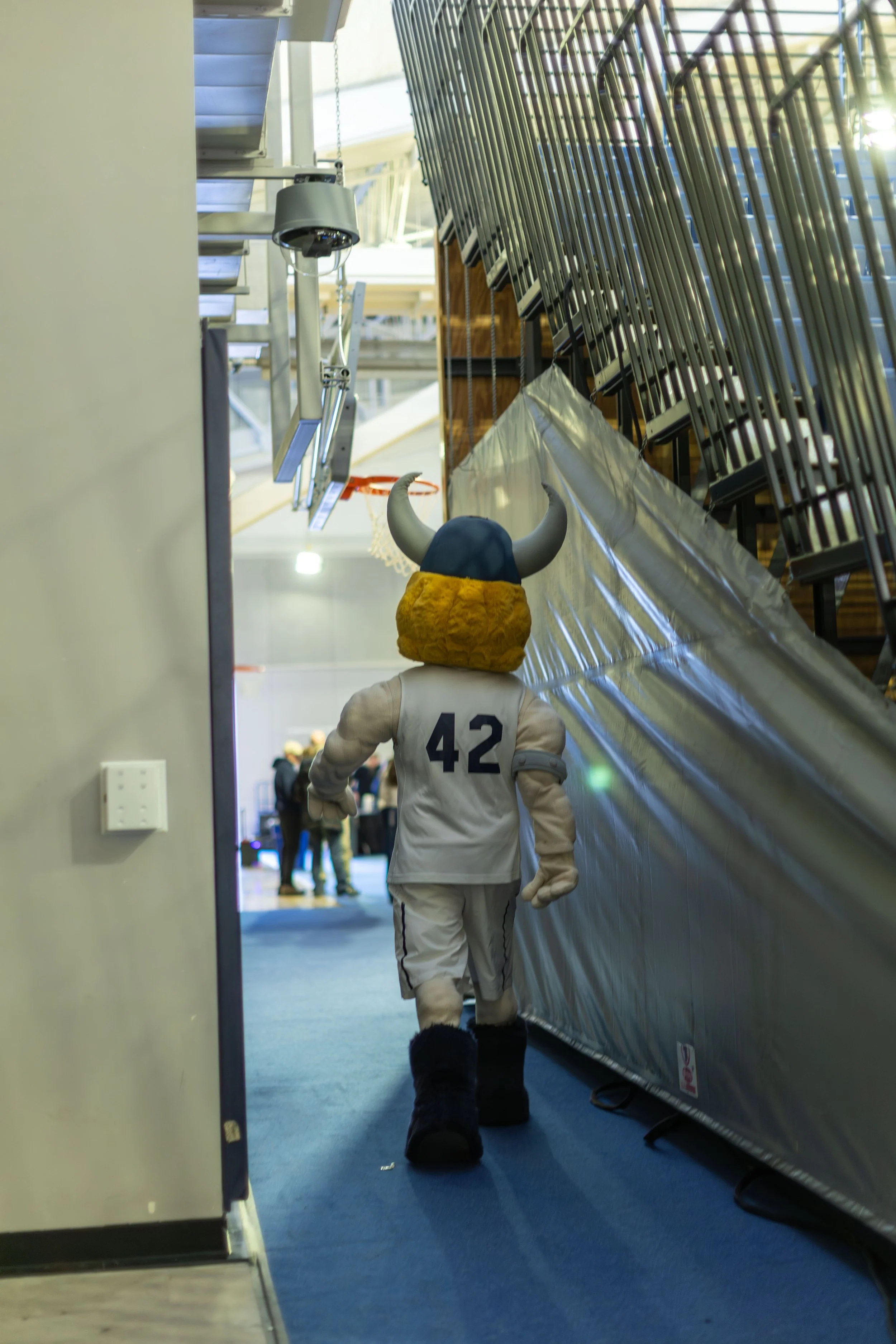
Victor E. Viking walks out to join an alumni event at Carver Gymnasium at Western Washington University in Bellingham, Wash., on Feb. 28, 2026. The alumni event recognized past basketball program alumni. // Photo courtesy of Meladie Young and WWU Athletics
Before plush suits took to the court, many sports teams used live animals to engage the crowd. From 1966 to 1968, the Miami Dolphins of the National Football League had a live dolphin that swam and performed tricks in a tank behind one of the end zones. Even today, the University of Colorado runs a live buffalo across the field before kickoff, and the University of Georgia features its series of bulldogs known as ‘Uga’.
For modern mascots like Victor, their goal at each game revolves around mastering silence.
“A key element of performing as a mascot is knowing how to stay quiet for hours on end. It's basically like a game of charades,” Victor said.
He challenges everyone to put themselves in his size 15 shoes and try non-verbal communication.
“Every person should take 20 minutes out of their day and not say a single word and figure out how you can get where you need to go and what you need to do it without speaking,” Victor said.
Relying on body language is much easier said than done, Victor said. Mascots must exaggerate their movements to convey emotion, especially for younger children who still believe the character is real. Even a simple high-five becomes more animated, with an almost robotic sweep of the arm to make sure the message lands.
“Sometimes I feel great, and they understood completely what I was (trying to) say,” Victor said. “Other times, I’m stuck wondering how to make someone understand or do something without talking.”
What about when Victor's not there? Where’s the energy? Who’s hyping up the crowd? It gets bleak.
“It's just less energetic,” Tinsley said. “People get less into it. They love seeing Victor, even the little kids who might be scared — they usually come around to him.”
As students’ time on campus comes and goes, Victor remains a constant presence at games. It’s no surprise that his name, “Victor E. Viking,” is meant to sound like the word “victory,” a fitting title for the silent figure who keeps the spirit of the game alive.