
Out then, in now
Derogatory for some, reclaimed as a term of pride for others, the meaning of ‘queer’ continues to evolve
Story by Anijah Polo
Published April 7, 2026
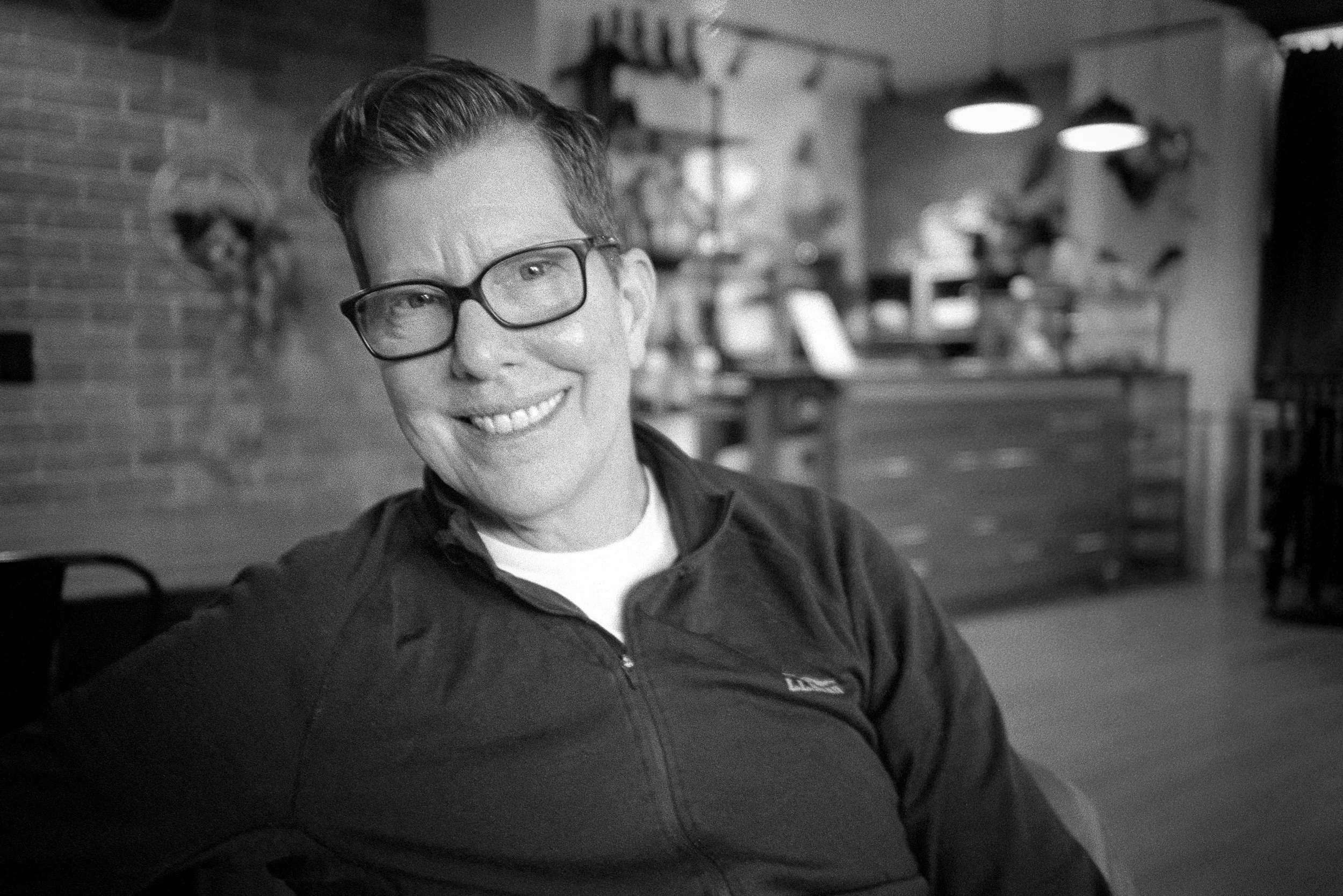
Michelle Harmeier smiles inside the Welcome Road coffee shop. // Photo courtesy of Mark Turner.
It was anything but easy. When Michelle Harmeier came out in the 1980s, at the height of the AIDS epidemic, the decision brought tension and discomfort within their conservative family.
After coming out to their family, Harmeier was given an ultimatum: attend conversion therapy or lose financial support for their education. Instead, Harmeier moved in with friends and worked over the summer to pay for school.
“My parents were afraid I was going to die. They didn't know — no one knew what was going on. They just knew AIDS was a gay disease,” Harmeier said. “They didn't know if it was gay men, gay women.”
Societal fears and stigma only amplified Harmeier’s fear of being publicly out.
“I'm a 61-year-old person, and for most of my adult life, I identified as a lesbian,” Harmeier said. “I had female partners, and I was very closeted because I was in public education in more conservative suburbs of California, so I was never really out and proud and hardly ever even used the word ‘lesbian’.”
While working as a school principal, Harmeier was out about their sexuality in private, but not to their colleagues. They said this contributed to an element of exclusion in the workplace, as they couldn’t effectively form bonds with coworkers.
“When you're closeted like that, you just kind of erase identity to keep it out of your vocabulary and to be discreet,” Harmeier said as their face dropped. “I was pushed out of a job for being perceived as gay. So I really was protecting my career and protecting myself during my career.”
When Harmeier and their partner moved to Bellingham during the COVID-19 pandemic, they realized the need for community across different age groups of queer people. This prompted them to form the Bellingham Queer Collective.
Although Gen Zers believe the term carries a more inclusive tone, for some, the word queer carries a traumatic connotation. This is true for Harmeier’s friend, who refuses to be involved with anything that includes the word “queer.”
“It was used against him. He was beat up, and he was harassed and bullied,” Harmeier said of their friend. “He just said, ‘I'm never going to feel comfortable. I'm not going to be part of a queer collective.’”
Harmeier believes men who identify as queer or gay have been especially susceptible to this trauma over the years. “I think there's a lot more hurt because they were probably more harassed than the lesbian community,” they said.
Many queer people have faced harassment or discrimination for who they are. The key difference in their relationship with the word “queer” often comes from the identity they resonate with the most and how the word was presented in their upbringing.
“I never felt just like a lesbian alone. I knew I wasn't like other lesbians. I knew there was a gender thing going on, but I had no vocabulary for it,” Harmeier said. “We were just butch, or we were just androgynous, right? But that's as far as it went.”
Through queerness, Harmeier has been able to live as everything they are. For Harmeier, queerness doesn't mean one concrete thing; it's fluid and doesn't force them to fit into a single category.
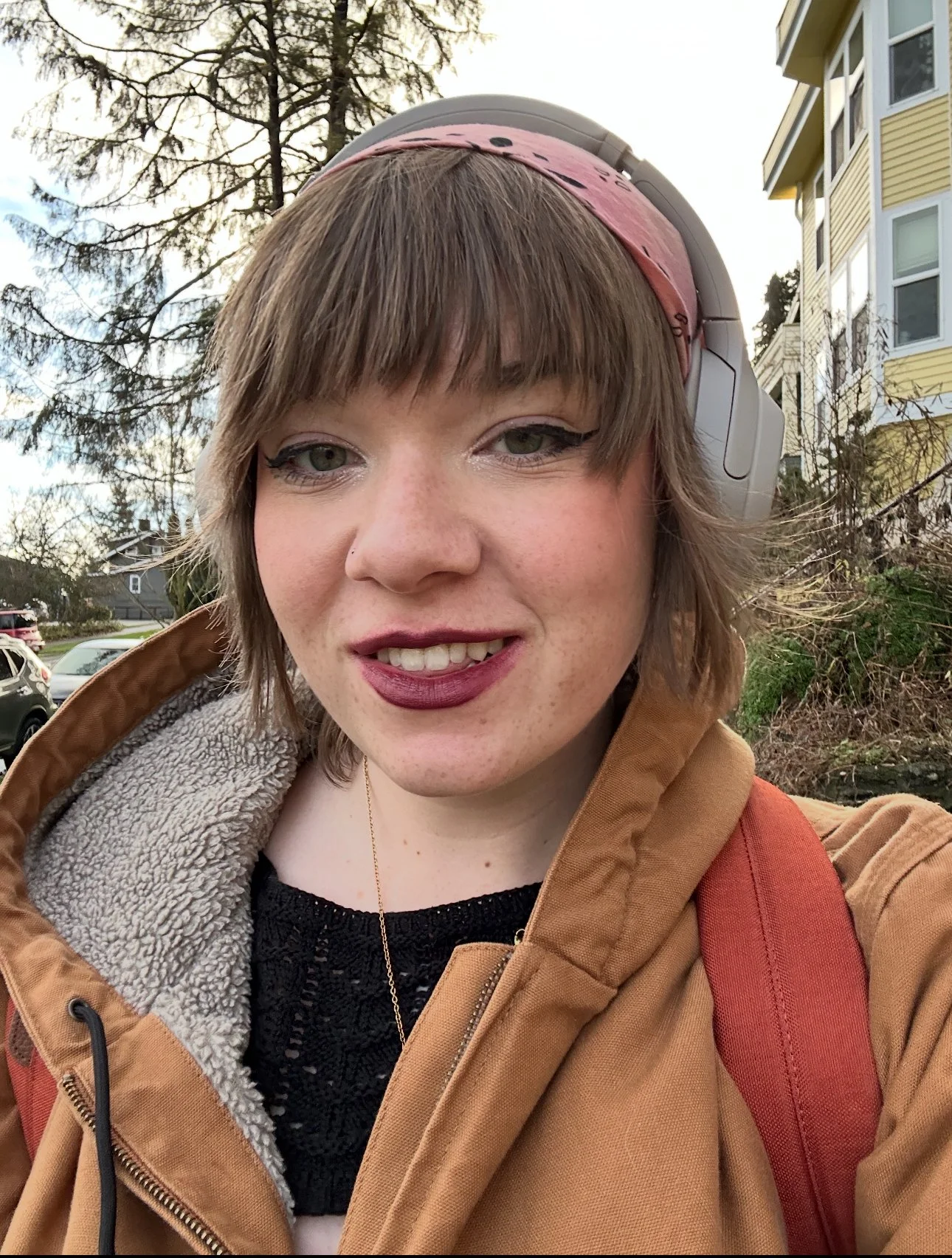
At 21, Stella wears light gray headphones and a tan jacket. // Photo courtesy of Stella Keating.
“Queerness just wraps it all together and says you don't have to pick one, you don't have to stick yourself in a silo or a box, and you can just be who you want to be,” Harmeier said.
Stella Keating is a third-year political science student at Western Washington University and the first identified transgender teen to testify before the United States Senate.
“The hardest time for me was definitely in school,” Keating said. “Kids didn't understand me. They didn't get this boy who liked girls' things. This boy, who dressed in all pink, who wore skirts all the time, who loved Barbies and Legos and Nerf guns and hated sports.”
While Keating had a clear sense of what she liked and didn’t like, her peers often struggled to understand, leaving her feeling isolated. At home, though, her parents offered the acceptance she couldn’t always find at school.
“When I was nine, I finally said to my mom, ‘I want to be called Stella,’” she said with a smile across her face.
Keating’s family was incredibly supportive of her as she explored her identity. This was a big part of her ability to transition and feel accepted by those she loves most.
“Queer was never a negative connotation to me,” Keating said. “It was always something of positivity. It was always something to support and to love and to cherish about yourself.”
Keating wishes she could go back in time and tell her younger self that someday, it would all make sense.
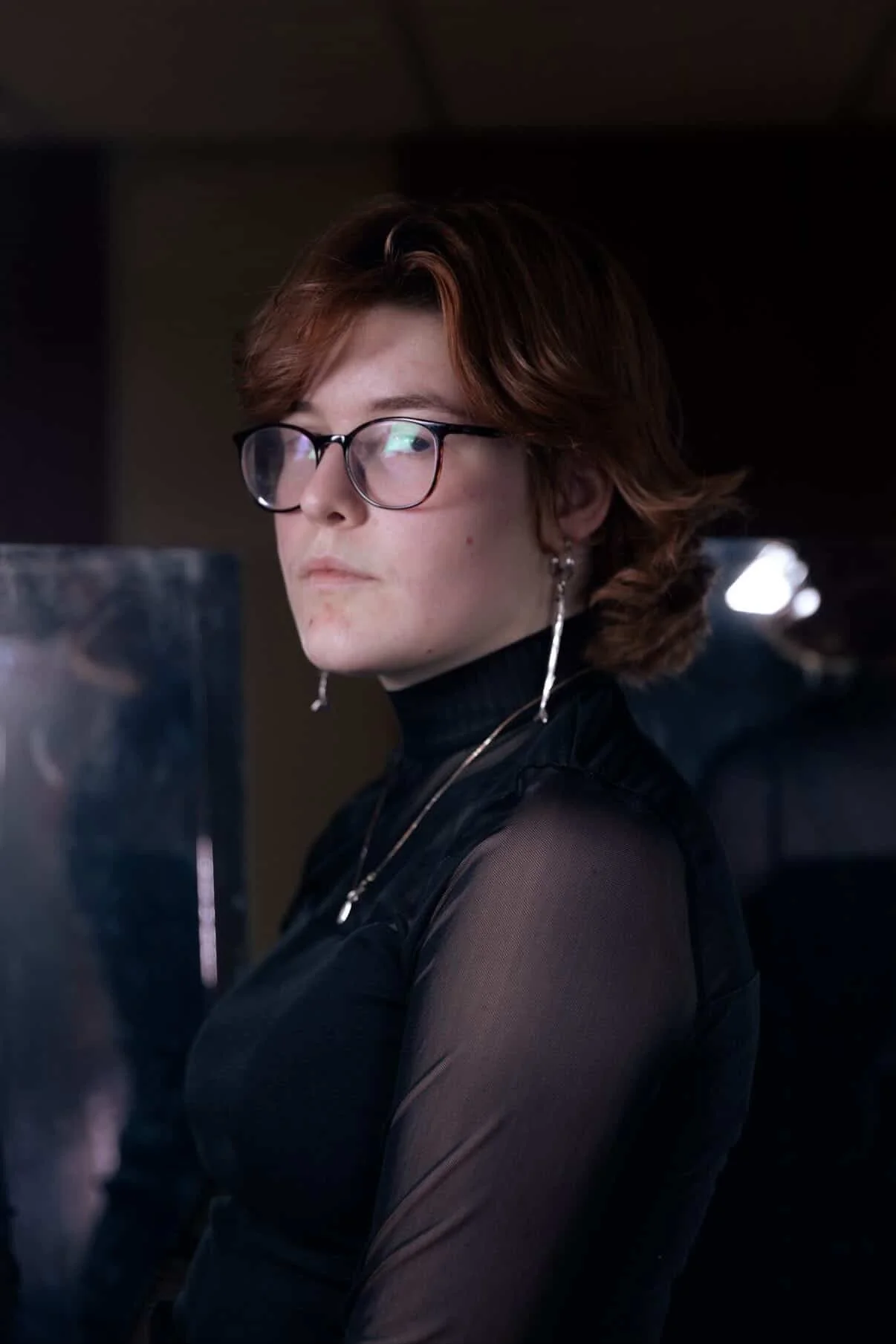
Nat Ballard, 20, looks over her shoulder, dressed in black with mesh sleeves, in the Viking Union. // Photo courtesy of Atlanta Moss.
“If I saw her in first grade, I'd just want to be able to have one opportunity to get to hug her, to look at her in the eyes and tell her that she's enough,” Keating said, referring to her younger self.
Much like Harmeier, Nat Ballard, a third-year student at Western, says her views on identity labels are largely shaped by her upbringing.
“I've known I was queer, and I've always been happy calling myself that to a degree,” Ballard said.
Still, Ballard says she hasn’t always felt comfortable with labels, something she traces in part to growing up in a military family.
“I've put myself under the microscope for how I identify a lot of the time, and I'll think, ‘oh, I can't be a lesbian, because I don't look like this or feel like this or do this,’” she said. “Using the word queer, it's a little more abstract, which is something I've always been more comfortable with.”
Ballard compared this to being a good soldier in the family unit. “It's not like I wanted them to think I was straight. I just didn't want to talk about it at all,” she said.
Although conversations about her identity with her family have been challenging, Ballard says the issue goes beyond labels.
“I want people's perception of me to just be that I'm whatever my own thing is, and however that comes off to you, that's great,” Ballard said. “It's felt nice. I just define myself through not having to define myself so closely.”